
Christopher Hailstone brings a wealth of knowledge to the table as a seasoned utilities expert with a deep focus on grid reliability and the intricate mechanics of electricity delivery. His career has been defined by navigating the precarious balance between maintaining a stable power supply and transitioning toward a sustainable energy future. In this discussion, we explore the controversial deployment of federal emergency orders that are currently preventing the retirement of aging fossil-fuel plants. We delve into the shifting landscape of energy demand driven by data centers, the financial strain these orders place on ratepayers, and the environmental consequences of keeping legacy units online in a rapidly evolving market. The conversation centers on the tension between immediate reliability concerns and the economic and health-related costs of extending the life of coal and gas generation.
The Department of Energy has recently pivoted toward using Section 202(c) emergency orders to keep fossil-fuel plants online. From your perspective as a grid security expert, how would you describe the underlying motivation for these federal interventions?
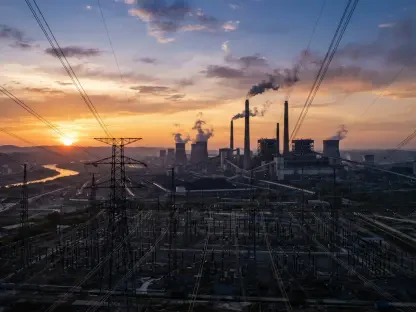
The motivation stems from a growing anxiety within federal agencies about the widening gap between reliable, dispatchable generation and a skyrocketing demand for power. When you hear officials like Alex Fitzsimmons mention that resource adequacy is worsening nationwide, they are looking at the cold reality of a grid being pushed to its limits by new, energy-intensive sectors like data center development. These emergency orders are essentially being used as a safety net to ensure we have enough “steel in the ground” to meet peak demand during unforeseen events. It is a reaction to years of what some consider the premature retirement of reliable units at a time when we cannot afford to lose a single megawatt. There is a palpable sense of urgency to maintain the status quo of reliability, even if it means keeping a coal plant like Stanton Unit 1 in Florida running instead of entering a planned cold shutdown.
Critics and some technical analysts have suggested that the “emergency” labels on these orders might be overstated. How do you reconcile the DOE’s claims of necessity with data showing that many of these regions actually have healthy reserve margins?
This is the central paradox we are currently facing in the utilities sector. On one hand, you have the DOE citing “emergency conditions” based on events like Winter Storm Fern, where we saw the R.M. Schahfer station operating at over 285 MW each day to keep the lights on during a bitter freeze. On the other hand, organizations like GridLab point out that many of these regions, including the Midcontinent Independent System Operator, actually cleared their capacity auctions with a reserve margin 3.5 percentage points above their reliability targets. It creates a confusing narrative for the public and for grid planners who see a “normal” risk assessment from NERC while the federal government is sounding an alarm. When four out of the eleven units ordered to stay online aren’t even operating, it suggests that the emergency might be more about long-term fear than immediate technical failure. We are essentially watching a clash between conservative federal risk management and the more optimistic, data-driven assessments of regional grid operators.
The financial implications of these orders are staggering, with estimates reaching $1.5 million per day in net expenses. Can you walk us through how these costs trickle down to the average consumer and the complexities of cost recovery?
The financial burden is immense and often invisible to the average person until they see their monthly utility bill creep upward. When a company like Consumers Energy spends $401 million to keep the Campbell plant online through the end of March, that money has to come from somewhere, and in this case, about $180 million is being sought directly from ratepayers. What’s particularly frustrating is that these costs aren’t just confined to the immediate vicinity of the plant; they are shared across vast regions, meaning families in North Dakota or Iowa might end up subsidizing the operation of a plant in Michigan. This creates a “squeeze” on utility spending, where every dollar spent on a 202(c) order is a dollar not spent on upgrading local infrastructure or investing in cheaper, cleaner alternatives. We are seeing merchant power plants like Centralia in Washington seeking nearly $20 million from ratepayers, leading to legal battles with entities like the Bonneville Power Administration over who is truly responsible for these “emergency” bills.
Beyond the financial balance sheets, there is a significant environmental and public health toll associated with these aging plants. How should we quantify the impact of keeping units like the Campbell plant operational beyond their planned retirement dates?
The environmental impact is not just a line item; it’s a tangible reality that people breathe every day. To put it into perspective, the Campbell plant alone has pumped out approximately 5.7 million short tons of carbon dioxide while under these orders, which is the equivalent of adding 1.2 million gas-powered cars to our roads for an entire year. Beyond the climate-warming CO2, we are talking about 3,020 short tons of sulfur dioxide and 2,140 short tons of nitrogen oxides, pollutants that have a direct, sensory impact on human health. These emissions are known to trigger asthma, exacerbate bronchitis, and contribute to premature mortality by forming fine particulate matter that settles deep in the lungs. When we choose to delay a retirement, we aren’t just choosing a power source; we are choosing to continue the emission of toxins that would have otherwise been eliminated from the local atmosphere.
Given that these emergency orders are issued in 90-day increments, how does this “blunt instrument” approach affect the long-term strategic planning that grid operators usually perform years in advance?
This is perhaps the most disruptive element for grid planners and investors. Long-term resource adequacy is a marathon, but these 90-day orders force everyone to run in 100-meter sprints. As Erin Melly correctly noted, this timeline simply does not align with the multi-year planning cycles used by grid operators to ensure stability. It creates a state of perpetual uncertainty; owners of plants like Centralia are left in limbo, wondering if they should spend another $23 million on repairs or if they will be allowed to move forward with gas conversions. This “last resort” mechanism, as John Moura from NERC calls it, might help in the aggregate, but it undermines the predictability required to transition the grid. It’s hard to build the future when the federal government keeps pulling the emergency brake on the retirement of the past.
What is your forecast for the future of grid reliability in the context of these frequent emergency interventions?
I expect that we will see a continued and perhaps even more frequent use of 202(c) orders through 2028 as we struggle to bring enough new capacity online to match the relentless growth of data centers. While these interventions provide a short-term cushion of dispatchable generation, they risk becoming a “new normal” that masks underlying structural deficiencies in how we permit and build new transmission and storage. Ultimately, the grid will remain reliable, but the price of that reliability will be paid in higher ratepayer costs and a slower transition away from high-emission fuels. We are entering an era where “emergency” status may no longer be an exception but a standard operational tool to bridge the gap between our current infrastructure and the massive energy needs of the digital age.