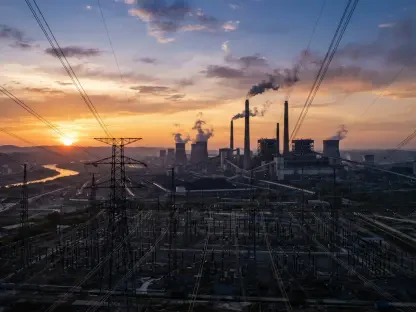

The mercury is climbing toward a staggering 115 degrees across the Eastern Seaboard, threatening to turn the modern electrical grid into a fragile relic of a cooler era. As a massive heat dome settles over the Eastern United States, the immediate challenge is not just the discomfort of the population, but the physical integrity of the wires and transformers that sustain the nation. This situation represents a significant collision between extreme meteorological shifts and a power system that is still catching up with the intensive energy needs of the present day.
The current atmospheric pressure has created a lid over the region, trapping heat and moisture in a way that prevents nighttime cooling. This lack of a thermal reset means that infrastructure is operating under constant, high-level stress without the typical recovery period. Engineers are closely monitoring the thermal limits of high-voltage transmission lines, which can sag and fail if they remain overheated for too long. The primary concern is whether the system will buckle under the sheer weight of a record-breaking cooling demand that shows no sign of relenting.
The 115-Degree Threshold: A High-Stakes Test for American Energy Resilience
The National Weather Service has issued warnings that push the boundaries of human endurance and technical capacity alike. A heat index of 115 degrees serves as a critical tipping point where traditional cooling systems lose efficiency, forcing air conditioners to work harder and draw more current. This increased draw places an immense burden on local distribution transformers, which are prone to overheating and exploding when demand spikes to these levels.
Meteorological data indicates that the current heat dome is one of the most intense recorded in recent history, driven by shifts in the jet stream. These patterns are no longer isolated flukes; they are the new reality for grid operators who must balance a delicate equilibrium between supply and demand. The aging nature of many electrical components further complicates this task, as older equipment was often designed for a climate that was significantly more temperate than the one seen today.
From the Mid-Atlantic to New England: Why the 2006 Demand Record Is Set to Fall
The PJM Interconnection, which oversees the electrical supply for 65 million residents, is preparing for a historical surge in consumption. Projections suggest that demand will surpass the all-time peak of 165,563 MW, a record that has remarkably stood for two decades. This surge is a regional phenomenon, with NYISO and ISO New England reporting similarly tight conditions as the heat wave encompasses the entire corridor from the Midwest to the Atlantic coast.
This tightening of the supply-demand gap is a direct result of increased residential and commercial cooling needs overlapping with a more electrified economy. The margin for error has shrunk to its narrowest point in recent history, leaving grid operators with very little room for mechanical failures. If a single major generation plant or transmission line goes offline during this peak, the risk of a cascading failure becomes a very real possibility.
Federal Intervention: The Prioritization of Reliability Over Environmental Mandates
In a decisive move to protect the stability of the grid, the Department of Energy has issued emergency orders to maximize every available megawatt of generation. Energy Secretary Chris Wright has authorized PJM to bypass certain environmental restrictions, allowing the use of older fossil fuel and dual-fuel plants that are typically sidelined due to their high emission levels. This mandate signals that the federal government considers the immediate risk of widespread blackouts to be more dangerous than a temporary spike in carbon output.
This regulatory trade-off highlights the difficult choices forced by climate volatility. By calling upon these “specified resources,” the government is prioritizing the survival of the grid and the safety of citizens who depend on indoor cooling. It is a stark reminder that during a national emergency, the primary goal shifts from long-term environmental targets to the immediate preservation of life and critical infrastructure.
Data Centers as a Last Resort: Turning Hyperscale Infrastructure Into an Insurance Policy
A significant finding in modern grid management is the evolving role of “hyperscaler” data centers, which have become some of the largest consumers of electricity. Under new emergency protocols, PJM has been granted the authority to disconnect these massive industrial loads to alleviate pressure on the residential grid. This strategy does not leave the data centers in the dark; instead, it forces them to switch to their tens of gigawatts of onsite backup generation.
This transition effectively turns private technology infrastructure into a temporary insurance policy for the public. By removing these large consumers from the utility lines, operators can “create” power for thousands of homes without needing to build new power plants. It is a new framework where industrial flexibility is leveraged to protect the integrity of the Eastern Interconnection during periods of maximum stress.
Navigating the Critical Window: Actionable Conservation Strategies for the 2:00 p.m. Peak
The stability of the interconnection relies heavily on public action during the peak window between 2:00 p.m. and 10:00 p.m. daily. This is the time when solar production begins to decline while temperatures remain at their highest, creating a dangerous imbalance. Consumers are encouraged to mitigate local outage risks by staggering the use of heavy appliances like dishwashers and dryers to ensure that neighborhood transformers do not reach a breaking point.
The mitigation of this crisis provided a roadmap for future infrastructure development. Actionable next steps centered on the deployment of widespread battery storage to capture midday solar energy for evening discharge. Solutions involved the hardening of physical transmission lines against extreme ambient temperatures. Furthermore, future considerations introduced the necessity of a national smart-grid standard that automated industrial load-shedding. These measures transformed the energy landscape into a more robust system capable of weathering similar atmospheric challenges.