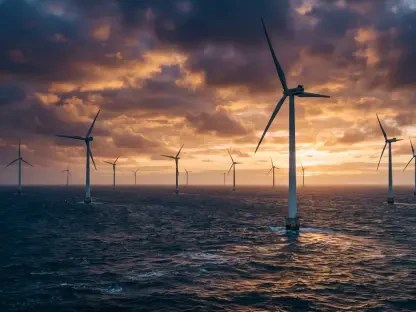

Australia stands at a precarious crossroads where the ambitious federal mandate for an 82 percent renewable energy share by 2030 clashes directly with a chilling reality in the wind power investment landscape. While the broader green energy sector continues to attract significant financial interest, the specific capital allocated to wind farms has experienced a staggering decline, plummeting from nearly five billion dollars down to just over five hundred million in a remarkably short timeframe. This sudden withdrawal of support creates a significant bottleneck for a nation that has historically positioned itself as a global leader in the transition toward sustainable power generation. The divergence between government policy goals and private sector confidence suggests that the traditional model for financing wind energy is no longer sufficient to meet the rigorous demands of the current economic environment. As investors reevaluate their risk tolerance, the path forward for the Australian grid remains uncertain and complex.
Financial Barriers and Market Volatility
The Rising Cost of Capital and Merchant Risk
The economic landscape for large-scale infrastructure has shifted dramatically, with high interest rates and persistent supply chain inflation drastically inflating the capital expenditure required for new wind developments. Project costs that seemed manageable a few years ago have ballooned, making the initial hurdle for breaking ground on massive wind farms significantly higher than previously anticipated. Lenders are increasingly cautious about the long-term viability of these assets, particularly as the costs of raw materials and specialized labor continue to rise in a competitive global market. This inflationary pressure is compounded by logistical bottlenecks that delay construction timelines, further eroding the projected returns for institutional investors who seek stability. Consequently, many developers are finding that their original financial models are no longer viable, leading to a period of stagnation where many shovel-ready projects are being shelved until the economic outlook becomes more favorable.
Beyond the immediate construction costs, the Australian energy market is grappling with a profound sense of uncertainty regarding the longevity of traditional power sources and the volatility of the spot price. Lenders are particularly wary of merchant risk, which refers to the potential for electricity prices to fluctuate wildly without the protection of long-term power purchase agreements. Because aging coal-fired power plants are remaining operational longer than many analysts predicted, the expected scarcity that would drive up prices for renewable energy has yet to fully materialize in a predictable way. This environment makes it difficult for wind farm operators to secure the bankable contracts needed to satisfy conservative credit committees at major financial institutions. Without a guaranteed price floor or a clear exit strategy for thermal generation, the merchant market remains a high-stakes gamble that few traditional financiers are willing to take, effectively stalling the expansion of standalone wind energy assets.
The Impact of Supply Chain Constraints: Navigating Global Delays
The logistical hurdles associated with transporting and installing massive turbine components have added a layer of complexity that few developers were prepared to manage effectively. In the current global market, competition for specialized shipping vessels and heavy-lift cranes has driven prices to historic highs, often doubling the estimated transport costs for remote Australian projects. These delays are not merely a matter of timing; they represent a significant financial drain as interest on construction loans continues to accrue while equipment sits in transit or in storage. Furthermore, the specialized nature of these components means that any disruption in the global manufacturing chain can set a project back by several months or even years. This unpredictability has made it nearly impossible for developers to provide fixed-price contracts to their partners, leading to a breakdown in the traditional procurement process that once underpinned the rapid expansion of the Australian wind energy sector.
As manufacturers focus on high-volume markets in the Northern Hemisphere, Australian developers are finding themselves at the end of a very long and expensive queue for the latest turbine technology. This geographical disadvantage is exacerbated by the lack of local manufacturing capacity, forcing the industry to remain entirely dependent on a volatile international supply chain that is currently under immense strain. The rising cost of raw materials, particularly steel and rare earth minerals required for high-efficiency generators, has also led to frequent price renegotiations even after contracts have been signed. This instability has forced many companies to increase their contingency budgets to levels that make some projects financially unfeasible from the outset. To combat these issues, some industry leaders are calling for a greater investment in local logistics hubs and more robust domestic assembly capabilities to reduce the reliance on external factors that are beyond the control of Australian energy stakeholders.
The Evolution Toward Hybrid Energy Solutions
Moving from Standalone Wind to Integrated Hubs
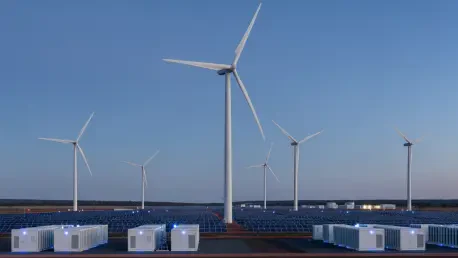
The industry is undergoing a fundamental structural shift as developers realize that standalone wind energy is increasingly viewed as a low-value commodity due to its inherent intermittency and lack of reliability. To address these shortcomings, the market is pivoting toward the concept of integrated energy hubs that combine multiple generation technologies into a single, cohesive infrastructure project. This evolution is driven by the need to provide firmed power, which ensures a steady supply of electricity regardless of whether the wind is blowing or the sun is shining at any given moment. By bundling wind turbines with large-scale solar arrays and sophisticated battery storage systems, developers can offer a more reliable product to the grid, which significantly increases the value of the energy produced. This holistic approach not only stabilizes the output but also allows operators to participate more effectively in ancillary service markets, providing a multifaceted revenue stream.
Specific examples of this strategic pivot can be seen in the redesign of major projects like the Bogunda Energy Hub, which was originally envisioned as a massive wind-only venture but has since been scaled back. The redesigned project now incorporates a more balanced mix of solar and battery capacity, reflecting a broader industry trend toward diversification as a means of mitigating technical and financial risks. This transition toward hybrid systems is essential for making projects more attractive to risk-averse banks, as firmed energy is much easier to value over a twenty-year horizon than intermittent wind alone. Furthermore, the integration of different technologies allows for more efficient use of existing transmission infrastructure, which is often a major constraint for new developments in remote areas. As these hybrid hubs become the new industry standard, the era of the isolated wind farm may be drawing to a close, replaced by a sophisticated network of multi-technology power plants.
How Conservative Lending Reshapes the Market
Financing trends within the Australian renewable sector indicate that banks are becoming far more selective, leading to a distinct polarization between different types of energy projects and their developers. Lenders are now imposing much more stringent requirements, often demanding that developers provide a larger portion of the project’s total value as equity before any debt is released. This shift toward conservative debt-to-equity ratios is a direct response to the perceived risks of over-leveraging in a market characterized by fluctuating prices and regulatory uncertainty. Small and mid-sized developers, who may not have the deep pockets of multinational corporations, are finding it increasingly difficult to compete in this new environment where capital is both expensive and scarce. This has created a bottleneck where only the most financially robust entities can move forward, potentially limiting the diversity of the market and slowing the overall pace of the energy transition.
The resulting two-tier system has created a clear divide between projects with ironclad, long-term agreements and those that rely on more flexible or speculative revenue models. Projects that can demonstrate secure contracts with blue-chip off-takers are still finding a path to financial close, although even these deals are subject to more rigorous scrutiny than in the past. Conversely, traditional wind-only ventures that lack a firmed power component or a diversified technology profile are frequently being left without the necessary financial backing to proceed to construction. This reality is forcing developers to reconsider their entire approach to project design, prioritizing financial security and risk mitigation over simple capacity metrics. The long-term implication of this conservative lending environment is a market that is more stable and resilient, but one that may also be slower to reach the massive scale required to meet the federal government’s ambitious climate targets.
Policy Challenges and New Growth Drivers
Reforming Regulatory Frameworks for Stability
Government support mechanisms, such as the Capacity Investment Scheme, are currently under intense scrutiny as industry stakeholders argue that these programs do not provide sufficient long-term certainty for investors. While the intent of such schemes is to encourage investment by providing a safety net, many experts believe the current iterations lack the depth and duration needed to offset the high costs of modern infrastructure. There is a growing consensus that Australia must refine its regulatory frameworks to include more robust price floors and more predictable revenue stabilization mechanisms to restore investor confidence. Without these adjustments, the gap between the nation’s stated policy objectives and the actual physical infrastructure being built will likely continue to widen, threatening the stability of the grid. Policy makers are being urged to look at more successful international models that have successfully incentivized large-scale offshore and onshore wind by providing transparency.
International comparisons suggest that markets with more mature and consistent regulatory environments tend to attract higher levels of foreign direct investment, a lesson that Australia must internalize quickly. By adopting mechanisms that have worked in Europe and parts of North America, such as more structured contracts for difference or long-term tax incentives, the Australian government could help de-risk the sector. These reforms would go a long way toward convincing institutional investors that the Australian market is a safe harbor for long-term capital, even in the face of global economic headwinds. Furthermore, streamlining the approval process and reducing the administrative burden for large-scale projects could significantly lower the pre-construction costs that often deter potential developers. As the global competition for green capital intensifies, the ability of a nation to provide a stable regulatory landscape will be the primary factor in determining which countries emerge as winners in the race toward a decarbonized economy.
Data Centers as a Lifeline for Renewables
An unexpected but powerful driver for the renewable energy sector has emerged in the form of the massive expansion of the data center industry across the Australian continent. These facilities, which house the servers and storage systems necessary for modern digital life, have an insatiable and constant appetite for electricity that must be met with clean energy to satisfy corporate mandates. Unlike traditional industrial consumers, tech companies are often willing to pay a premium for reliable green energy, providing the high-value, long-term contracts that wind and hybrid developers so desperately need. This surge in demand from the technology sector is acting as a vital lifeline, allowing projects that might otherwise be unbankable to move forward with confidence. The relationship between the digital economy and the green energy sector is becoming increasingly symbiotic, as data center operators seek to locate their facilities near major renewable hubs to minimize transmission losses.
Looking ahead toward 2027 and 2028, the continued growth of artificial intelligence and cloud computing was expected to further accelerate the demand for firmed renewable power. Developers already started to tailor their project designs to meet the specific requirements of these high-tech clients, emphasizing high uptime and the ability to scale capacity as data center campuses grew. This shift in the customer base also influenced where projects were built, with a greater emphasis on proximity to urban centers and existing high-speed fiber networks. The influx of tech-driven capital provided a much-needed boost to the sector, proving that private sector demand could sometimes outpace government policy as a catalyst for change. As these new partnerships matured, they provided the blueprint for the next phase of the energy transition, where the requirements of the digital age became the primary engine for building a more sustainable and resilient power grid for the entire nation.