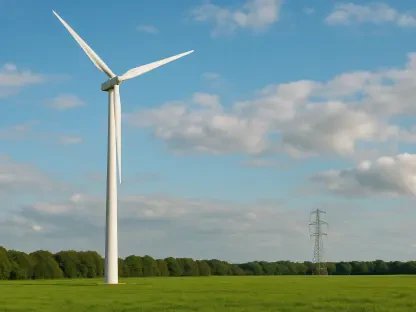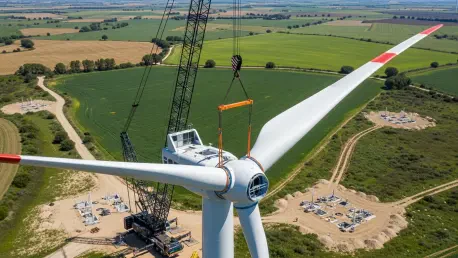

The winds sweeping across the hillsides of Tarragona are currently carrying more than just the scent of the Mediterranean; they represent a significant shift in how Catalonia approaches its aging renewable energy infrastructure during this pivotal transition. For years, the province has relied on early-generation turbines that, while revolutionary at the time of installation, are now struggling to meet the escalating energy demands of a modern industrial economy. By choosing to overhaul these facilities now, local authorities and private investors are not merely performing maintenance but are fundamentally reimagining the power density of existing wind sites. This strategic pivot involves dismantling hundreds of smaller, less efficient units to make way for a handful of high-capacity machines that can produce significantly more electricity with a smaller footprint. As the region moves through 2026 and toward 2028, this multi-million dollar investment serves as a blueprint.
Maximizing Resource Efficiency: Technical and Spatial Upgrades
Repowering Projects: Technical Advancements in Turbine Replacement
The primary driver behind the modernization initiative in Tarragona is the leap in aerodynamic efficiency and mechanical reliability found in current-generation wind technology. Older turbines, often dating back decades, possess lower hub heights and smaller rotor diameters, which prevents them from capturing the more consistent and powerful wind currents found at higher altitudes. By replacing these legacy units with state-of-the-art models, the energy yield per square mile can effectively triple without requiring the development of new land parcels. These modern systems incorporate advanced sensors and automation to adjust blade pitch in real-time, optimizing performance even in turbulent conditions that would have forced older models to shut down for safety. Furthermore, the reduction in the total number of turbines simplifies maintenance and lowers operational costs over the long term, as fewer moving parts require monitoring despite the increased power output.
Land Management: Environmental Integration and Spatial Optimization
Beyond the gains in electricity production, the modernization process addresses significant environmental and aesthetic concerns that have historically slowed the expansion of wind power in rural Catalonia. Consolidating energy production into fewer, more powerful turbines allows for the restoration of local ecosystems, as the physical footprint of the infrastructure is significantly reduced. This spatial optimization means that land previously occupied by dozens of small foundations can now be reclaimed for agricultural use or natural habitats, fostering a more harmonious relationship between industrial needs and biodiversity. Modern turbines are also engineered with noise-reduction technology and slower rotational speeds, which minimizes the impact on local bird populations and reduces visual flickering for nearby communities. This approach demonstrates that increasing energy capacity does not necessarily require an expansion of industrial zones, but rather a more sensitive application of technology.
Socioeconomic Implications: Strategic Investment and Grid Growth
Economic Impact: Growth and Local Industry Development
The injection of millions of dollars into Tarragona’s wind sector is expected to catalyze a ripple effect throughout the regional economy, creating specialized jobs in engineering, logistics, and digital grid management. While the initial construction phase provides a boost to local labor markets, the long-term benefit lies in the establishment of a high-tech service hub capable of maintaining complex renewable assets. This investment encourages the growth of secondary industries, such as battery storage manufacturing and specialized transport services, which are essential for supporting a modernized energy grid. By positioning the province as a leader in repowering projects, the local government is attracting international firms looking for stable environments to test and deploy next-generation energy solutions. This synergy between public policy and private capital ensures that the transition away from fossil fuels is not just a necessity but a robust engine for economic prosperity.
Strategic Pathways: Future Grid Resiliency and Decarbonization
The decision to modernize Tarragona’s wind infrastructure established a clear precedent for how aging renewable assets were managed across the broader European landscape. Stakeholders recognized that simply maintaining the status quo was insufficient for meeting the rigorous demands of a decarbonized economy, leading to the implementation of aggressive repowering strategies. This transition emphasized the importance of lifecycle management in green technology, shifting the focus from initial installation to continuous technological evolution. Policy frameworks evolved to streamline the permitting process for these upgrades, ensuring that environmental protection and energy production were treated as complementary goals rather than competing interests. By prioritizing the replacement of obsolete machinery with high-efficiency systems, the region secured its position as a central pillar of the Mediterranean energy market. The successful integration of these assets showed that the path to a sustainable future was certain.