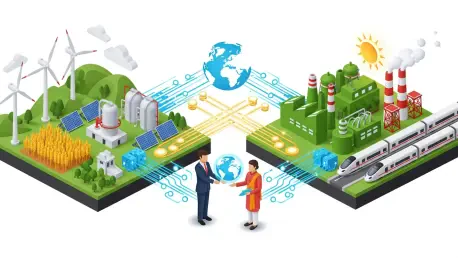

The global pursuit of decarbonization has reached a critical juncture where the massive energy demands of developing economies must be balanced against the urgent need for sustainable resource management. India is currently navigating this complex landscape as it seeks to power its burgeoning middle class and expanding manufacturing sector while fulfilling its ambitious international climate commitments. Saskatchewan has emerged as a pivotal partner in this journey, offering a wealth of natural resources and specialized technological expertise that aligns perfectly with India’s long-term energy security goals. This bilateral relationship extends far beyond traditional trade agreements, fostering a collaborative ecosystem where research, development, and resource extraction converge to accelerate the transition toward a low-carbon future. By integrating Saskatchewan’s vast uranium reserves and carbon management innovations with India’s industrial scale, both regions are setting a precedent for how subnational and national entities can cooperate to solve global challenges.
Nuclear Cooperation: Fueling the Base Load Demand
The cornerstone of this partnership lies in the secure supply of uranium, a critical component for India’s rapidly expanding fleet of pressurized heavy water reactors and newly commissioned light water units. As India aims to significantly increase its nuclear power capacity from 2026 to 2030, the reliability of the Athabasca Basin in northern Saskatchewan provides a strategic buffer against global market volatility. Companies like Cameco have established long-term delivery frameworks that ensure a steady flow of high-grade uranium to Indian utilities, thereby supporting the continuous generation of clean base load electricity. This stability is essential for a nation that cannot afford the intermittency of renewables alone while phasing out coal-fired plants. Furthermore, the collaboration includes technical exchanges on fuel fabrication and waste management, ensuring that the entire lifecycle of nuclear energy is handled with the highest standards of safety and environmental stewardship to benefit both the Canadian province and the Indian subcontinent.
Beyond the nuclear sector, the partnership has expanded into the vital realm of critical minerals and rare earth elements, which are indispensable for the global manufacturing of electric vehicle batteries and wind turbines. Saskatchewan’s recent investments in processing facilities have positioned it as a reliable alternative to existing monopolistic supply chains, offering India a transparent and ethically sourced stream of minerals like lithium and neodymium. This alignment is particularly important as India ramps up its domestic production of green technologies to meet its net-zero targets by the middle of the century. The exchange of geoscientific data and exploration techniques has allowed both parties to identify new opportunities for joint ventures in mineral extraction. By securing these essential components, Saskatchewan helps India build a resilient domestic green industry, while India provides the massive market scale required to justify large-scale capital investments in Canadian mining projects, creating a mutually beneficial economic loop.
Technological Integration: Decarbonization at Scale
Technological collaboration is perhaps most visible in the development and deployment of small modular reactors, which offer a flexible and cost-effective alternative to traditional large-scale nuclear plants. Saskatchewan’s commitment to being a first mover in the SMR space provides India with a living laboratory for testing these reactors in varied climates and grid configurations. Simultaneously, the two regions have deepened their cooperation in carbon capture and storage technology, building on the success of projects like the Boundary Dam 3 facility. For India, which maintains a significant coal infrastructure, integrating carbon capture is a pragmatic necessity to reduce emissions without sacrificing current industrial output. By sharing engineering blueprints and operational data, Saskatchewan enables Indian energy firms to bypass the expensive trial-and-error phase and move directly toward implementation. This rapid adoption of carbon management tools is essential for decarbonizing heavy industries such as steel and cement, which are the backbone of India’s ongoing development.
The partnership between Saskatchewan and India effectively demonstrated that regional cooperation could provide the necessary momentum for global climate goals. Stakeholders focused on streamlining regulatory frameworks to ensure that cross-border investments remained attractive and predictable for long-term capital commitments. Leaders in both jurisdictions recognized that achieving a sustainable energy transition required a balanced approach that prioritized both energy security and environmental responsibility. Consequently, the collaboration moved toward formalizing educational exchanges that prepared a new generation of engineers and scientists to manage complex energy systems. These efforts ensured that the technical successes of 2026 were translated into lasting institutional knowledge and robust industrial capacities. By prioritizing transparency and shared prosperity, the two entities established a roadmap for other resource-rich regions and emerging economies to follow. The integration of advanced technology with reliable resource supplies proved to be a decisive factor in maintaining growth.