
The global industrial landscape is facing a profound shift where the historical focus on production volume is being replaced by a critical mandate for deep decarbonization and operational efficiency. For many manufacturers, the path toward a low-carbon future remains obscured by high initial costs and a lack of actionable data, making the transition feel like a financial burden rather than a strategic opportunity. On August 3, 2026, Mitsubishi Heavy Industries (MHI) and Green AI Co., Ltd. announced a strategic partnership designed to dismantle these barriers by merging traditional engineering with advanced data analytics. This collaboration addresses the fundamental challenge of modern industry: how to decouple economic growth from carbon emissions without sacrificing the competitive edge that keeps businesses afloat. By aligning environmental goals with profitability, the alliance seeks to redefine what it means to be a sustainable manufacturer in a rapidly evolving global market.
Strategic Focus: Economic Sustainability
Empowering the Industrial Supply Chain
Small and medium-sized enterprises (SMEs) represent the foundational layer of the manufacturing ecosystem, yet they often face the steepest hurdles when attempting to adopt advanced green technologies. These organizations frequently operate with tighter margins and fewer technical staff compared to major corporations, making the prospect of large-scale decarbonization feel out of reach. The partnership between MHI and Green AI specifically targets this segment by providing the necessary resources and accessible tools to demystify the decarbonization process. By focusing on the specific needs of these smaller players, the initiative ensures that the entire supply chain moves forward in unison, preventing a digital and environmental divide that could leave smaller firms behind. This inclusive strategy is essential for achieving broader national goals, such as Japan’s Green Transformation, which requires a collective effort across all levels to be truly effective.
Navigating Green Transformation Goals
Navigating the complexities of governmental environmental mandates can be a daunting task for businesses that are primarily focused on daily production quotas and maintaining quality. The collaboration aims to simplify this journey by offering a clear and structured pathway that translates abstract policy goals into concrete operational steps. By leveraging the combined expertise of both partners, SMEs can now access a level of strategic planning that was previously the exclusive domain of multinational conglomerates. This democratization of environmental strategy allows companies to meet regulatory requirements without overwhelming their internal management teams or diverting too many resources away from their core competencies. Ultimately, this approach fosters a more resilient industrial base where sustainability is woven into the fabric of business operations rather than being treated as an external compliance chore that interferes with productivity or long-term growth and stability.
Visualizing Value: Data-Driven Decisions
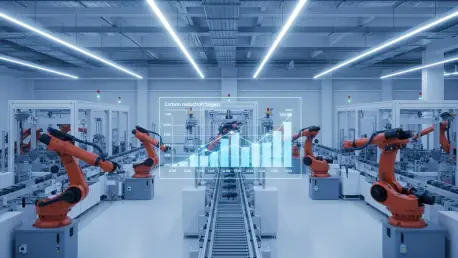
A central component of this data-driven strategy involves the use of Marginal Abatement Cost (MAC) curves, which provide a visual representation of various carbon reduction options sorted by their cost-effectiveness. This analytical tool allows business leaders to see exactly where they can achieve the highest emissions reductions for the lowest investment, turning a vague environmental goal into a precise financial plan. Instead of guessing which upgrades will provide the best results, manufacturers can use these curves to prioritize projects that offer a high return on investment while simultaneously lowering their carbon footprint. This transition from abstract environmentalism to rigorous financial analysis is crucial for gaining buy-in from stakeholders who may be skeptical of green initiatives. By framing decarbonization as a series of calculated investments, the partnership ensures that every dollar spent on efficiency contributes directly to the long-term profitability of the firm.
Shifting Efficiency: From Cost to Investment
Treating energy efficiency as a core financial asset rather than a sunk cost represents a fundamental shift in how industrial leaders perceive their environmental responsibilities. When businesses view CO2 reduction as a way to lower operational expenses and increase production efficiency, the motivation to implement these changes becomes much stronger. The integration of advanced analytics into the decision-making process helps firms identify hidden inefficiencies in their current systems that may have been overlooked for years. By addressing these issues, companies can significantly reduce their energy bills and improve their overall operational performance, making them more competitive in an increasingly crowded market. This approach essentially turns decarbonization into a profit-driven endeavor, where the benefits of reduced emissions are matched by the tangible financial gains of a more streamlined operation. This synergy between environmental and economic goals is what drives the global transition.
Technical Innovation: Merging Heritage with AI
Engineering Expertise: Physical and Financial Support
Mitsubishi Heavy Industries brings a wealth of engineering knowledge to this partnership, having spent over a century refining manufacturing processes and developing some of the world’s most advanced industrial equipment. This deep technical foundation is essential for translating digital insights into physical reality, as software alone cannot reduce emissions without the hardware to back it up. MHI has already successfully implemented a wide range of energy-saving measures across its own extensive network of global plants, proving that these technologies work in diverse and demanding industrial environments. This real-world experience allows the partnership to offer solutions that are not just theoretically sound but are also proven to be reliable and effective under actual operating conditions. By drawing on this heritage, the collaboration provides manufacturers with the confidence that the upgrades they implement will perform as expected and deliver the promised energy savings.
Financial Frameworks: Overcoming Capital Barriers
Beyond providing the physical technology, MHI has also established a robust financial framework in cooperation with the Shoko Chukin Bank to help manufacturers overcome the initial capital barriers of decarbonization. This partnership ensures that businesses have access to the necessary funding to purchase high-efficiency equipment and implement large-scale upgrades without straining their liquidity. By offering tailored financial products and strategic advice, the framework helps companies bridge the gap between recognizing a need for change and having the actual means to execute it. This comprehensive support system is vital for the widespread adoption of green technologies, as many firms are often hesitant to commit to major investments without a clear and supportive financial path. The presence of a trusted financial partner adds a layer of stability to the decarbonization journey, making it a more attractive and feasible option for businesses across the industrial spectrum.
Digital Intelligence: Automated Auditing Systems
On the digital front, Green AI Co., Ltd. provides a sophisticated software ecosystem that serves as the brain of the partnership’s decarbonization efforts. This platform is powered by an extensive database of approximately 5,700 energy-saving measures, each categorized and analyzed for its potential impact on different types of industrial sites. When a company uses this system, the AI analyzes the specific emission profile and energy usage patterns of their facility to generate a highly customized reduction roadmap. This level of automation allows smaller firms to conduct the kind of in-depth energy audits that were once too expensive or complex for anyone but the largest corporations. By providing these advanced digital tools, Green AI enables manufacturers to pinpoint exactly where they are losing energy and which specific interventions will yield the best results, taking the guesswork out of the transition to a more sustainable and efficient operating model.
Securing the Future: Resilience and Energy Security
The collaboration between MHI and Green AI established a new benchmark for how industrial players can approach the dual challenges of profitability and sustainability. By combining deep engineering expertise with sophisticated artificial intelligence, the partners created a practical framework that made the transition to low-carbon operations both manageable and financially rewarding. Looking forward, the success of this initiative suggested that industrial leaders should prioritize the integration of digital analytics into their physical infrastructure to remain competitive. Businesses were encouraged to view decarbonization as a series of strategic investments rather than an unavoidable cost, focusing on projects that offered clear economic returns. The next phase of industrial growth will likely depend on the ability of firms to adopt these integrated solutions, ensuring that environmental performance becomes a core driver of operational excellence and energy security in the global marketplace.