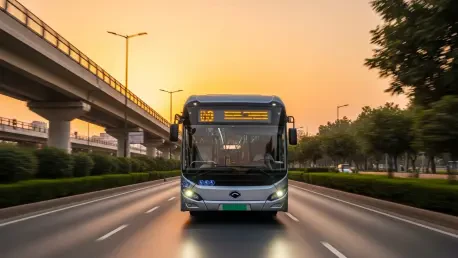

The ambitious drive to decarbonize India’s massive commercial transport sector depends heavily on dismantling the financial walls that separate private operators from the next generation of electric mobility. As the Ministry of Heavy Industries convened a high-level summit in New Delhi, the focus shifted from simple policy incentives toward a sophisticated financial ecosystem. This gathering, led by Secretary Shri Kamran Rizvi, specifically targeted the high interest rates and risk perceptions that have historically stifled the adoption of electric buses and trucks. By addressing these economic hurdles, the government aims to ensure that the transition to green energy is both environmentally essential and commercially lucrative for the private sector.
The Evolution of India’s Commercial Vehicle Landscape
For decades, the Indian logistics and public transport sectors have relied almost exclusively on internal combustion engines, driven by a robust diesel infrastructure and predictable resale markets. However, as the nation moves toward its 2070 Net Zero commitment, the reliance on fossil fuels has become an operational and environmental liability. Historically, the high upfront price of electric vehicles and uncertainty regarding battery degradation made lenders hesitant to provide favorable credit terms. This shift now represents a move from experimental pilot projects toward a mature, integrated financial framework designed to sustain long-term industrial growth.
Strategic Interventions: Bridging the Capital Gap
Partial Credit Guarantees: Mitigating Lender Risk
One of the most significant hurdles for private operators is the perceived risk by financial institutions regarding heavy-duty electric vehicle performance. To counter this, the government proposed Partial Credit Guarantee Schemes to act as a safety net for banks and non-banking financial companies. By covering a portion of potential losses in the event of a default, these mechanisms encourage lenders to extend credit more freely to fleet operators. This intervention is crucial for scaling the market, as it directly addresses the lack of historical data that often keeps interest rates prohibitively high.
Interest Subvention: Improving Total Cost of Ownership
While electric vehicles offer lower operating costs over time, the initial capital expenditure remains a formidable barrier for small-scale logistics firms. To bridge this gap, the government focused on Interest Subvention Mechanisms that effectively lower the cost of borrowing for e-Buses and e-Trucks. By subsidizing a portion of the interest rate, the total cost of ownership becomes far more competitive when compared to traditional diesel-powered alternatives. When the monthly financing burden is reduced, the economic rationale for switching to a green fleet becomes undeniable for private operators.
Stakeholder Alignment: Creating a Unified Financial Roadmap
The success of these financial interventions relied on a unified approach involving a diverse array of stakeholders, including the World Bank and major commercial banks. This collaboration ensured that policy was not created in a vacuum but addressed the specific concerns of truck and bus operators while satisfying risk-assessment criteria. By dismantling misconceptions regarding the scalability of electric transport, the Ministry of Heavy Industries fostered a cleaner national transport ecosystem that aligns with the vision of a self-reliant economy.
Emerging Trends and the Future of Indian Logistics
Looking forward, the electrification of the commercial fleet is set to be shaped by technological leaps and integrated policy-making. From 2026 to 2030, the market expects a significant shift toward “As-a-Service” business models, where operators pay for usage rather than ownership. Additionally, as domestic battery manufacturing increases under the Aatmanirbhar Bharat initiative, the reliance on external subsidies may give way to a self-sustaining market. This evolution suggests a future where industrial strategy and green financing work in tandem to foster a highly efficient transport sector.
Market Implications: Actionable Strategies for Private Operators
For private operators and investors, the current shift in the regulatory landscape offers several actionable paths to maintain a competitive edge. Businesses should proactively engage with emerging credit guarantee programs to negotiate better lending terms with specialized financial institutions. Furthermore, fleet managers needed to conduct thorough lifecycle analyses that accounted for interest subventions and reduced maintenance costs rather than focusing solely on the sticker price. Early adoption allowed companies to position themselves as leaders in a sector increasingly defined by sustainability and carbon efficiency.
Securing a Cleaner Future for Indian Transport
The strategic focus on financing gaps for electric commercial vehicles marked a major turning point in the national decarbonization journey. By addressing the twin challenges of high capital costs and lender risk through targeted credit guarantees, the government established a foundation for a resilient transport ecosystem. Authorities successfully identified that long-term energy independence required more than just vehicle subsidies; it demanded a robust secondary market for used batteries. Industry participants subsequently prioritized the development of standardized charging protocols to further de-risk investments. As these financial frameworks took hold, the move toward electric trucks remained a cornerstone of progress toward a modern and sustainable future.