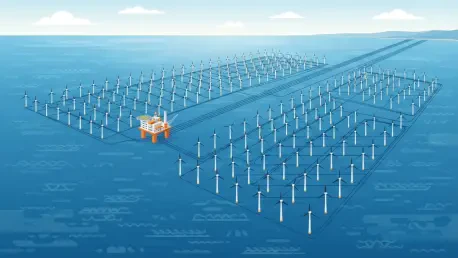

The horizon off the coast of East Anglia has transformed into a sprawling theater of engineering where massive turbines harness North Sea gales to power millions of homes across the United Kingdom. This shift represents more than just a change in power generation; it is a fundamental reconfiguration of the regional economy that has replaced traditional maritime industries with a high-tech energy sector. For decades, coastal towns faced the uncertainty of dwindling fishing and traditional shipping trades, but the current expansion of projects like East Anglia THREE has introduced a sense of permanence and purpose. As these structures rise from the seabed, they bring with them a demand for a highly specialized workforce, effectively ending the era when ambitious young professionals had to leave their hometowns for London or other urban centers to find meaningful careers. The region now stands as a primary engine for the national green energy transition, providing a blueprint for industrial evolution.
Transforming Regional Economics Through Renewable Energy
The Establishment of a Sustainable Employment Runway
The establishment of the East Anglia THREE project has created what industry analysts describe as a visible runway for long-term regional employment and local investment. This predictability allows small and medium-sized enterprises in Suffolk and Norfolk to scale their operations with the confidence that the demand for their services will remain consistent for decades. Unlike previous economic cycles that relied on short-term construction booms, the operational lifespan of modern offshore wind farms ensures that maintenance and technical support roles are embedded into the local fabric. Consequently, the perception of career longevity has shifted significantly among the local population, as the sector offers a stable path that combines technical expertise with environmental stewardship. This environment has encouraged a surge in apprenticeships and vocational training, bridging the gap between historical trade skills and the advanced engineering requirements of the clean energy industry.
Bridging Skills Gaps Through Technical Retraining
Transitioning into the renewable sector has become a tangible reality for experienced professionals from declining industries, as exemplified by the recent influx of technical workers. Retraining programs have enabled former boatbuilders and maritime engineers to apply their mechanical knowledge to the statutory inspection and maintenance of massive offshore wind turbines. These roles demand a high degree of physical resilience and technical precision, often requiring technicians to commute via specialized vessels from ports like Lowestoft to perform complex tasks in challenging marine environments. The day-to-day reality of this work involves early departures and intensive offshore rotations, but the sense of individual contribution to national climate goals provides a unique level of job satisfaction. By providing a clear pathway for professional pivots, the industry has successfully retained a wealth of manual and technical talent that might have otherwise been lost to regional economic stagnation or early retirement.
Navigating the Intersection of Infrastructure and Expertise
Strengthening Supply Chains and Port Operations
The Port of Lowestoft has emerged as a multidisciplinary crossroads where sophisticated management structures meet the logistical demands of massive offshore energy operations. Managed by organizations such as Associated British Ports, the site serves as a vital nerve center that supports everything from marine coordination to heavy engineering maintenance. This growth has necessitated the recruitment of professionals across a wide spectrum of disciplines, including environmental strategy, legal counsel, and complex project finance. The modern energy economy requires much more than manual labor; it demands a robust white-collar support system to navigate the regulatory and operational hurdles of offshore development. By integrating these diverse professional roles, the region has developed a comprehensive ecosystem that supports the entire lifecycle of a wind farm. This infrastructure ensures that the local economy is not solely dependent on the turbines themselves but also on the high-level services required to keep them operational.
Driving Long-Term Growth: Strategic Steps for the Workforce
Strategic partnerships between renewable energy firms and local educational institutions established a sustainable framework for regional talent retention and professional growth. These initiatives ensured that the younger generation viewed the offshore wind sector as a viable and prestigious career path rather than a temporary employment opportunity. It was essential for stakeholders to prioritize the development of specialized curricula that mirrored the evolving technical demands of the North Sea projects. By investing in regional infrastructure and workforce training, the community successfully mitigated the risk of a brain drain while securing its position as a global leader in clean energy. Future progress necessitated a continued focus on cross-sector collaboration to adapt to emerging technologies in energy storage and grid integration. The successful integration of these elements provided a stable economic foundation that supported both national environmental targets and the long-term prosperity of the residents across the entire coastal region.