
Transitioning a home from a soot-stained oil furnace to a modern, whisper-quiet electric heat pump was once a luxury reserved for the affluent, but King County’s recent initiatives have fundamentally rewritten that narrative for the region’s most vulnerable residents. The Energize program emerged from a critical need to bridge the gap between ambitious climate goals and the lived reality of families in White Center and Skyway. By focusing on areas where residents often struggled with high utility bills and inefficient heating, the pilot phase proved that green technology is not just an environmental necessity but a social lifeline. These early efforts established a scalable model, demonstrating that replacing old fossil-fuel systems with modern electric infrastructure can simultaneously lower carbon footprints and improve daily comfort. This success has since catalyzed a massive regional expansion, transforming a local experiment into a blueprint for a decarbonized future. By creating a clear roadmap for local governments to tackle carbon emissions while enhancing safety, the program demonstrated that environmental justice and fiscal responsibility are not mutually exclusive. As urban centers across the Pacific Northwest look for ways to modernize aging housing stocks, this initiative provides the necessary empirical data and community trust to drive large-scale change without leaving anyone behind.
Strengthening Local Infrastructure Through Partnership
Building a Multi-County Collaborative Network
Scaling the Energize program required a significant shift from local management to a unified regional approach that could handle the complexities of multi-jurisdictional governance. Leaders from four major counties—King, Pierce, Snohomish, and Kitsap—have come together to pool their political and financial resources, creating a collaborative framework that simplifies the decarbonization process for everyone involved. This partnership allows the region to more effectively utilize funding from the Washington State Climate Commitment Act and federal EPA grants, ensuring that climate resilience is treated as a shared priority rather than a series of isolated local projects. By standardizing the application process and contractor requirements across these borders, the initiative has reduced administrative friction, making it easier for eligible households to access modern technology. This streamlined approach ensures that every dollar spent is maximized for impact, fostering a resilient network that connects local needs with regional resources and expertise.
Establishing Regional Standards for Climate Safety
This regional consensus is based on the undeniable reality that extreme weather patterns, such as intense heatwaves and freezing winters, do not respect municipal boundaries or city limits. By working together, local governments can establish a consistent standard of safety and comfort for all residents, regardless of which county they call home or their proximity to the urban core. This joint effort not only makes the transition to clean energy more efficient but also builds a stronger, more connected infrastructure that is better prepared to handle the environmental challenges of the current decade. The alignment of these four counties creates a formidable bloc that can negotiate better rates for hardware and labor, driving down the overall cost of the transition. Furthermore, it fosters a sense of regional identity centered on sustainability, where the collective health of the community is prioritized over individual jurisdictional gains, ensuring long-term stability for all residents who are facing an increasingly volatile and unpredictable climate.
Strategic Investment in Vulnerable Sectors
Prioritizing Care Facilities and Childcare Centers
To maximize the impact of the program, funding is strategically allocated across four distinct categories that target the most critical community sectors where people spend their time. A major portion of the budget is dedicated to adult family homes and childcare providers, ensuring that seniors and young children—who are the most sensitive to temperature extremes—have access to reliable heating and cooling. These upgrades allow childcare centers to maintain a stable learning environment regardless of the weather outside and help seniors age in place safely, even during record-breaking summer heat. By securing these environments, the program protects the most fragile members of society while supporting the essential workers who care for them. This focus on care facilities recognizes that climate resilience is deeply intertwined with public health, requiring a targeted approach that addresses the specific needs of high-risk populations in the region through efficient, reliable, and sustainable mechanical upgrades.
Enhancing Public Spaces and Multifamily Housing
Beyond individual care facilities, the program invests heavily in affordable multifamily housing and public community buildings that serve as the backbone of social life in the Puget Sound area. By weatherizing these structures and installing efficient heat pumps, the initiative lowers utility costs for renters and reduces the operational expenses of local governments that manage these assets. Many of these upgraded public buildings also serve as emergency cooling centers, providing a vital safety net for the community during extreme weather events and ensuring that the region’s most vulnerable have a place to seek refuge. This dual-purpose investment transforms standard housing and civic centers into resilient hubs that can withstand environmental shocks. The focus on multifamily units ensures that the benefits of energy efficiency are shared by thousands of residents at once, creating a massive shift in regional energy consumption while providing direct financial relief to those who are often the most burdened by rising costs.
The Technical Edge of Electric Solutions
Heat Pump Technology: Efficiency and Performance
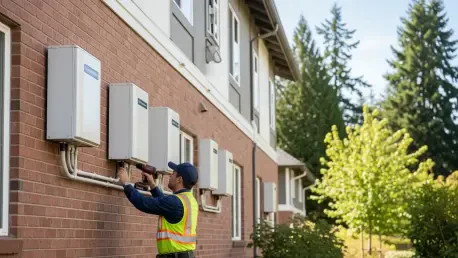
The technological cornerstone of the Energize program is the electric heat pump, which is significantly more efficient than traditional gas or oil furnaces found in older Pacific Northwest homes. Unlike older systems that generate heat through combustion, heat pumps move warmth from one place to another, providing an all-in-one solution for both winter heating and summer cooling requirements. This transition marks a clean break from outdated technology, helping households reduce their carbon footprint while drastically cutting their monthly energy consumption and overall utility costs. Modern heat pumps are engineered to operate effectively even in the damp, cool climate of the Central Puget Sound, offering a versatile alternative to fossil fuels. By replacing inefficient resistance heaters and oil boilers, the program not only modernizes individual homes but also stabilizes the regional power grid by reducing peak demand during the most extreme weather seasons of the year, ensuring long-term reliability for the entire energy network.
Indoor Air Quality and Environmental Health
In addition to energy savings, heat pumps offer critical health benefits by improving indoor air quality through advanced filtration systems that traditional furnaces simply cannot match. As wildfire smoke becomes a recurring seasonal threat in the Pacific Northwest, these systems allow residents to keep their windows tightly closed while still circulating filtered, climate-controlled air. This capability is essential for protecting respiratory health during smoke events, turning a home’s heating system into a primary line of defense against environmental pollutants and fine particulate matter. For families living near industrial zones or major highways, the continuous filtration provided by these units offers a significant improvement in daily life and long-term health outcomes. By addressing both thermal comfort and air purity, the technology serves as a comprehensive health intervention, ensuring that the interior of a home remains a safe sanctuary regardless of the deteriorating air quality or extreme environmental conditions outside.
Promoting Economic Fairness and Sustainability
Breaking Financial Barriers for Low-Income Families
One of the program’s most significant achievements is its commitment to making green technology accessible to everyone, regardless of their income level or financial standing in the community. By covering 100% of the installation costs for the vast majority of participants, King County Energize has removed the high upfront price tag that often prevents low-income families from adopting clean energy. This ensures that the transition to a greener economy is equitable and that the financial relief of lower utility bills is felt by those who need it most during these economically challenging times. Removing these barriers is essential for widespread adoption, as it allows families to prioritize other necessities like food and healthcare while still contributing to regional climate goals. This model proves that with the right financial support, low-income households can lead the way in the transition to sustainable energy, rather than being the last to benefit from the modernization of regional infrastructure.
Catalyzing the Local Green Workforce
The program also serves as a catalyst for the local green economy by creating high-quality jobs for contractors and installers within the immediate Central Puget Sound community. By hiring local workers for weatherization and heat pump installations, the initiative keeps investment dollars circulating in the region and helps build a workforce trained in future-proof technologies and systems. This dual focus on social equity and economic growth demonstrates that climate resilience is not just about the environment—it is about building a more stable and prosperous community for everyone. As the demand for these technologies grows, the regional labor market is evolving to meet the challenge, providing long-term career paths for local residents in the burgeoning clean energy sector. By investing in people as much as in hardware, the program ensures that the economic benefits of the energy transition are distributed fairly, strengthening the middle class while protecting the planet for the current generation.
Future Considerations: Actionable Insights for Regional Growth
The regional expansion of the Energize program demonstrated that successful decarbonization required a departure from fragmented, city-by-city strategies toward a more integrated approach. Analysis of the implementation results indicated that future programs needed to prioritize grid-edge storage solutions to complement the surge in electric heat pump adoption. It became clear that the next phase of resilience had to involve deeper integration with local utility companies to manage increased loads during peak demand periods. Policymakers discovered that providing technical training for property managers was as essential as the hardware itself to ensure long-term equipment efficiency and durability. By establishing a robust network of local contractors, the initiative proved that regional climate goals were achievable when financial incentives were combined with direct community outreach. These insights formed the basis for subsequent policy recommendations aimed at expanding similar equity-focused energy transitions into the transportation and commercial sectors.