
Modern architectural paradigms are undergoing a profound transformation as the global community grapples with the urgent necessity of reducing carbon emissions while managing escalating energy costs in rapidly expanding urban centers. No longer viewed as a mere secondary building component, advanced insulation technology has emerged as a cornerstone of sustainable infrastructure by providing a passive yet powerful barrier against thermal energy loss. As populations concentrate in dense metropolitan areas, the demand for high-performance envelopes has surged, forcing designers to rethink how buildings interact with their environments. These solutions do more than just stabilize indoor temperatures; they act as the primary defense against the volatility of climate patterns, ensuring that residential and industrial structures remain habitable and efficient without over-reliance on mechanical heating and cooling systems. By optimizing energy performance at the source, modern insulation provides a practical and scalable pathway toward creating resilient, eco-friendly urban environments that meet today’s standards.
Part 1: Economic Market Growth and Asset Valuation
The global insulation market is currently navigating an era of unprecedented expansion, with financial projections suggesting its valuation will more than double to approximately $132.90 billion by 2035. This sustained trajectory is largely driven by a fundamental shift toward high-performance materials that offer substantial long-term economic benefits through superior thermal optimization. Investors and property developers are increasingly recognizing that the initial capital expenditure associated with premium insulation is quickly offset by reduced operational expenses and increased asset value. This financial logic has transformed energy efficiency from a niche environmental concern into a core component of prudent real estate investment. As the cost of fossil fuels and electricity remains unpredictable, the ability to maintain internal climates with minimal energy input has become a significant competitive advantage. Consequently, the manufacturing sector is scaling up production of advanced thermal barriers to meet the global hunger for cost-effective sustainability solutions.
Part 2: Regulatory Mandates and Building Standards
Governments across the globe are reinforcing these market trends by implementing increasingly strict green building codes and offering lucrative subsidies for the retrofitting of aging structures. These legislative frameworks are designed to ensure that energy efficiency remains a top priority during both the design phase of new construction and the renovation of existing city blocks. By mandating higher R-values and better air sealing, regulatory bodies are effectively pushing the construction industry toward a zero-emission future. Furthermore, financial incentives such as tax credits and low-interest loans for energy-efficient upgrades are making it feasible for homeowners and commercial enterprises to adopt high-tech insulation solutions that might otherwise be cost-prohibitive. This synergy between public policy and private enterprise is accelerating the transition to a low-carbon economy, as buildings are responsible for a significant portion of global greenhouse gas emissions. These standards ensure that sustainable infrastructure becomes the default.
Part 3: Material Innovation and Fire Safety
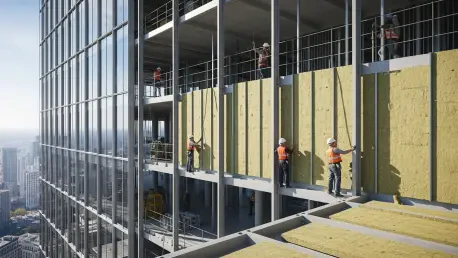
Material innovation sits at the absolute center of the current industry transformation, characterized by a decisive move toward multi-functional green products that offer more than basic heat retention. Modern insulation solutions are now engineered to address a variety of structural challenges simultaneously, such as fire resistance, acoustic dampening, and moisture management. For instance, mineral wool has gained widespread adoption due to its non-combustible nature and its ability to significantly reduce noise pollution in dense urban settings. These materials are derived from natural or recycled sources, aligning with broader sustainability goals while providing the physical durability required for high-rise construction. The ability to integrate soundproofing with thermal protection allows architects to design more comfortable living spaces without adding excessive weight or volume to the building’s footprint. This holistic approach to material selection reflects a deeper understanding of how physical environments impact human health and safety.
Part 4: High-Performance Aerogels and Bio-Based Solutions
Technological breakthroughs have also introduced specialized materials like high-tech aerogels and bio-based products into the mainstream construction market. Aerogels, often referred to as frozen smoke, provide exceptional thermal resistance with minimal thickness, making them an ideal choice for high-efficiency designs where space is at a premium. These advanced materials allow for the creation of ultra-thin walls that still meet or exceed rigorous energy standards, providing architects with greater creative freedom without compromising on performance. Simultaneously, there is a growing emphasis on bio-based insulation made from renewable resources like hemp, cork, or cellulose, which capture carbon during their growth cycle. These products offer a lower embodied carbon footprint compared to traditional synthetic options, appealing to developers who prioritize the lifecycle impact of their buildings. By diversifying the palette of available materials, the industry is ensuring that sustainable infrastructure can be tailored to specific needs.
Part 5: Future Resilience and Strategic Decarbonization
The collective shift toward advanced thermal solutions established a solid foundation for the next generation of sustainable infrastructure and urban planning. Stakeholders successfully moved beyond basic heat retention, embracing multi-functional materials that protected buildings from fire, moisture, and sound while drastically reducing energy consumption. To maintain this momentum, industry professionals prioritized the integration of bio-based materials and circular manufacturing processes into every project. They focused on retrofitting existing urban areas to ensure that older structures met modern efficiency standards, thereby preventing a widening gap in building performance. Furthermore, the expansion of insulation technology into the transportation sector provided a clear blueprint for how thermal management could solve complex challenges in mobility and energy storage. These efforts demonstrated that investing in high-performance envelopes was not merely an environmental choice but a strategic economic necessity for long-term resilience and equity.