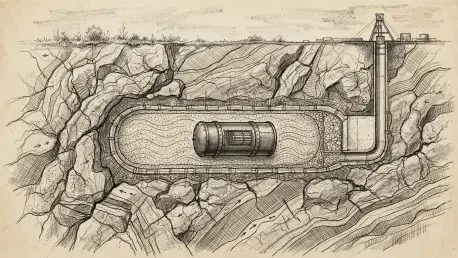

The deep geological facility is designed to withstand geological shifts by enclosing nuclear fuel in corrosion-resistant canisters buried in stable granite. This momentous step marks the first time any nation has successfully navigated the complex intersection of long-term environmental safety, advanced engineering, and public policy regarding nuclear waste. For decades, the global nuclear industry has grappled with the question of where to store highly radioactive spent fuel, often leaving it in temporary surface storage that requires constant maintenance and security. Finland’s decision to move forward with the Onkalo repository at Olkiluoto represents a shift from temporary solutions to a permanent, multi-millennial strategy. By authorizing the company Posiva to begin operations at its encapsulation plant and deep underground site, the government has demonstrated that technical hurdles can be overcome when paired with a transparent regulatory framework and consistent scientific investment over several generations. This achievement solidifies Finland’s role as a pioneer in the sustainable nuclear lifecycle, providing a definitive answer to the problem of radioactive waste.
Regulatory Precision: The Path to Final Approval
The path toward securing this operating license was defined by an exhaustive regulatory process that prioritized safety above all other considerations. Posiva submitted its formal application for the project five years ago, initiating a period of intense scrutiny by the Radiation and Nuclear Safety Authority. This agency conducted a comprehensive multi-year review that investigated every technical and environmental facet of the repository design. The regulator examined thousands of pages of scientific data to verify that the facility complied with the stringent requirements of the Finnish Nuclear Energy Act. This review was not merely a formality but a critical filter designed to catch any potential vulnerability in the storage plan. By the time the safety assessment was finalized in 2024, the evidence supported a conclusion of absolute compliance with national radiation and nuclear security standards, clearing the way for the government to issue the world’s first operating permit for such a deep geological installation.
Central to this regulatory framework is the requirement for ongoing monitoring and continuous justification of long-term safety. Even after the license was granted, the Finnish government maintained strict conditions that require the operator to update its safety case every ten years. This approach ensures that the facility remains aligned with the latest scientific discoveries and technological improvements in waste management. It also provides a mechanism for the government to intervene if any unforeseen geological or structural changes are detected within the repository site. The licensing process reflects a deep commitment to institutional integrity, where the independence of the regulator is respected by both the industry and the political leadership. This level of oversight has been essential for maintaining public confidence, as it demonstrates that safety is treated as a dynamic and evolving priority rather than a one-time checkbox completed during the initial construction phase of the project.
Operational Capacity: Managing National Nuclear Waste
Under the terms of the newly granted license, the facility is authorized to handle and dispose of a maximum of 6,500 uranium tonnes of used nuclear fuel. This material is primarily generated by the Olkiluoto and Loviisa nuclear power plants, which provide a substantial portion of the carbon-free electricity powering the Finnish economy. The repository serves as the essential final link in the lifecycle of this energy production, ensuring that radioactive byproducts do not remain a burden for future operators. By centralizing the disposal process at Onkalo, Finland has created a closed-loop system for its nuclear energy sector. The permit covers the entire projected volume of spent fuel from existing reactors, providing a clear and predictable path for the industry as it continues to support the national transition toward carbon neutrality. This capacity limit ensures that the facility remains within its design specifications while meeting the total disposal needs of the entire country.
In addition to the high-level spent fuel, the repository is licensed to manage various categories of low-level and intermediate-level radioactive waste produced during reactor operations and future decommissioning activities. The operational scope allows for the final disposal of up to 3,000 cubic meters of this secondary waste, which includes materials like contaminated tools and mechanical components from the power plants. Beyond the energy sector, the facility also fulfills a vital public service by accepting small quantities of radioactive waste from other domestic sources. This includes specialized materials from healthcare institutions, such as oncology departments, and various research laboratories across the country. This holistic approach to waste management ensures that Finland possesses a comprehensive national solution for all radioactive materials, effectively eliminating the risks associated with decentralized and temporary storage at various sites that were never intended for permanent disposal.
Engineering Excellence: Technical Innovations of Onkalo
The Onkalo repository is an engineering masterpiece located nearly 1,500 feet below the surface in ancient granite bedrock that has remained stable for nearly two billion years. This location was chosen for its exceptional geological properties, which serve as the final natural barrier against radiation release. Within this rock, a sophisticated multi-barrier system is employed to protect the biosphere. The primary containment consists of iron-copper canisters that are specifically designed to resist the corrosive effects of groundwater. These canisters are then surrounded by a buffer of bentonite clay, which expands when wet to form an impermeable seal that protects the metal from physical rock movements. Finally, the disposal tunnels are backfilled with swellable clay, ensuring that the entire underground complex becomes an integrated part of the geological landscape. This layered defense strategy is intended to keep the waste isolated for at least one hundred thousand years.
Ongoing construction at the site has already achieved several critical milestones, including the initiation of specialized drilling for the first deposition holes within the repository tunnels. These holes are being created using a sophisticated Deposition Hole Boring Machine, which ensures the precise dimensions required for the canisters and their clay buffers. Over its projected one-hundred-year operational lifespan, Posiva plans to excavate a vast network of tunnels stretching more than twenty miles across the underground site. This massive infrastructure project requires the continuous application of cutting-edge subterranean engineering techniques to maintain the integrity of the host rock. Each tunnel is meticulously mapped and tested before any waste is introduced, ensuring that the specific geological conditions meet the safety criteria established during the design phase. This rigorous approach to construction ensures that the facility can grow incrementally while maintaining safety and precision.
Strategic Legacy: Global Nuclear Sustainability
The success of the Onkalo project is widely attributed to Finland’s high level of social stability and the deep-seated public trust in scientific and regulatory institutions. Unlike many other nations where nuclear waste disposal has faced local opposition, the Finnish approach focused on early engagement and community empowerment. The municipalities of Eurajoki and Loviisa were involved in the process from the beginning, allowing for a transparent dialogue regarding the benefits and risks of the project. This collaborative environment helped to frame the repository not as a burden, but as a responsible solution to a collective national challenge. By viewing the management of radioactive waste as a generational responsibility, the Finnish public and its leaders have demonstrated a unique commitment to environmental ethics. This social consensus provided the political stability necessary for a project with a timeline spanning decades, ensuring consistent funding.
The granting of the operating license established a new standard for how modern societies managed the complex residues of industrial progress. Looking back at the research that preceded this milestone, it became clear that success depended on the integration of geological science with social transparency. Moving forward, the international community focused on standardizing the data archiving techniques used at Onkalo to ensure global nuclear safety remained consistent. Future projects in other jurisdictions benefited from adopting similar multi-barrier systems and local engagement strategies that were perfected in the Finnish bedrock. The completion of this phase also suggested that long-term waste solutions were essential for the continued expansion of nuclear energy as a climate solution. By securing a permanent disposal site, the industry finally addressed its most significant criticism, providing a clear path for future investments in the global clean energy infrastructure.