
Northback’s promise to extract millions of tonnes of coal while utilizing only a fraction of the water typically required by industry standards has drawn intense technical skepticism from experts. The proposed Grassy Mountain site in southern Alberta is marketed as a modern revitalization of historical mining operations, yet the scale of projected output—roughly 2.5 million tonnes of steelmaking coal annually—appears to defy the mechanical and geological limitations recorded over decades of provincial industrial activity. Independent analysts have pointed out that these figures seem to bypass nearly fifty years of historical data maintained by the Alberta Energy Regulator, which consistently shows that such high yields from limited footprints are unprecedented. This perceived gap between corporate ambition and the physical reality of resource extraction has sparked a heated debate regarding the project’s feasibility and the potential for regulatory oversight to be misled by overly optimistic forecasting.
Production Targets: Comparison With Historic Industrial Data
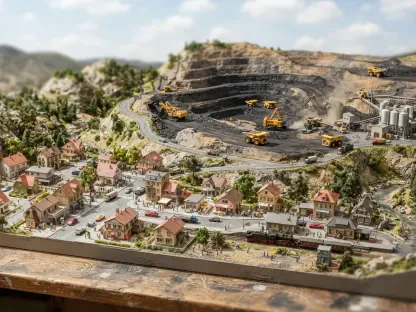
When evaluating the feasibility of the Grassy Mountain project, industry veterans often point to the Luscar mine, which long served as a benchmark for Alberta’s metallurgical coal production. Luscar was nearly three times larger in geographical footprint than the proposed Northback site, yet even during its peak operational years, its annual output remained significantly lower than the 2.5 million tonnes currently being promised. This discrepancy suggests a level of operational efficiency that has never been documented in the region. Critics argue that expecting a smaller site to outproduce a much larger, established predecessor by half a million tonnes per year requires a leap of faith that technical data simply does not support. If the geological density of the coal seams does not vastly exceed historical averages, the physical volume required to reach these targets would necessitate a much larger surface disturbance than what is currently being presented by the developers to the public and regulators.
Regional Output: Discrepancies in Operational Scale
Further skepticism arises when comparing the Grassy Mountain proposal to subsurface ventures located near Grande Cache. These operations occupied a land footprint more than twice the size of the proposed Northback site but frequently struggled to maintain an average of even one million tonnes of raw coal per year. The disparity between these historical performance metrics and Northback’s projections highlights a significant anomaly in the company’s business model. To achieve the stated goals, the mine would need to move material at a rate that exceeds the logistical capacity of similar regional infrastructures. This pattern of high-yield promises on limited land suggests that the project’s proponents may be emphasizing best-case scenarios rather than realistic averages. Without a transparent explanation for this sudden leap in productivity, the figures remain a primary point of contention for those familiar with the rugged terrain and the technical limits of the regional coal industry.
Water Consumption: Technical Contradictions in Scarcity
Water usage represents perhaps the most significant environmental hurdle for the proposed development, given its location within the Oldman River basin. This region is notorious for its water scarcity, with the basin being effectively over-allocated for decades, leading to a freeze on new licenses that has persisted for nearly twenty years. Northback’s claim that it can manage a massive production scale while using only a small fraction of the water required by previous mining generations is viewed by many hydrologists as a technical impossibility. Coal processing is an inherently water-intensive endeavor, requiring a consistent supply for washing, dust suppression, and tailings management. Any significant increase in demand from a new industrial player would inherently threaten the existing balance of the watershed, potentially impacting downstream agricultural users and the delicate ecological health of the river system, which already struggles to meet the needs of the surrounding communities.
Hydrological Physics: Industry Standards and Resource Realities
A comparison with currently active operations, such as CST Canada Coal, illustrates the scale of the water usage discrepancy. Data indicates that these active mines utilize approximately ten times the amount of water projected by Northback, despite producing only a fifth of the coal volume. Historical records from the Tent Mountain and Vicary Creek sites further reinforce this concern, as those operations required fifteen times the water for outputs that were significantly lower than the Grassy Mountain targets. Critics contend that the physics of coal refinement do not allow for such drastic reductions in water dependency without sacrificing the quality of the final product or neglecting essential environmental safeguards. The assertion that a record-breaking volume of coal can be processed with minimal water resources remains unproven and contradicts the established operational standards observed across the global mining sector, raising fears that water shortages could eventually lead to shortcuts.
Financial Risk: Economic Forecasting and Environmental Liability
The financial viability of the Grassy Mountain project is inextricably linked to its production targets, creating a high-risk scenario for the province. If the mine fails to meet its lofty goal of 2.5 million tonnes per year, the resulting revenue shortfall would severely compromise the company’s ability to fund daily operations and long-term environmental obligations. Specifically, the budget for land reclamation is often the first to suffer when an industrial project becomes unprofitable. There is a palpable concern among environmental advocates that if the coal reserves are not as accessible or as plentiful as claimed, the operation could be abandoned prematurely. This would leave the public to manage the astronomical costs of cleaning up a degraded landscape and addressing potential selenium contamination in the water supply. The history of the mining industry is littered with examples of “orphan” sites where corporate entities dissolved, leaving local taxpayers to bear the burden.
Social Impact: Socioeconomic Benefits versus Long-Term Debt
Beyond environmental risks, the inflated production estimates create a precarious socioeconomic situation for local communities in southern Alberta. Northback has utilized these high projections to build a narrative of widespread economic prosperity, promising thousands of jobs, significant tax contributions, and substantial royalties for the provincial government. However, if the physical coal output cannot match the theoretical models, these benefits will never materialize in the expected volume. This leaves the region vulnerable to a “boom and bust” cycle where the initial promise of growth turns into a long-term economic liability. The local workforce and businesses that invest in the region based on these projections may find themselves stranded if the mine’s output falters. By tying the project’s social license to such ambitious and questionable figures, the developers have created a situation where any technical failure directly translates into a failure to deliver on the promised public benefits.
Industry Patterns: Evaluating the Strategy of Over-Promising
Experts have noted that the tendency to over-promise during the regulatory approval phase is part of a broader, well-documented trend within the coal industry across North America. Recent studies from British Columbia have demonstrated that multiple mining operations consistently failed to meet their original targets for production, direct employment, and tax revenue once operations actually commenced. This historical context suggests that the Grassy Mountain proposal might be utilizing a tactical approach designed to bypass strict regulatory hurdles rather than presenting a grounded business model. By presenting “miraculous” efficiency gains, proponents may be attempting to minimize the perceived environmental impact while maximizing the projected economic value. This strategy places the burden of proof on regulators, who must determine if the proposal represents a genuine technological breakthrough or a calculated inflation of figures intended to secure approval for a project.
Strategic Oversight: Future Considerations for Regulatory Accountability
In conclusion, the evaluation of the Grassy Mountain mine project required a careful balance between the allure of industrial growth and the harsh realities of geological and hydrological constraints. As of 2026, the province faced a critical juncture where rigorous scientific oversight was the only barrier against potentially catastrophic environmental mismanagement. The path forward necessitated the implementation of independent, third-party audits of all production and water usage claims before any further permits were considered. It was also determined that stricter bonding requirements were essential to ensure that reclamation funds were secured upfront, protecting the public from future financial liabilities. Stakeholders recognized that transparency in reporting and a commitment to realistic, data-driven forecasting were the only ways to restore public trust in the resource sector. Ultimately, the focus shifted toward prioritizing the long-term health of the Alberta watershed and ensuring accountability.