
The global shipping and energy sectors are currently navigating a profound transformation where centuries-old traditions meet radical technological shifts to redefine how the planet powers itself. The maritime industry currently serves as the pivotal backbone for the most significant energy transformation in modern history, balancing the immediate needs of global commerce with an urgent transition toward carbon-neutral operations. This evolution is particularly evident in the way ocean-based logistics and offshore engineering are being repurposed to support the massive scaling of renewable energy installations across the world’s coastlines. While the traditional role of shipping was primarily centered on the transport of fossil fuels, the current landscape emphasizes the development of infrastructure that generates and transmits clean electricity directly to national grids. This shift requires a combination of sophisticated naval architecture, advanced materials science, and a complete reimagining of marine propulsion systems. As nations strive to meet ambitious climate targets, the maritime sector provides the necessary scale and technical expertise to turn theoretical energy models into functional, high-capacity realities.
Scaling Offshore Wind Infrastructure in Europe
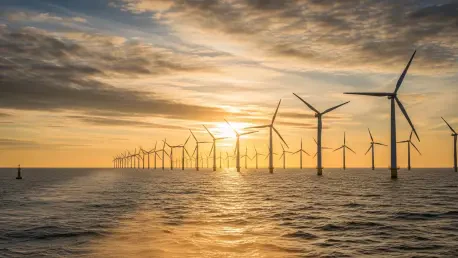
A notable example of this industrial shift is the rapid progress observed at the Dieppe Le Tréport offshore wind farm in France, which has recently entered a critical phase of its operational deployment. The installation of 500-megawatt turbines marks a significant milestone in the region’s efforts to diversify its power generation away from traditional sources. This project relies on the successful integration of massive offshore substations that act as the vital electrical link between the turbines located miles at sea and the terrestrial distribution networks. These substations are engineering marvels in their own right, designed to withstand harsh maritime conditions while managing the high-voltage transmission of clean energy for nearly a million residents. The precision required for these operations demonstrates how specialized maritime vessels and heavy-lift technologies are being adapted to handle components that are significantly larger and heavier than those found in standard industrial construction.
This level of infrastructure development is fundamentally dependent on an intricate web of international industrial cooperation that spans across several European borders. The construction of these wind farms involves a diverse group of stakeholders, including turbine manufacturers from Germany and logistics experts from Belgium and Luxembourg, who provide the specialized hardware and coordination necessary for sea-based assembly. This collaborative model has established a new standard for how large-scale renewable projects are executed, proving that the European market can successfully mobilize cross-border resources to achieve collective environmental goals. By leveraging the unique capabilities of each partner, the project minimizes the risks associated with such complex maritime environments while accelerating the timeline for commissioning. This synergy between diverse national industries illustrates that the transition to green energy is as much a feat of diplomatic and logistical management as it is a triumph of modern engineering.
Breakthroughs in Clean Fuel Technology
Innovations in alternative fuels are moving beyond the theoretical stage and are now providing concrete solutions for industries that have historically been difficult to decarbonize. Recent pilot programs have successfully demonstrated the conversion of organic waste from dairy farms into sustainable aviation fuel, a process that addresses two environmental challenges simultaneously. By capturing methane emissions from agricultural runoff and refining them into high-standard fuel, these systems create a carbon-negative energy source that can be utilized by existing aircraft fleets without requiring expensive engine modifications. This development highlights the versatility of modern chemical engineering in finding value within waste streams that were previously considered purely problematic. Such circular economy models are essential for reducing the total environmental footprint of global transport, offering a viable pathway for airlines to lower their emissions while maintaining their current operational infrastructure.
Simultaneously, the shipping industry is undergoing a similar revolution with the introduction of ammonia-fueled marine engines designed for long-distance cargo transport. These new propulsion units offer performance metrics that rival traditional diesel engines but do so with zero carbon emissions during their operational cycles. The recent surge in large-scale orders for these units, particularly for bulk carriers and tankers, indicates a significant shift in how global shipping firms perceive the future of their fleets. This transition toward ammonia is supported by advancements in storage and handling technologies that ensure the safe management of this fuel in volatile maritime environments. As the maritime sector continues to embrace these zero-carbon solutions, it sets a precedent for other heavy industries to follow, proving that the technology required for a post-fossil fuel era is already operational. These breakthroughs represent a tangible departure from reliance on carbon-heavy fuels for transoceanic logistics.
The Critical Importance of Specialized Subsea Services
While the focus remains heavily on the expansion of renewable energy, the maintenance of existing subsea infrastructure continues to be a vital component of global energy stability. In regions such as Ghana, specialized maritime firms are deploying advanced remotely operated vehicles to conduct intricate inspections and repairs on deepwater assets. These robotic systems are capable of operating at depths that are unreachable by human divers, ensuring that pipelines and wellheads remain structurally sound and free from leaks. The use of these technologies is critical for preventing environmental disasters that could devastate marine ecosystems and disrupt regional economies. By maintaining the integrity of these assets, the industry ensures a steady supply of energy while the transition to newer sources gradually matures. This high-tech maintenance work emphasizes that the shift to a sustainable future is not an overnight replacement but a carefully managed process that requires the continued reliability of legacy systems.
The role of specialized subsea services also extends to the decommissioning of older offshore sites and the preparation of the seabed for new renewable installations. This dual responsibility requires a high degree of engineering precision and an understanding of complex marine environments that can only be provided by experienced maritime operators. The data gathered by remotely operated vehicles during these missions provides invaluable insights into the condition of the seafloor, helping engineers to design more resilient structures for future wind and wave energy projects. This bridge between traditional oil and gas expertise and new renewable requirements is where much of the current maritime innovation is concentrated. As the demand for cleaner energy grows, the ability to safely manage both old and new underwater assets will remain a cornerstone of industrial strategy. This continuity of service ensures that the global energy market remains resilient against technical failures while facilitating the integration of diverse power sources into the wider grid.
Geopolitical Pressures and Future Energy Pathways
The journey toward a sustainable energy future is frequently obstructed by geopolitical tensions that force nations to prioritize immediate security over long-term environmental objectives. For instance, recent domestic fuel shortages and the impact of international sanctions in Russia have led to a temporary reduction in fuel quality standards to maintain internal supplies. This situation illustrates the fragile balance between adhering to climate commitments and ensuring that basic industrial and civilian needs are met during times of political crisis. When regional stability is threatened, the drive for cleaner technology can often take a backseat to the necessity of maintaining basic energy flows, creating a significant setback for global decarbonization efforts. This tension highlights the vulnerability of international energy transitions to economic and political shifts, reminding us that progress in technology must be accompanied by stable diplomatic frameworks to remain effective across different parts of the world.
The maritime sector consequently navigated a dual-speed world where rapid technological leaps in some regions contrasted sharply with the struggles to maintain basic supply chains in others. To address these disparities, stakeholders prioritized the deployment of modular green infrastructure that could be easily integrated into existing ports regardless of their local economic status. Industry leaders advocated for the establishment of global ammonia bunkering standards to accelerate the adoption of zero-emission vessels across all major trade routes. Furthermore, the development of robust subsea monitoring networks became a critical requirement for protecting both legacy pipelines and new renewable cables from physical and digital threats. These steps ensured that the transition remained inclusive and resilient against the localized disruptions seen in the mid-2020s. By focusing on cross-compatible technologies and enhanced logistical transparency, the maritime industry solidified its position as the primary driver of a stable global energy network.