
Christopher Hailstone is a veteran of the energy sector, possessing deep expertise in utility management, renewable integration, and grid security. As we navigate the complexities of 2026, his insights into the evolving landscape of consumer energy resources—from solar panels to electric vehicles—are more critical than ever. In this discussion, we examine the federal government’s recent structural changes aimed at standardizing household energy technology. We explore the transition of oversight to the Department of Climate Change, Energy, the Environment and Water, the creation of new regulatory bodies, and the ongoing tension between centralized government control and industry-led innovation.
Our conversation covers the strategic shift toward a unified technical code, the role of expert advisory committees in bridging the knowledge gap within government, and the challenges of ensuring transparency in a ministerial-led regulatory environment. We also delve into the practical implications for grid reliability and the potential costs passed down to consumers.
The establishment of the Technical Requirements Office and the National Technical Regulator marks a significant shift in federal oversight; how do these bodies redefine the management of household energy technology?
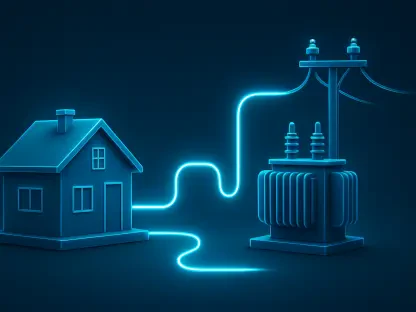
The creation of the Technical Requirements Office, or TRO, within the department fundamentally changes the hierarchy of how we treat home-scale energy. By housing these technical requirements directly within the Department of Climate Change, Energy, the Environment and Water, the government is signaling that consumer energy resources are no longer just “fringe” additions but core components of the national grid. Simultaneously, the Consumer Energy National Technical Regulator, which we call CENTR, will act as the enforcement arm hosted by the Clean Energy Regulator to ensure everyone plays by the new rules. This two-pronged approach aims to bring order to a market that has often felt like the Wild West, where inverters and batteries frequently struggled to communicate with each other or the broader system. From my perspective, seeing these institutional structures finally take shape provides a sense of stability, even if the bureaucratic weight behind them feels quite heavy for an industry that moves at lightning speed.
With the formation of a seven-person technical requirements advisory committee, how effectively can independent specialists influence a system where the federal minister holds the final decision-making power?
The Technical Requirements Advisory Committee, or TRAC, is essentially a bridge designed to fill a critical capability gap because, frankly, the specialist expertise required for these systems often sits outside of government walls. These 7 individuals are tasked with providing evidence-based, credible advice to ensure that technical requirements keep pace with the sheer velocity of industry evolution. However, the framework is very clear that the federal energy minister remains the ultimate gatekeeper, possessing the authority to approve or reject the Forward Work Plan and any updates to the Technical Code. This creates a fascinating tension where the experts provide the “how,” but the politician decides the “if” and “when.” While this ensures democratic accountability, there is a palpable concern among my peers that expert advice could be sidelined by political expediency, especially since the minister or their delegate is the final accountable decision-maker.
Industry advocates have expressed concerns about a “dangerous precedent” regarding transparency; what are the specific risks of developing the Technical Code within a government department rather than an independent body?
The primary risk is the potential for a “closed-door” culture that limits the meaningful consultation industry needs to thrive. When you develop a code internally within a department like DCCEEW, you risk losing the rigorous, transparent testing that usually accompanies independent regulatory processes. Critics have pointed out that the current path wasn’t even among the four options originally canvassed by the Australian Energy Market Commission in their 2023 report, which naturally raises eyebrows about why this specific route was chosen. We have already seen instances where advice leaned toward allowing distribution network service providers to take on broader roles, which could lead to a fragmented system of 13 different IT processes. This lack of transparency can leave consumers footing the bill for duplicated systems and inefficient rollouts, which is a frustrating prospect for those of us who have spent years advocating for a streamlined, consumer-first energy market.
How does the new CER Technical Code practically address the challenges of integrating diverse products like solar inverters, batteries, and electric vehicle chargers into a single, reliable system?
The Technical Code is designed to be the “universal translator” for the grid, setting common rules that ensure a battery from one manufacturer and an EV charger from another can actually talk to each other and the network. It focuses heavily on the technical standards for inverters and supply equipment, ensuring that as more price-responsive resources come online, they don’t destabilize the local voltage or cause frequency issues. By mandating that these products meet specific connection and operational standards, the code supports a much more reliable energy system that can handle the bi-directional flow of power. Every two years, this code will undergo updates to ensure it reflects the latest technological leaps, though this timeline requires a high degree of agility from the minister to remain relevant. I’ve seen firsthand the frustration of installers dealing with mismatched equipment, so a national standard that provides a “plug and play” experience for the consumer would be a massive leap forward in day-to-day grid management.
Why was the department-led model chosen over expanding the Clean Energy Regulator’s role, and what does this decision suggest about the future of energy governance?
The decision to bypass the Clean Energy Regulator for standard-setting, despite its existing relationships with installers and manufacturers, seems to stem from concerns about its long-term resourcing and experience in enforcing power sector objectives. While the AEMC previously noted that leveraging the CER’s existing regulatory ties would be beneficial, the government ultimately decided that the policy-setting power should remain closer to the executive branch. This suggests a move toward “direct-action” governance where the minister has a more hands-on role in the energy transition, rather than delegating it to an arm’s-length statutory body. For the industry, this is a double-edged sword; it can lead to faster implementation of government priorities, but it also means that a change in government could result in sudden, unpredictable shifts in technical requirements. It reflects a desire for tighter control over a sector that is increasingly viewed as vital to national security and economic stability.
What is your forecast for the integration of consumer energy resources over the next few years under this new ministerial-led framework?
I expect we will see a rapid, if somewhat friction-filled, consolidation of standards that will finally eliminate the patchwork of state-based rules that has plagued the market. The success of this framework will depend entirely on whether the Technical Requirements Office can maintain a genuine dialogue with the 7 experts on the advisory committee and avoid becoming a bureaucratic bottleneck. We will likely see an increase in the visibility and participation of price-responsive resources as the new Wholesale Market Settings Review reforms take hold, though the financial burden on consumers remains a major “if” depending on how network charges are handled. Ultimately, if the government prioritizes transparency and follows the evidence-based advice of the TRAC, we could see a world-class grid where 29,000 or even millions of individual devices act as a single, resilient power plant. However, if the process remains opaque and dominated by political shifts, we risk building a fragmented and expensive system that fails to live up to the promise of the renewable transition.