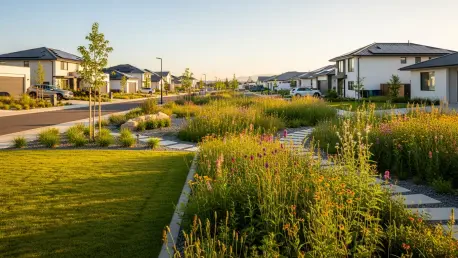

The rapid expansion of Homeowners Associations across the United States has fundamentally altered the landscape of local governance, with nearly two-thirds of all newly constructed residential properties now falling under the jurisdiction of these private corporate entities. Originally established to protect property values through the enforcement of rigid aesthetic standards, these organizations have evolved into influential players that dictate the environmental footprint of millions of households. While many residents appreciate the maintenance of shared amenities and neighborhood consistency, a growing tension exists between traditional management styles and the urgent need for ecological resilience. Conservation social scientists Daniel Kramer and Madeline Carr characterize this dynamic as a double-edged sword, noting that while HOAs have historically acted as formidable barriers to green initiatives, their collective structure offers a unique opportunity to scale up conservation efforts rapidly. By shifting from a focus on visual uniformity to one of environmental stewardship, these associations could become the primary drivers of sustainable living in the modern era.
The Tension Between Aesthetic Standards and Ecological Needs
The quintessential American suburb has long been defined by the image of the pristine, emerald-green turfgrass lawn, a standard that many Homeowners Associations strictly enforce through detailed landscaping regulations. This commitment to a specific visual ideal often results in the creation of biological monocultures that require staggering amounts of potable water, chemical fertilizers, and synthetic pesticides to maintain their unnatural appearance. Beyond the direct chemical impact, these manicured landscapes provide almost no support for native pollinators, birds, or beneficial insects, effectively turning vast swaths of residential land into ecological deserts. The reliance on fossil-fuel-powered maintenance equipment further exacerbates the carbon footprint of neighborhoods that were designed before the current understanding of climate stability. As water scarcity becomes a more pressing reality in many regions from 2026 to 2030, the insistence on water-intensive greenery is increasingly viewed as a relic of a previous century that no longer aligns with the practicalities of natural resource management.
When individual residents attempt to break away from these resource-heavy norms by introducing native habitats or xeriscaping, they frequently encounter severe legal and financial resistance from their neighborhood boards. A prominent case in Maryland illustrates this struggle, where a couple spent over a decade cultivating a diverse native plant garden only to face a protracted lawsuit from their HOA that ultimately forced the removal of the habitat in favor of standard turf. These conflicts highlight a broader national trend where private covenants can effectively override an individual’s desire to participate in wildlife conservation or water reduction efforts. The psychological and financial toll of these disputes often discourages other residents from pursuing sustainable upgrades, reinforcing a status quo that prioritizes a narrow definition of beauty over the health of the local ecosystem. Consequently, the rigid enforcement of aesthetic uniformity serves as a significant deterrent to the grassroots environmental movements that are necessary for building climate-resilient communities in the face of shifting global temperatures.
Legal Barriers and the Inertia of Outdated Covenants
The structural resistance to sustainability within Homeowners Associations is deeply embedded in their founding legal documents, known as Covenants, Conditions, and Restrictions. These CCRs are typically drafted by developers during the initial planning phases of a subdivision to ensure a consistent look that appeals to a wide range of potential buyers and protects early investment values. Once the developer transfers control to the residents, these rules become notoriously difficult to amend, often requiring a supermajority vote that is nearly impossible to achieve due to voter apathy or internal disagreements. As a result, regulations written decades ago continue to govern modern neighborhoods, mandating outdated practices such as the prohibition of solar panels or the requirement of specific high-water-use vegetation. This legal inertia prevents associations from adapting to the technological and environmental shifts occurring between 2026 and 2032, leaving residents trapped in a regulatory framework that was never designed to address energy efficiency or water conservation.
Empirical research conducted in Michigan provides a sobering look at how these foundational rules actively stifle green initiatives across diverse residential areas. A systematic analysis of dozens of association governing documents revealed that nearly half of the surveyed HOAs mandated traditional lawn maintenance while also requiring impervious driveway surfaces that contribute to poor stormwater management and increased urban heat. Furthermore, many of these organizations maintained explicit restrictions on energy-saving measures, treating solar installations as aesthetic eyesores rather than essential infrastructure for a modern power grid. These findings suggest that the default operational framework for most HOAs is inherently biased toward a resource-intensive visual standard that ignores the long-term ecological consequences of land management. By prioritizing short-term property value perceptions over the functional health of the environment, these associations create a systemic barrier that makes it difficult for even the most well-intentioned homeowners to reduce their environmental impact.
Harnessing Collective Power for Environmental Stewardship
Despite the historical challenges, the centralized nature of Homeowners Associations provides a powerful mechanism for implementing large-scale environmental changes that would be impossible to achieve on a lot-by-lot basis. In Madison, Wisconsin, specific neighborhoods that shifted their focus toward sustainability-oriented rules witnessed a dramatic increase in native plant cover, rising from less than 7% to over 42% in a relatively short period. This data demonstrates that when an HOA board decides to prioritize ecological health, they can transform fragmented residential lots into cohesive, functional wildlife corridors that support local biodiversity. By mandating the use of native species and placing limits on the percentage of turfgrass allowed, these organizations can leverage their governance to create a unified impact that far exceeds the efforts of individual homeowners. This collective approach not only improves the local environment but also fosters a shared sense of community identity centered around stewardship, proving that the same structures once used to enforce uniformity can be repurposed to promote a flourishing natural habitat.
As the public becomes more aware of the environmental consequences of private residential rules, state governments have begun to implement legislative guardrails to limit the restrictive power of HOA boards. Numerous states have already enacted laws that prevent associations from prohibiting the installation of rooftop solar panels or the use of drought-resistant landscaping, commonly referred to as xeriscaping. These legal protections ensure that private contracts cannot be used to veto broader public policy objectives such as water conservation, renewable energy adoption, and carbon footprint reduction. This legislative shift is crucial for protecting the rights of homeowners who wish to modernize their properties in response to the environmental challenges predicted for the years from 2026 to 2035. By establishing a baseline of environmental rights, state intervention is helping to level the playing field and encouraging HOAs to work collaboratively with residents rather than acting simply as adversarial gatekeepers. This evolving legal landscape is a vital component in transforming these private organizations into active partners in the broader movement toward sustainable development.
Sustainable Neighborhoods: The Path Toward Future Resilience
The transformation of Homeowners Associations from obstacles into catalysts for change required a fundamental shift in how property values and community aesthetics were perceived by both boards and residents. Successful communities transitioned by adopting model governing documents during the initial development phase, ensuring that sustainability was woven into the neighborhood’s DNA from the very beginning. Instead of adhering to mid-20th-century norms, these modernized organizations led the way in implementing smart irrigation systems, restoring native meadows, and integrating decentralized energy solutions across entire blocks. The collaboration between urban planners, developers, and local governments provided the necessary framework for HOAs to shed their reputations as rigid enforcers of the status quo. By focusing on actionable steps like reducing impervious surfaces and incentivizing the removal of thirsty lawns, these private entities demonstrated that they could indeed serve as vital bridges to a more resilient future. The lessons learned from these transitions suggested that the key to suburban sustainability lay in reimagining local governance.
To move forward effectively, it remained essential for homeowners to engage directly with their boards to promote transparent decision-making processes regarding environmental upgrades. Communities that established dedicated green committees were often able to bypass the legal rigidities of CCRs by creating voluntary programs and educational workshops that encouraged sustainable practices without the need for immediate rule changes. These grassroots efforts within the associations helped to build the consensus required for eventual supermajority votes on more permanent policy shifts. By highlighting the long-term cost savings associated with reduced water use and lower energy bills, these committees shifted the narrative from one of sacrifice to one of financial and environmental gain. Ultimately, the successful integration of sustainable practices depended on a multi-faceted approach that combined state-level protections with local advocacy and professional management strategies. The evolution of these organizations proved that governance could be both protective and progressive.