
The staggering disparity between boardroom optimism and the reality of technical implementation has created a systemic risk that threatens to undermine the most ambitious environmental commitments across the African continent. This phenomenon, increasingly recognized as the sustainability execution gap, highlights a disconnect where senior executives project confidence in achieving climate goals while the professionals on the ground report a much grimmer reality. As global standards for environmental, social, and governance (ESG) reporting tighten, the inability to move from theoretical strategy to tangible project delivery has become more than a management hurdle; it is now a critical barrier to economic growth and social stability. For African nations, the urgency of this situation is amplified by the massive demand for resilient infrastructure, from renewable energy grids to sustainable water management systems, all of which require a precision in execution that is currently lacking in many organizational structures.
This disconnect is not merely a matter of differing perspectives but reflects a deep-seated structural failure within the modern corporate hierarchy. While high-level commitments are essential for setting a direction, they often lack the granular detail and resource allocation required for project managers to succeed. In a landscape where the global climate crisis demands immediate and effective action, bridging this gap is the only way to ensure that the billions of dollars allocated to green initiatives actually result in measurable benefits for the population. Understanding the nuances of this execution gap reveals that the path to a sustainable future in Africa depends less on the volume of promises made and more on the technical capacity to fulfill them through disciplined project management and transparent reporting.
The Confidence Divide: Why Executive Ambition Often Fails to Reach the Project Floor
The internal landscape of modern organizations reveals a striking psychological and operational chasm that threatens the viability of sustainability initiatives. Recent research indicates that a massive 85 percent of sustainability executives believe their organizations are on track to meet climate goals, yet only 20 percent of project-level professionals share this optimism. This “confidence gap” suggests that leadership remains largely insulated from the technical, logistical, and financial hurdles that project teams face daily. When the boardroom sets a target for carbon neutrality without a clear understanding of the procurement delays or labor shortages on the ground, the resulting friction creates a culture of frustration and missed deadlines that can stall even the most well-meaning programs.
Beyond the difference in perception, the fragmentation of corporate hierarchy serves as a primary driver of this implementation failure. Data suggests that 60 percent of organizations have failed to integrate sustainability into their core operational methodologies, leaving it as a peripheral “special project” rather than a foundational business practice. This lack of integration means that sustainability goals are frequently sidelined when they conflict with immediate financial targets or operational requirements. Without a unified framework that aligns executive vision with the practical realities of the project floor, organizations remain trapped in a cycle of high-level aspiration and low-level execution, a state that is increasingly unsustainable in an era of heightened accountability.
The insulation of leadership often stems from a reporting culture that prioritizes positive optics over raw data. Executives may receive polished summaries that gloss over the systemic bottlenecks preventing progress, leading to a false sense of security regarding the organization’s trajectory. Meanwhile, project managers grapple with unclear mandates and a lack of authority to make the necessary changes to workflows or supply chains. This disconnect essentially creates two different versions of the organization: one that exists in strategic documents and another that operates in the field. Until these two worlds are synchronized through better communication channels and shared performance metrics, the execution gap will continue to widen, leaving ambitious climate goals as nothing more than unfulfilled potential.
Beyond Paper Goals: The High Stakes of Sustainable Execution for African Nations
For African nations, the transition from climate planning to physical infrastructure represents one of the most significant challenges of the current decade. The debate has moved past whether sustainability is necessary to the much more complex question of how it can be physically delivered in an environment characterized by resource constraints. As national climate plans are refined, the focus must shift toward building the actual grids, water systems, and transportation networks that will define the continent’s economic resilience. This physical transition is the only way to move beyond “paper goals,” ensuring that political will is backed by the engineering and management capacity required to turn blueprints into functional reality.
The developmental bottleneck in Africa is often tied to the massive infrastructure deficit that hinders industrialization and trade. Because financial resources are limited, every project must deliver maximum value, making the “execution gap” particularly costly for developing economies. A failure to deliver a renewable energy project on time does not just represent a missed corporate target; it results in continued energy poverty and stunted economic growth for entire communities. Consequently, project delivery has become a prerequisite for resilience, requiring a shift in focus from broad policy statements to the rigorous details of credible feasibility studies, transparent procurement, and the development of a skilled local contracting workforce.
Ensuring that sustainable projects succeed requires a move away from short-term thinking toward a long-term vision of utility and social impact. When projects are rushed or poorly planned to meet political deadlines, they often lack the long-term functionality needed to survive harsh environmental conditions or shifting economic landscapes. Avoiding these pitfalls requires a commitment to the “how” of execution, where technical excellence and local context are prioritized over the simple completion of a checklist. By focusing on the tangible outcomes of infrastructure—such as reliable kilowatt-hours delivered or clean liters of water provided—African nations can build a foundation of credibility that attracts further investment and fosters genuine social progress.
Navigating the Friction Points: Why Sustainable Projects Often Stumble
Executing sustainable initiatives is a complex endeavor fraught with specific friction points that can derail even the most well-funded efforts. Research has identified six core areas where projects consistently stumble: measurement difficulties, weak integration, unclear goals, competing priorities, data scarcity, and governance gaps. Measurement remains one of the most persistent hurdles, as many organizations find it difficult to quantify the non-financial benefits of a green initiative. Without a clear way to measure success, these projects often lose support when compared to traditional investments that offer immediate and easily calculated financial returns, leading to a loss of momentum and resources.
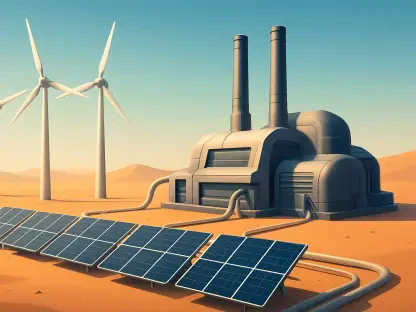
A critical distinction must be made between the “output” of a project and its eventual “outcome.” A project that is finished on time and within budget might be considered an output success, but if it fails to provide long-term social value or environmental protection, it is an outcome failure. For instance, constructing a solar farm is an output; however, if that farm fails to integrate with the local grid or becomes inoperable due to poor maintenance within three years, the intended sustainability outcome has not been achieved. This distinction is vital for developing economies where poorly designed investments impose significant fiscal burdens on governments, as the costs of repair and replacement far outweigh the initial savings of a cheaper, less sustainable design.
Governance gaps and data scarcity further complicate the landscape, creating an environment where “green-labeled” projects may lack actual substance. When there is no reliable baseline data to track progress, it becomes nearly impossible to hold project teams or leadership accountable for environmental impacts. Moreover, when governance structures are weak, sustainability goals are often the first to be sacrificed when a project faces budget overruns or schedule delays. Addressing these friction points requires more than just better software or higher budgets; it requires a fundamental shift in how organizations prioritize the long-term health of the planet and its people alongside their traditional operational goals.
The Financial Imperative: Linking Credible Delivery to Global Green Capital
The global financial landscape has undergone a profound shift, with access to capital now increasingly tied to an organization’s ability to demonstrate measurable sustainability outcomes. Investors and development finance institutions are no longer satisfied with vague promises; they demand granular data that proves a project is delivering on its environmental and social claims. This new reality has turned the execution gap into a major financial risk for African businesses. Those who cannot bridge the divide between strategy and delivery find themselves locked out of the growing pool of ESG-aligned capital, which is often available at more favorable rates than traditional commercial financing.
Demonstrating a “return on sustainability” requires a complete overhaul of traditional reporting paradigms. Instead of merely documenting expenditures, organizations must now show how those expenditures translated into reduced carbon footprints, improved community health, or enhanced resource efficiency. This shift toward transparent monitoring and reliable data baselines is essential for building investor trust. As experts from the Project Management Institute have noted, weak reporting systems have evolved into a significant liability. In an era where “greenwashing” is met with severe regulatory and market penalties, the ability to provide credible, verifiable evidence of sustainable impact is a competitive necessity.
The transition to a more rigorous reporting environment also offers an opportunity for African organizations to differentiate themselves in the global market. By adopting international standards for transparency and impact measurement, local firms can signal their maturity and readiness for large-scale investment. This process involves more than just a change in accounting; it requires the integration of sustainability data into every stage of the project lifecycle, from initial planning to final operation. When data flows seamlessly from the project floor to the financial report, it creates a virtuous cycle of accountability and investment, ensuring that capital is directed toward the projects that are most likely to deliver genuine, long-lasting value.
Building the Capacity to Deliver: Practical Frameworks and Professional Upskilling
Closing the sustainability execution gap requires the adoption of practical frameworks that operationalize the “triple bottom line” of People, Planet, and Prosperity. One such approach is the P5 Standard, which provides a structured methodology for assessing the environmental and social impacts of a project throughout its entire lifecycle. By moving beyond a narrow focus on carbon footprints, the P5 Standard allows project managers to consider a broader range of factors, such as community engagement, labor practices, and long-term economic viability. This holistic view is essential for navigating the complex trade-offs that often arise in African development projects, where the need for industrial growth must be balanced with the protection of local ecosystems.
Implementing impact scoring and escalation mechanisms early in the project lifecycle is another critical step in ensuring sustainable delivery. These tools allow teams to identify potential environmental or social risks before they become insurmountable problems, enabling proactive decision-making that saves both time and money. For example, an impact score might reveal that a proposed transport corridor would significantly disrupt a local watershed, prompting a redesign that preserves the ecosystem while still meeting the project’s economic goals. By embedding these considerations into the project management process rather than treating them as an afterthought, organizations can ensure that sustainability is a driver of value rather than a source of delay.
The demand for a workforce capable of navigating these complexities has led to a growing emphasis on professional upskilling and certification. There is a rising need for engineers, managers, and executives who understand both conventional project management metrics—such as budget and schedule—and modern sustainability requirements. Certifications like the Certified Sustainable Project Professional are becoming increasingly important as they provide a standardized benchmark for expertise in this field. As African educational institutions and professional bodies prioritize these skills, they are building a talent pool that can deliver the next generation of resilient infrastructure, ensuring that the continent’s sustainability goals are met by a workforce equipped for the challenges of 2026 and beyond.
The bridge between executive ambition and practical reality was finally constructed through a dedicated effort to professionalize the delivery of sustainability. Organizations across Africa realized that bridging the execution gap was not an optional endeavor but a survival necessity in a world that demanded tangible results. By shifting the focus from “paper goals” to physical infrastructure and by adopting rigorous standards like the P5, these entities transformed their operations. The integration of sustainability into the core of project management ensured that every dollar spent contributed to long-term prosperity. Ultimately, the success of these initiatives was defined by the functional assets created—the power stations that stayed online, the water systems that remained clean, and the communities that flourished under a new era of accountable and sustainable development.