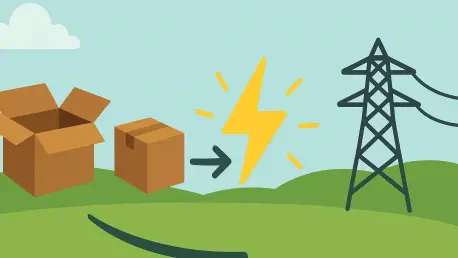

The presence of calcium carbonate in printed packaging can lead to slagging and fouling, which are mineral deposits that insulate boiler surfaces and reduce overall power plant efficiency. This technical reality stands in stark contrast to the sheer ubiquity of cardboard, which has become an indispensable element of the global logistics and retail sectors, with an annual production volume now exceeding 72 million tons. As the backbone of the shipping industry, cardboard is generally categorized into two primary forms: paperboard, used for lighter applications like consumer product boxes, and corrugated fiberboard, which provides the structural integrity required for heavy-duty shipping containers. In the United Kingdom, the domestic cardboard industry is valued at approximately £6.2 billion, reflecting its massive footprint in the national economy. However, as consumer habits continue to favor e-commerce—a sector that generates nearly five times the packaging waste of traditional brick-and-mortar retail—the volume of cardboard entering the waste stream has surged to over 5.48 million tons per year. This scale of material availability, while challenging for municipal waste management, presents an unprecedented opportunity for the energy sector to harness a reliable, indigenous feedstock that could stabilize the grid while reducing the environmental impact of traditional disposal.
Environmental Limitations: The Methane Threat and Fiber Decay
While the United Kingdom has established a robust infrastructure for recycling, cardboard is subject to a physical limitation known as fiber degradation that prevents it from being a permanent circular resource. Wood fibers can typically undergo the recycling process between five and seven times before they become significantly shortened and lose the structural strength necessary for high-quality packaging. Once these fibers reach their inevitable end-of-life stage, the material is often diverted toward composting or landfilling. However, disposing of cardboard in these anaerobic environments is environmentally detrimental because the biological breakdown of organic material releases methane. According to data from 2026, methane remains a primary concern for climate scientists due to its global warming potential, which is significantly higher than that of carbon dioxide over a century-long horizon. Diverting this material away from landfills and toward energy production prevents these harmful emissions and extracts final utility from a resource that would otherwise contribute to atmospheric warming.
The transition toward treating end-of-life cardboard as a bioenergy feedstock represents a move toward valorization, where waste is redefined as a high-value industrial asset. By capturing the energy stored within these cellulose-rich fibers through controlled thermal conversion, the UK can effectively close the loop on the packaging lifecycle. This approach is particularly relevant as the nation seeks to minimize its environmental footprint without compromising the efficiency of its logistics networks. Utilizing cardboard for bioenergy serves as a practical solution to the inherent limitations of the recycling loop, ensuring that fibers which are too weak for manufacturing still provide a tangible benefit to society. Furthermore, thermal recovery in modern facilities allows for the precise management of emissions, offering a much cleaner alternative to the uncontrolled release of gases associated with organic decomposition in landfill sites. This strategic shift not only addresses waste volume issues but also aligns with the broader goals of a sustainable, low-carbon economy.
National Energy Evolution: Moving Beyond Imported Biomass
The energy landscape in the United Kingdom has undergone a dramatic transformation, moving away from a historical reliance on coal and toward a diversified mix of renewables. As of 2026, bioenergy accounts for approximately 14% of the nation’s total electricity production, playing a critical role in providing baseload power that complements intermittent sources like wind and solar. However, the industry currently maintains a heavy dependence on imported wood pellets, primarily sourced from North America. This reliance on overseas supply chains has sparked significant debate regarding the carbon footprint associated with trans-Atlantic shipping and the vulnerability of the national grid to geopolitical disruptions. With government subsidies and frameworks like Renewable Obligation Certificates transitioning between 2026 and 2028, there is an urgent and growing need for energy producers to identify more cost-effective, locally sourced, and sustainable fuel alternatives that can be processed within domestic borders.
Simultaneously, new regulatory catalysts are reshaping how waste is managed and utilized across the country. The “Simpler Recycling” initiative and the implementation of Extended Producer Responsibility (EPR) are designed to standardize waste collection and ensure that packaging producers bear the financial responsibility for the entire lifecycle of their products. These policies are expected to result in a more consistent and predictable supply of waste cardboard, making it a more attractive feedstock for the bioenergy sector. By aligning power generation strategies with these regulatory shifts, the UK can create a more streamlined and resilient approach to biomass fuel. This domestic strategy reduces the “transported carbon” associated with imports and enhances national energy security by utilizing a resource that is already being generated in massive quantities within every city and town. The integration of waste cardboard into the energy mix thus serves as both an environmental imperative and a strategic economic move.
Scientific Validation: Performance in High-Temperature Systems
Extensive research conducted at the University of Nottingham has provided a scientific foundation for the use of waste cardboard in industrial combustion systems. Researchers utilized drop tube furnaces and muffle furnaces to evaluate how the material performs under different operational conditions, focusing on its viability for both stoker furnaces and pulverized fuel boilers. Stoker furnaces, which are common in energy-from-waste plants, typically operate at around 900°C and require a longer residence time for the fuel to fully combust. In contrast, pulverized fuel boilers used in large-scale power stations operate at temperatures exceeding 1,300°C and require the fuel to be ground into a fine powder for rapid ignition. The Nottingham studies confirmed that cardboard possesses favorable thermal characteristics, igniting quickly and maintaining a stable burn rate. This versatility suggests that cardboard can be a successful candidate for either dedicated energy production or for co-firing alongside traditional wood biomass.
The experimental data indicates that the cellulose-rich composition of cardboard allows it to react well to high temperatures, often matching or exceeding the ignition efficiency of standard wood pellets. Because cardboard is essentially processed wood fiber, its thermal behavior is predictable, which simplifies the process of integrating it into existing power plant infrastructures. The research highlighted that cardboard’s high volatility ensures a rapid release of energy, a critical factor for maintaining the high-pressure steam required for electricity generation. This scientific validation is an essential prerequisite for industrial adoption, as it reassures plant operators that switching to a cardboard-based feedstock will not compromise the stability or output of their systems. By proving that cardboard can meet the rigorous technical demands of modern combustion, these findings have opened the door for a large-scale shift in how the energy industry views paper-based waste products.
Mechanical Barriers: Overcoming Material Handling and Milling Issues
Despite its impressive combustion performance, cardboard presents unique mechanical challenges during the pre-processing phase that must be addressed to ensure operational efficiency. In order to be utilized in high-efficiency pulverized fuel boilers, biomass must be milled into a fine powder, but cardboard does not fracture as cleanly as raw wood. When processed in standard industrial knife mills, the tough, interlocking fibers of cardboard have a tendency to form “fluffy agglomerates.” These are low-density, tangled mats of material that can cause severe blockages within a power plant’s fuel delivery system. Such clumps often lead to “bridging” in storage silos, where the material becomes stuck and stops flowing, and can clog the conveyor systems that transport fuel to the furnace. These mechanical interruptions lead to increased maintenance costs and operational downtime, which can offset the economic benefits of using a cheaper waste-based feedstock.
Furthermore, the physical structure of these fluffy fiber mats introduces specific safety risks that require careful management. The high surface-area-to-volume ratio of these agglomerates makes them highly combustible and prone to spontaneous ignition if not stored correctly. In a high-pressure power plant environment, the presence of low-density, airborne fibers can also increase the risk of dust explosions. To mitigate these hazards, industry experts are currently investigating advanced milling techniques and pelletization processes designed specifically for paper-based materials. By densifying the cardboard into pellets before milling, operators can produce a more uniform and manageable fuel that behaves more like traditional wood biomass. Solving these handling issues is a critical step in the commercialization of cardboard as a bioenergy source, as it ensures that the material can be moved and stored with the same level of safety and reliability as existing fuel types.
Chemical Profiles: Managing Ash and Inorganic Additives
The chemical composition of cardboard is a significant factor that distinguishes it from traditional raw biomass feedstocks. During the industrial manufacturing process, various additives are incorporated into the paper pulp to enhance the performance of the final product. One of the most common additives is calcium carbonate, which is used as a filler to improve the stiffness, opacity, and surface quality of the cardboard for printing. While these characteristics are essential for the packaging industry, the presence of calcium carbonate has a direct impact on the combustion process. Thermal analysis has identified a specific “fingerprint” at approximately 600°C, where the calcium carbonate decomposes, leading to a higher ash content compared to untreated wood. This inorganic matter does not burn away and instead accumulates as ash, which can reach levels near the maximum thresholds set by international biofuel standards.
This elevated ash content requires plant operators to implement rigorous management strategies to prevent damage to the boiler systems. When cardboard is burned, the mineral residues can form molten deposits that adhere to the internal heat-exchange surfaces of the boiler, a process known as slagging. These deposits act as insulation, significantly reducing the efficiency of heat transfer and requiring frequent, labor-intensive cleaning cycles. Research has also demonstrated that printed cardboard, which often contains glossy coatings and high levels of decorative pigments, produces significantly more ash than plain, unprinted corrugated boxes. This finding suggests that a selective sourcing strategy—prioritizing plain shipping containers over highly decorated consumer packaging—could be the most effective way to minimize maintenance issues. By understanding these chemical dynamics, the bioenergy industry can optimize its fuel mixtures and boiler settings to accommodate the unique requirements of paper-based feedstocks.
Strategic Advantages: Energy Security and Carbon Dynamics
Evaluating the energy density of waste cardboard reveals that it offers a sustainable return on investment, even though it possesses a lower heating value than coal or some premium wood pellets. The Higher Heating Value of cardboard is approximately 16 MJ/kg, which means a larger volume of material is required to generate the same amount of electricity as traditional fossil fuels. However, the strategic value of cardboard lies in its status as an indigenous, readily available resource that eliminates the carbon emissions associated with international logistics. In 2026, as the UK focuses on reducing “transported carbon,” the ability to source fuel from local waste streams rather than importing it from North America provides a clear environmental and economic advantage. This shift strengthens the nation’s energy security by insulating it from the price volatility and supply chain vulnerabilities of the global biomass market.
Moreover, utilizing waste cardboard in energy production offers a sophisticated pathway toward carbon-neutral or even carbon-negative operations when combined with modern technology. Carbon Capture and Storage (CCS) systems, such as the non-amine trials currently underway at major energy recovery facilities, allow for the extraction of carbon dioxide from flue gases before it enters the atmosphere. Because the carbon in cardboard is originally derived from atmospheric CO2 during the growth of trees, capturing it during combustion effectively removes that carbon from the natural cycle. This makes the thermal recovery of cardboard a potentially powerful tool for active decarbonization. By transforming a ubiquitous waste product into a source of clean energy, the United Kingdom can move closer to a true circular economy where the end of one product’s life serves as the vital beginning of another’s contribution to the national energy grid.
Forging a Resilient Infrastructure: Final Outcomes and Integration
The integration of waste cardboard into the national bioenergy strategy represented a significant step forward in the UK’s pursuit of a circular economy. Researchers and industrial stakeholders successfully identified the mechanical and chemical parameters required to transform packaging waste into a viable power source. By addressing the technical hurdles of fiber agglomeration and ash management, the industry established a framework that allowed for the seamless co-firing of cardboard alongside traditional biomass. This development ensured that millions of tons of material, which previously faced the risk of landfill disposal and methane generation, were diverted toward high-value energy recovery. The transition was supported by the alignment of waste management policies, which provided a consistent and high-quality feedstock for power stations across the country.
Stakeholders ultimately realized that the strategic benefits of using domestic cardboard far outweighed the initial challenges of system recalibration. The move effectively reduced the national carbon footprint by eliminating the need for extensive trans-Atlantic biomass shipping while simultaneously enhancing the stability of the domestic energy supply. Throughout this period, the collaboration between academic institutions and energy providers led to the implementation of advanced pre-processing techniques that minimized operational downtime. As the infrastructure for carbon capture continued to mature, the thermal recovery of cardboard proved to be an essential component of the nation’s broader decarbonization efforts. This initiative demonstrated that with the right scientific insight and regulatory support, even the most common waste materials could be repurposed to meet the urgent energy demands of a modern society.