
The rapid expansion of renewable energy sources across the national power grid has created an urgent demand for more sophisticated and scalable storage solutions capable of handling massive fluctuations. As the global economy transitions away from traditional fossil fuels, the ability to capture surplus energy during peak production hours for use during high-demand intervals has become a fundamental requirement for maintaining grid stability. Traditional battery technologies, while highly effective for consumer electronics and small-scale mobile applications, often struggle to meet the rigorous physical and economic demands of utility-scale storage, which require exceptional longevity, safety, and manufacturing efficiency. In response to these pressing challenges, Pacific Northwest National Laboratory has unveiled a pioneering initiative focused on the development and production of advanced prismatic battery cells. This strategic move aims to bridge the long-standing gap between laboratory-scale chemical innovation and large-scale industrial manufacturing, providing a robust blueprint for the future of resilient energy storage systems that can support a fully modernized and reliable power infrastructure.
Strategic Evolution of Battery Architecture
Transitioning to Prismatic Cell Manufacturing
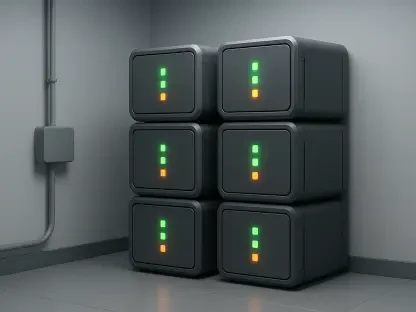
Prismatic cells represent a significant technical departure from the cylindrical designs that have historically dominated the energy storage market, offering a rectangular form factor that allows for much higher packing density within battery modules. Unlike cylindrical cells, which inherently leave small gaps of unused space when bundled together, prismatic cells can be stacked flush against one another to maximize the total energy density of the storage system. This specific geometry is particularly advantageous for grid-scale installations where physical footprint and thermal management are paramount concerns for utility providers. Pacific Northwest National Laboratory is currently leveraging this architecture to optimize the internal chemistry of lithium-ion systems, ensuring that each cell can withstand the repeated deep-discharge cycles required by utility-scale operations. By focusing on this specific form factor, the engineering team is addressing the practical physical constraints of large-scale battery enclosures while simultaneously improving the overall mechanical stability of the power storage units.
The establishment of a specialized manufacturing line at the laboratory marks a critical step in de-risking the production process for private sector partners and commercial battery manufacturers. By implementing a dedicated line for prismatic cell fabrication, the facility allows researchers to refine the precision of electrolyte filling, electrode coating, and terminal welding within a highly controlled environment. These manufacturing refinements are essential for reducing the internal resistance of the batteries, which in turn minimizes energy loss during the charging and discharging phases of operation. Furthermore, the ability to test various electrode materials in a prismatic configuration provides invaluable data on how different chemical compositions react to the stresses of a rigid, flat enclosure. This pilot-scale operation serves as a vital intermediary, ensuring that new battery chemistries are not only high-performing in a laboratory setting but are also fully compatible with high-speed automated assembly processes that define modern industrial manufacturing.
Enhancing System Performance and Durability
Beyond the physical shape and manufacturing efficiency, the advancement of prismatic technology centers on the integration of enhanced safety protocols and thermal regulation mechanisms. Prismatic cells typically feature larger surface areas compared to their cylindrical counterparts, which facilitates more efficient heat dissipation and reduces the risk of localized hotspots that can lead to thermal runaway. The laboratory has incorporated sophisticated pressure-relief vents and reinforced casings into the design to ensure that any internal pressure buildup is managed safely without compromising the integrity of the surrounding battery pack. These safety features are indispensable for grid energy storage, where thousands of individual cells are interconnected and a single failure could potentially lead to a cascading catastrophic event. Ongoing research into non-flammable electrolytes and heat-resistant separator materials further strengthens the resilience of these units, making them a more viable and secure option for placement in urban environments or near critical utility infrastructure components.
The successful deployment of this prismatic battery line established a foundation for transforming how utilities manage the fluctuating loads of a modernized power network. Engineers and policymakers now have access to a standardized platform that demonstrates the feasibility of high-capacity storage without the traditional overhead costs associated with custom battery architectures. To capitalize on these technical advancements, the next phase of development should prioritize the integration of localized manufacturing hubs and the standardization of cell dimensions across the industry to further drive down costs through economies of scale. Industry leaders should look toward adopting these prismatic standards to ensure interoperability between different storage providers and grid management software systems. By proving that these advanced cells could be produced at scale while maintaining rigorous safety and performance metrics, the project simplified the path toward a more sustainable energy future. The transition to this technology moved from a theoretical laboratory concept to a practical, deployable solution for global energy security.