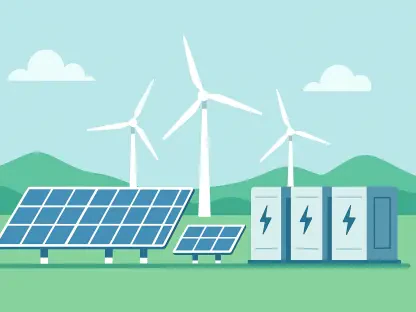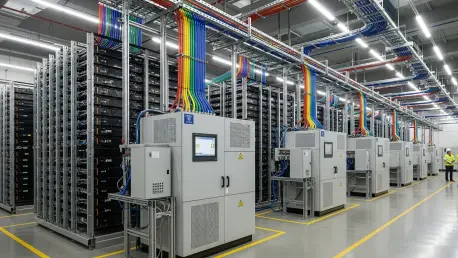

The aggressive pursuit of a carbon-neutral economy has forced industrial giants to reconsider the geographical distribution of their manufacturing assets to ensure maximum efficiency. As India accelerates its transition toward a green energy grid, the reliance on high-capacity energy storage systems has moved from a secondary requirement to the very backbone of national infrastructure. This shift has created a high-stakes environment where domestic manufacturing policies favor companies that can scale rapidly while maintaining lean operational costs.
Current market segments are witnessing a massive surge in lithium-ion battery production, driven by a national push for self-reliance in the supply chain. Global sustainability goals are no longer just idealistic targets; they are practical catalysts for regional corporate restructuring. Companies are now evaluated not just by their total output, but by how effectively they align their production hubs with the evolving demands of a decentralized power grid that requires centralized reliability.
Strategic Shifts and Growth Drivers in the Energy Storage Market
Emerging Trends in Manufacturing Consolidation and Resource Optimization
The industry is currently moving toward a lean philosophy that prioritizes the centralization of production facilities to drastically reduce operational overhead. By consolidating manufacturing footprints, firms can better manage the integration of automated technologies and high-output machinery. This trend is particularly evident as companies move away from maintaining multiple smaller sites in favor of primary technological hubs that can serve a national client base with higher precision.
Consumer and industrial demand is increasingly focused on large-scale lithium-ion solutions that can handle the intermittent nature of renewable energy sources. To meet this need, market leaders are reallocating capital from secondary assets and peripheral locations. This capital is being injected into specialized facilities capable of producing advanced battery chemistries, ensuring that resource optimization leads to tangible improvements in product quality and delivery speed.
Market Performance Indicators and Financial Growth Projections
Recent fiscal data reveals that plant closures, while seemingly disruptive, often have a negligible impact on a firm’s total net worth compared to the long-term savings they generate. For instance, analyzing turnover metrics shows that even when a facility accounts for ten percent of revenue, its removal can improve overall margins if the underlying overhead was disproportionate. Investors are increasingly looking past short-term production dips to focus on the fiscal health of the consolidated entity.
Stock performance remains sensitive to these structural changes, yet the overarching trend in the energy sector points toward long-term appreciation for efficient operators. While shareholder liquidity and trading volume might fluctuate during a transition period, the push for large-scale energy projects ensures a steady demand for capital. This creates a fertile ground for firms that prioritize fiscal discipline as a means to attract institutional investment for upcoming renewable ventures.
Navigating Operational Volatility and Supply Chain Complexities
Consolidating a manufacturing footprint is not without its inherent risks, as logistical transitions can often lead to temporary revenue gaps. Moving production from one region to another requires a meticulous recalibration of the supply chain to ensure that raw material flow remains uninterrupted. Furthermore, scaling up a centralized facility to meet the collective demand of several previous sites poses significant technological and management hurdles that must be addressed to maintain market share.
Maintaining investor confidence during these periods of volatility requires transparent communication regarding the long-term benefits of a leaner structure. Companies must demonstrate that the Noida facility, or similar hubs, possesses the capacity to absorb the workload of discontinued plants without sacrificing delivery timelines. Successfully navigating these complexities allows a firm to emerge more resilient, shielding itself from the inefficiencies that typically plague decentralized and fragmented manufacturing operations.
Compliance Frameworks and the Importance of SEBI Governance
The regulatory landscape for listed energy firms is becoming increasingly rigorous, with a focus on strict adherence to the Securities and Exchange Board of India (SEBI) guidelines. Reporting requirements, such as those found under Regulation 74(5), are essential for maintaining the integrity of the financial markets. These regulations ensure that the process of security dematerialization is handled with absolute transparency, which in turn fosters trust among institutional and retail investors alike.
Professional registrar services play a critical role in this ecosystem by acting as the bridge between the corporation and the regulatory authorities. When a company reports minimal activity in security conversions, it often signals a stabilized investor base that is committed to the long-term vision of the firm. Such stability is vital for maintaining market reputation, as it suggests that the core stakeholders are not reacting impulsively to short-term operational changes or plant closures.
Positioning for Long-Term Sustainability in a Competitive Market
The future of the Indian energy sector is clearly tilting toward an agile model that favors cost-efficiency and rapid response times. As competition intensifies, the ability to secure major government tenders will depend on a company’s proven ability to deliver high volumes at competitive prices. Strategic partnerships and targeted acquisitions will likely become the norm as firms seek to integrate localized supply chains and reduce their dependence on imported components.
Looking ahead, the development of advanced battery chemistries and localized energy storage solutions will define the next phase of growth. Companies that have already streamlined their operations are better positioned to pivot into these new technological areas without being weighed down by legacy infrastructure. This transition represents a fundamental change in how energy infrastructure is built, moving away from sheer volume and toward a more sophisticated, technology-driven approach to power storage.
Assessing the Resilience of a Leaner CLN Energy Strategy
The decision to close the Pune facility served as a definitive tactical move that prioritized operational excellence over maintaining a broad but inefficient geographical presence. This consolidation effort successfully insulated the broader business from the rising costs of decentralized management while ensuring that the primary production hub remained at peak performance. The move demonstrated that fiscal discipline can be a powerful tool for navigating the inherent volatility of the lithium-ion market.
Stakeholders should now consider the implications of such efficiency-first strategies when evaluating the long-term investment potential of the energy sector. Prioritizing lean operations allowed the organization to maintain its growth trajectory despite a challenging market environment. Future considerations will likely involve how this refined manufacturing base can be leveraged to capture emerging opportunities in the renewable grid, suggesting that the path to true sustainability lies in the careful balance of technological innovation and rigorous cost control.