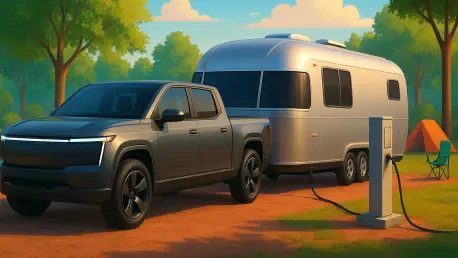

The low center of gravity and substantial weight of the GMC Sierra EV’s battery pack provided unexpected stability against crosswinds and the aerodynamic pressure of passing semi-trucks. This mechanical confidence was a cornerstone of a recent 3,800-mile summer expedition involving a 2025 GMC Sierra EV Denali Max Range and a 28-foot Airstream trailer. For many years, the primary barrier to adopting electric trucks for heavy-duty tasks has been range anxiety, yet this specific journey across eastern Canada and Maine proved that strategic logistics could dismantle those concerns. By shifting the focus away from high-speed highway chargers and toward the existing electrical infrastructure of RV campgrounds, the feasibility of long-distance electric towing became a reality. The 72-day trip demonstrated that a high-capacity battery could manage the significant energy demands of a large trailer while maintaining a travel rhythm that mirrored traditional camping experiences. This successful traversal suggests that the electric pickup is no longer just a local utility vehicle but a capable cross-country cruiser for specialized hauling.
Comparing Range Capacity: Charging Speed Versus Battery Volume
The transition from a Tesla Model Y to the GMC Sierra EV illustrated a critical paradigm shift in how drivers should evaluate towing performance. While smaller electric vehicles often boast impressive charging speeds, their limited battery volume frequently creates a bottleneck during long-distance hauling. In previous years, travelers found that the Tesla’s efficiency was severely hampered by the aerodynamic drag of a trailer, necessitating frequent stops to charge the battery to 100%. Because charging speeds drop off dramatically after 80%, these sessions became long and inefficient, turning what should have been a quick stop into a lengthy ordeal. The experience confirmed that for heavy-duty applications, a vehicle must prioritize energy storage capacity over mere charging velocity. This realization pushed the move toward the GMC platform, which offered a larger physical buffer to absorb the high energy consumption inherent in pulling thousands of pounds against wind resistance at highway speeds.
Choosing the GMC Sierra EV meant accepting a trade-off where raw capacity replaced the convenience of rapid top-ups. The Sierra’s massive battery pack requires approximately 40 minutes to move from a 10% to 80% state of charge, which is double the time required for a smaller vehicle like the Model Y. However, the sheer amount of kilowatt-hours available in that 80% window allowed the truck to cover an entire day’s travel distance without needing to visit a single roadside station. This capacity-first approach proved far superior for heavy-duty towing, as it effectively eliminated the “range-to-charging” stress that typically plagues electric truck owners. By starting each day with a nearly full battery, the driver could maintain highway speeds and navigate complex routes without constantly monitoring the energy percentage. This shift in perspective from charging speed to total range highlights a maturing market where utility and endurance are becoming the primary metrics for success in the heavy truck segment.
Technical Performance: Analyzing Efficiency and Reliability Data
The technical data harvested during the 3,800-mile trek provides a sobering yet optimistic view of current electric towing efficiency. The Sierra EV, which carries a GM-estimated unhitched range of 460 miles, saw its performance predictably cut by half when hitched to the Airstream, averaging approximately 1.17 miles per kWh. While this reduction sounds substantial, the massive scale of the Denali’s battery meant that a 95% charge still provided a “safe” towing distance of about 217 miles while leaving a 20% reserve for emergencies. In contrast, the unhitched efficiency during sightseeing errands remained high, averaging 2.30 miles per kWh over more than 1,600 miles of secondary road driving. These metrics prove that while physics cannot be cheated—towing a heavy, non-aerodynamic load will always be energy-intensive—a sufficiently large battery can compensate for these losses. The ability to maintain a consistent 200-mile range while hitched represents a significant milestone that brings electric trucks into direct competition with internal combustion counterparts.
A surprising outcome of the data was the discovery that the Sierra EV could bypass public charging infrastructure on the majority of travel days. Out of 29 total days spent on the road with the trailer hitched, the vehicle only required a roadside fast-charge on 10 occasions. This means that for 65% of the trip, the truck operated entirely outside the traditional highway charging network. The large battery served as a vital buffer against environmental variables that often cripple smaller EVs, such as sudden headwinds or steep elevation gains through mountainous regions. For example, during the ascent into rugged provincial park territories, the truck’s energy density allowed it to absorb the increased load without the driver needing to search for a charger prematurely. This resilience suggests that the future of electric towing lies not just in more chargers, but in larger, more resilient energy storage systems that can handle the unpredictability of long-distance travel across diverse North American landscapes.
Infrastructure Optimization: Utilizing Campground Resources for Practical Travel
Integrating energy recovery into the natural downtime of a camping trip emerged as the most efficient way to manage a high-capacity electric truck. Approximately 60% of the total energy used during the journey was sourced directly from campground electrical pedestals while the vehicle was parked overnight. This “charge-where-you-sleep” model transformed the potentially slow charging process of a large battery into a seamless background task. It also solved one of the most frustrating logistical hurdles of electric towing: the need to unhitch the trailer at public charging stations. Most highway chargers are designed for passenger cars and do not accommodate the length of a truck and trailer, forcing drivers to detach their loads before they can plug in. By utilizing campsite power, the travelers avoided this labor-intensive task on 19 travel days, only having to unhitch four times throughout the entire 10-week excursion. This synergy between vehicle needs and lifestyle habits represents a sophisticated evolution in the electric travel experience.
Beyond the purely electrical considerations, the mechanical engineering of the Sierra EV Denali enhanced the physical experience of long-distance hauling. The inclusion of four-wheel steering proved to be an indispensable asset when navigating the narrow, winding loops of provincial parks that were never designed for modern, oversized rigs. This maneuverability, combined with the instantaneous torque of the dual-motor electric drivetrain, allowed for effortless control on steep access roads where traditional engines might struggle with gear hunting or overheating. Furthermore, the truck’s massive storage capacity, including the front trunk or “frunk,” allowed the travelers to carry lifestyle equipment like Starlink satellite terminals and outdoor cooking gear without cluttering the interior cab. This combination of heavy-duty hardware and smart utility features established the Sierra as a true basecamp on wheels. The vehicle provided a stable, powerful platform that made the physical act of towing less fatiguing, allowing the occupants to focus on the journey rather than the mechanics of the haul.
Strategic Takeaways: The Future of Heavy-Duty Electric Towing
The completed 3,800-mile journey established that the 2025 GMC Sierra EV Denali Max Range was a transformative tool for those who adopted a flexible travel philosophy. The experiment proved that by prioritizing battery volume over charging speed, long-distance towing became a manageable and even relaxing endeavor. Future travelers should consider that successful electric hauling required a shift in mindset, favoring slower, multi-day itineraries that leveraged existing RV infrastructure rather than high-speed highway networks. It was recommended that prospective owners audit their desired routes for campground power availability, as these locations acted as the primary fuel source for the majority of the trip. Furthermore, while the truck handled the mechanical stresses of the road with ease, the physical limitations of specific campsites remained the only true bottleneck to the experience. Ultimately, the data suggested that as battery technology matures from 2026 to 2028, the reliance on high-speed public chargers would likely decrease as vehicles gained the capacity to bridge larger gaps between destinations independently.