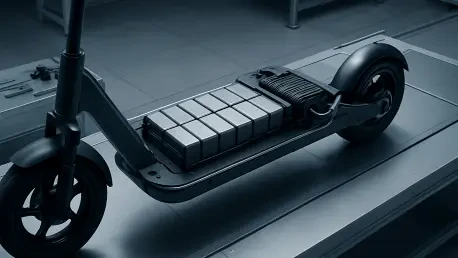

Supercapacitors can withstand over one million charge-discharge cycles without significant degradation, making them an ideal high-speed buffer for lithium-ion battery packs. This technical reality has paved the way for a new era of energy management where researchers at the National Institute of Technology, Rourkela, have secured a patent for a groundbreaking hybrid energy-storage system. As the global transition toward sustainable transportation places unprecedented pressure on energy density and thermal stability, particularly in emerging markets like India, the limitations of standard lithium-ion and lead-acid packs have become increasingly visible. This newly patented innovation addresses these technical bottlenecks by focusing on improving the efficiency and operational lifespan of batteries used in demanding urban environments. By creating a system that prioritizes thermal management through hybrid integration, the developers have provided a clear path toward more durable electric vehicle components that can handle the rigorous demands of modern transportation networks.
Addressing Mechanical and Chemical Stressors in Urban Environments
In dense city settings, electric vehicles are subjected to relentless stop-and-go cycles that significantly degrade battery health over time. While modern battery packs offer high energy density suitable for long-distance travel, they often lack the necessary power density to handle sudden, intense current spikes during rapid acceleration or heavy regenerative braking. These transient surges create immense thermal stress and accelerate chemical degradation within individual cells, leading to internal resistance growth. Consequently, the very nature of urban commuting acts as a catalyst for premature battery failure, which has historically forced manufacturers to choose between battery longevity and performance. This dilemma is particularly acute in crowded metropolitan areas where the frequency of power fluctuations is highest. Bridging the gap between energy storage and power delivery requires a fundamental shift in how electrical loads are distributed throughout the vehicle’s powertrain to prevent localized overheating.
To mitigate these mechanical and chemical stressors, the NIT Rourkela team integrated supercapacitors into the energy storage architecture to create a load-sharing mechanism. Unlike traditional batteries that rely on chemical reactions, supercapacitors store energy electrostatically, allowing them to charge and discharge almost instantaneously without degradation. In this hybrid model, the supercapacitor acts as a high-speed buffer that absorbs or supplies power during sudden bursts of activity, shielding the primary battery from the most damaging current surges. This effectively preserves the battery’s chemical integrity over hundreds of thousands of cycles by allowing the lithium-ion cells to operate in a steady-state mode. By decoupling the energy storage requirements from the peak power demands, engineers can ensure that the primary battery remains within its optimal operating temperature. This synergy ensures that the primary energy source is never overtaxed, even during aggressive maneuvers typical of urban delivery fleets.
Streamlining Architecture for Economic and Environmental Stability
The true technical breakthrough of this patent lies in the streamlined efficiency of its system architecture, utilizing a unified system with a single converter and inductor. By reducing the hardware footprint and minimizing electronic switches, the researchers have created a design that is lighter and more reliable than existing active connection models. Rigorous testing and simulations under extreme urban conditions have confirmed that the system maintains stable voltage during emergency braking and rapid speed fluctuations. Specifically optimized for low-voltage platforms between 24 V and 60 V DC, this technology is a perfect fit for electric scooters and e-rickshaws, which are the backbone of transport in many developing regions. This architectural elegance ensures that the benefits of the supercapacitor are not offset by the weight of additional electronics. Furthermore, the focus on these platforms ensures that the benefits of high-tech energy management reach the drivers who need them most.
By solving the problems of system complexity and component stress, this innovation represented a major leap toward making electric vehicles more economically viable for the general public. Extending the life of an electric vehicle battery reduced the total cost of ownership, as the battery remained the most expensive component to replace over the vehicle’s lifespan. This technology contributed to environmental sustainability by slowing the rate of battery disposal and reducing the consumption of raw materials like lithium and cobalt. Looking forward, the industry prioritized the integration of these hybrid systems with emerging solid-state technologies to further enhance reliability. Stakeholders moved to standardize single-converter designs, facilitating easier repairs and modular upgrades across diverse vehicle classes. This holistic approach to energy management set a new standard for balancing performance and preservation. Moving forward, the focus shifted to implementing these systems in larger transit grids to maximize global ecological impact.