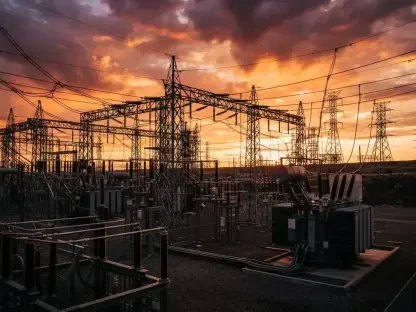

The rapid expansion of generative artificial intelligence and large-scale language models has fundamentally rewired the expectations for global electricity grids, shifting the priority from steady-state supply to a high-stakes race for hyper-scale reliability. Current estimates indicate that the computational power required for training and operating the next generation of neural networks is increasing at an exponential rate, placing an unprecedented burden on aging transmission networks that were never designed for such concentrated, high-density loads. This surge creates a fascinating technical paradox in which the very technology that is pushing the grid to its physical limits is also becoming the most essential tool for preventing its collapse. Grid operators are finding themselves in a position where they must deploy sophisticated machine learning algorithms to manage the volatility induced by the massive hardware clusters running those same algorithms. This shift represents the most significant transformation of utility management since the dawn of the electrical age, requiring a transition from mechanical oversight to digital-first orchestration. The integration of renewable energy sources, which are inherently intermittent, only complicates this matter further, making the role of real-time data analysis non-negotiable for maintaining the delicate balance between supply and demand. As the world moves forward through 2026, the ability to harmonize these competing forces will define the economic success of entire regions, determining which markets can sustain the growth of the digital economy without compromising the stability of their basic infrastructure.
Managing the Surge: Strategies for Power Demand
The sheer scale of electricity required to sustain high-performance computing clusters is forcing a radical rethinking of how energy infrastructure is prioritized and deployed across the globe. Unlike residential developments or light commercial zones, hyper-scale data centers demand hundreds of megawatts of constant, always-on power, often requiring direct connections to high-voltage transmission backbones. This sudden demand creates a timing mismatch because a modern data center can be fully constructed and ready for operation within eighteen months, while the permitting and construction of a new substation or transmission line can take well over a decade to complete. This disparity has forced utilities to look for ways to augment existing capacity through digital optimization rather than waiting for physical expansion. Large technology firms are increasingly collaborating with utility providers to co-locate facilities near surplus power zones, but the geographic concentration of these facilities continues to create bottlenecks in regions with older infrastructure. Consequently, the industry is seeing a shift toward localized microgrids and modular reactor designs as potential long-term fixes to the immediate thirst for energy that traditional coal and gas plants struggle to meet without compromising carbon neutrality goals. The pressure to innovate is no longer a theoretical exercise but a practical necessity to keep the digital economy functioning.
To navigate these mounting pressures, grid operators are increasingly relying on artificial intelligence to provide enhanced situational awareness that was previously impossible with manual monitoring systems. Digital twin technology allows utilities to create virtual replicas of entire power networks, enabling them to run simulations that predict how various components will react under extreme stress or shifting load patterns. By processing billions of data points from weather sensors, industrial meters, and transmission line monitors, these systems can detect subtle anomalies that precede equipment failure. This evolution from reactive maintenance to proactive reliability means that a transformer showing signs of overheating can be serviced before it triggers a wide-scale blackout, potentially saving millions of dollars in economic losses and repair costs. Furthermore, the integration of real-time market pricing into these models allows for more efficient dispatching of resources, ensuring that the cleanest and most cost-effective energy sources are prioritized at any given moment. This high-resolution view of the grid ensures that the infrastructure remains resilient even as the total volume of electricity flowing through it reaches historical peaks. The implementation of these tools has transformed the control room from a place of observation into a hub of high-speed, data-driven decision-making that operates at the speed of the modern market.
Grid Optimization: Sophisticated Tools for Modern Utilities
Forecasting has transitioned from a practice of historical estimation to a discipline of real-time precision through the use of machine learning models paired with high-resolution satellite imagery. These advanced systems do not merely look at what happened during previous seasons; instead, they analyze current cloud cover, wind speeds, and even local industrial schedules to predict electricity supply and demand with an accuracy that human analysts could never achieve. For instance, when a large solar farm experiences a sudden drop in output due to localized cloud movement, these digital platforms can instantly trigger battery storage systems or adjust industrial loads to compensate for the loss. This level of granular control is essential for integrating higher percentages of wind and solar power, which fluctuate significantly based on environmental conditions. By reducing the reliance on spinning reserves—gas plants that run idle just in case they are needed—utilities are able to lower their operational costs while significantly reducing their carbon footprint. This precision forecasting also allows for more strategic energy trading, as grid managers can anticipate surplus production and sell it to neighboring regions that may be experiencing a deficit. This interconnectedness allows the grid to function as a fluid, intelligent network rather than a series of isolated and rigid silos.
Beyond the utility companies themselves, large-scale commercial and industrial organizations are evolving from passive consumers into active, intelligent participants in the energy ecosystem. Through the implementation of smart energy management systems at the facility level, manufacturing plants and corporate campuses can now modulate their consumption based on the health and price signals of the broader grid. When the cost of electricity spikes due to high demand, these companies can automatically dim lighting, adjust climate controls, or switch to onsite energy storage without human intervention. This capability, often referred to as demand response, helps stabilize the grid by shedding load during critical peaks, effectively acting as a virtual power plant. Moreover, many of these organizations are now installing their own renewable generation assets and long-duration batteries, allowing them to sell excess power back to the grid when it is most needed. This decentralized approach reduces the strain on centralized infrastructure and creates a more robust, distributed energy network where every building contributes to the overall stability of the system. The result is a more democratic energy market where transparency and automation allow for the most efficient use of every kilowatt produced, ensuring that no energy is wasted during the transition to a more electrified society.
Operational Shifts: Infrastructure Solutions and Data Quality
Despite the impressive capabilities of these digital tools, their successful implementation remains heavily dependent on the quality of the data they consume and the oversight provided by human experts. AI models are only as effective as the telemetry provided by thousands of physical sensors installed across the distribution network, which means that the modernization of hardware must keep pace with the software. There is also a growing recognition that high-fidelity, real-time information is critical to avoiding errors in automated decision-making that could lead to system instability. Consequently, grid operators are maintaining a human-in-the-loop approach, where artificial intelligence handles the complex data processing while experienced engineers provide the final ethical and operational oversight. This synergy ensures that the grid remains safe and reliable, preventing a situation where an algorithm might prioritize efficiency over public safety during a natural disaster or extreme weather event. As these systems become more autonomous, the industry is also investing heavily in cybersecurity measures to protect these digital-first grids from potential interference, recognizing that a software-defined power system requires a new level of digital fortification. The human element remains the ultimate safeguard in a world where the speed of change often outpaces the development of formal regulatory frameworks.
In the immediate term, utilities are finding innovative ways to squeeze additional capacity out of their existing physical assets to bridge the gap until new transmission lines can be built. One of the most promising developments in this area is Dynamic Line Rating, which uses specialized sensors to measure the actual temperature and sag of power lines in real time. Traditionally, power lines were assigned static ratings based on conservative worst-case weather assumptions, which often meant they were operating well below their true physical capacity. With this technology, grid managers can safely increase the amount of power flowing through a line when there is a cooling breeze or lower ambient temperatures, effectively unlocking up to thirty percent more capacity without digging a single trench. This technology is particularly valuable for connecting remote wind farms to urban centers, as it allows for higher energy throughput exactly when the wind is blowing hardest and cooling the lines. By optimizing existing infrastructure through these digital overlays, the energy sector can meet the skyrocketing demand from the tech industry while simultaneously managing the transition to a greener grid. This phase of development proves that the future of energy is not just about building bigger, but about building smarter and more connected systems that utilize every available resource to its maximum potential.
Strategic Integration: Pathways to Future Resilience
The growing interdependence between the technology sector and the electricity industry has created a new economic reality where data centers and power grids must be planned as a single, cohesive unit. Energy providers are no longer just suppliers; they have become strategic partners in the development of artificial intelligence, providing the literal fuel that powers the information economy. This relationship has led to the emergence of energy-aware software development, where developers optimize their code and model training schedules to coincide with periods of high renewable energy availability. This proactive approach ensures that the massive carbon footprint often associated with high-end computing is mitigated through smart scheduling rather than just through the purchase of carbon offsets. Organizations that successfully navigate this intersection are gaining a significant competitive advantage by lowering their energy costs and ensuring their operations are resilient to grid volatility. As this trend continues, the boundary between technology companies and energy companies will likely continue to blur, leading to a hybrid industry focused on the efficient conversion of natural resources into digital intelligence. This alignment of interests is driving a faster transition toward a sustainable energy future than would have been possible under traditional market conditions.
To ensure long-term stability, the energy sector focused on implementing decentralized architectures that integrated both advanced software and modular physical hardware. Stakeholders recognized that the traditional model of large, centralized power plants was no longer sufficient for the rapid, localized demand spikes caused by artificial intelligence clusters. Instead, the industry pivoted toward localized energy hubs that could operate independently of the main grid during emergencies, providing a critical safety net for both industrial and residential users. Governments and regulatory bodies also moved to streamline the permitting processes for transmission projects, acknowledging that the digital economy could not thrive without a modernized physical foundation. Training programs for the next generation of power engineers emphasized a dual mastery of electrical systems and data science, preparing the workforce for a world where code was as important as copper. These steps established a clear path forward, where the focus shifted from managing scarcity to optimizing abundance through intelligent distribution and storage. Ultimately, the successful convergence of these two sectors provided the framework for a more sustainable and economically vibrant society, where technology served as both the primary driver of demand and the ultimate solution for supply management.