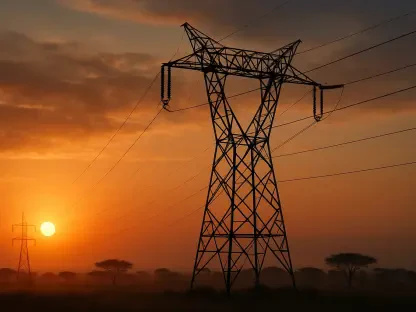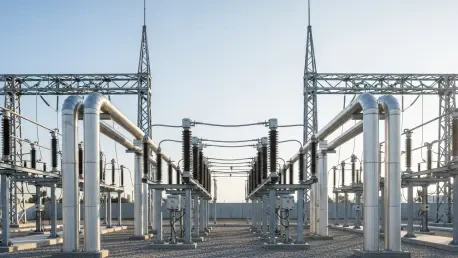

Ireland stands at a pivotal crossroads where the ambition of a green economy frequently collides with the physical limitations of an aging and heavily congested power transmission network. For years, the inability of the grid to absorb new connections without massive infrastructure overhauls has acted as a significant bottleneck for both industrial expansion and the deployment of renewable energy resources. The arrival of the European Union (Electricity Market Design) Regulations 2026 marks a decisive turning point in how these challenges are managed across the island. By moving away from rigid, legacy connection policies and adopting a more sophisticated, data-driven approach to market management, the state is finally addressing the mismatch between energy supply and grid capacity. This overhaul is not merely a technical update; it is a fundamental reconfiguration of the electricity market intended to foster competition while ensuring the system remains stable as Ireland integrates higher shares of intermittent power sources like wind and solar.
Grid Access: Evolution of Connection Standards and Financial Stability
Implementation: The Flexible Connection Agreement Model
Under the direction of the Commission for Regulation of Utilities (CRU), the Irish energy sector is now formalizing the use of flexible connection agreements to bypass traditional infrastructure delays. These legal instruments allow new generators or large power consumers to link to the grid immediately, provided they agree to modulate their energy usage or injection during periods of peak congestion. Such a mechanism effectively maximizes the utility of existing copper and steel components while the long-term physical expansion of the network continues in the background. For developers of battery energy storage systems, these flexible terms offer a particularly lucrative path, as these technologies are inherently designed to respond to grid signals by absorbing excess power or discharging it when needed most. By enshrining these agreements in law, the 2026 regulations ensure that grid operators have a clear mandate to offer these creative solutions rather than simply turning away new applicants in congested areas.
Capital Security: Improving Investment Certainty through Clear Frameworks
One of the most significant hurdles for financing large-scale energy projects in the past was the inherent uncertainty regarding when, or if, a project would be allowed to export its full power capacity to the market. The 2026 regulations address this financial risk directly by requiring grid operators to provide definitive timelines and quantified limits on power injection and withdrawal for every new connection request. By removing the “all or nothing” ambiguity, the new rules allow institutional investors to perform much more accurate sensitivity analyses and risk assessments before committing capital. This level of granular detail is essential for the bankability of offshore wind farms and data centers, where even minor variations in grid availability can significantly impact the long-term return on investment. Consequently, the Irish market has become a more attractive destination for global infrastructure funds that prioritize regulatory stability and transparent market entry conditions over speculative or poorly defined connection regimes.
Market Operations: Enhancing Visibility and Protecting Utility Users
Data Accessibility: Implementing Rigorous Reporting Requirements
Transparency has become the cornerstone of the reformed Irish electricity market, as distribution system operators are now legally obligated to provide a much higher degree of spatial and temporal data regarding grid health. This requirement involves the publication of high-resolution capacity maps that are updated at least once every three months, allowing prospective developers to identify exactly where the network can accommodate new loads without significant upgrades. Previously, such information was often siloed or difficult to access, leading to speculative applications that clogged the connection queue and delayed viable projects. By democratizing this data, the 2026 rules empower businesses to make informed decisions about where to locate their operations based on actual grid realities rather than guesswork. This localized visibility is particularly crucial for the growth of community-led energy initiatives and small-scale renewable installations, which often lack the resources to navigate complex grid processes.
Market Resilience: Strengthening Consumer Safeguards and Wholesale Stability
To protect homes and businesses from the extreme price volatility that has characterized global energy markets, the 2026 regulations enforce sophisticated hedging requirements on all retail electricity suppliers. These rules mandate that suppliers maintain a balanced portfolio of long-term and short-term energy contracts to ensure that sudden spikes in wholesale prices are not immediately passed on to the end consumer. By requiring a more disciplined approach to risk management, the regulatory framework reduces the likelihood of supplier bankruptcy and provides a more stable pricing environment for the entire economy. This stability is essential for maintaining public support for the energy transition, as it demonstrates that moving toward a cleaner power system does not have to come at the expense of energy security or affordability. Furthermore, the enhanced oversight by the CRU ensures that these hedging strategies are robust and capable of withstanding significant market shocks without failing to protect the public.
Strategic Outcomes: Long-Term Achievements and Operational Success
The implementation of these comprehensive reforms established a robust foundation for the Irish power sector by addressing both technical bottlenecks and market inefficiencies. Stakeholders within the industry moved quickly to adopt the new flexible connection standards, which allowed for a more rapid deployment of energy storage and renewable generation than was possible under the previous rigid system. Government agencies and regulators prioritized the deployment of advanced monitoring technologies to meet the new reporting requirements, ensuring that market participants had access to the real-time data needed for strategic planning. Moving forward, the focus remained on ensuring that these regulatory tools were continuously refined to keep pace with evolving energy technologies and international market trends. By maintaining this commitment to transparency, flexibility, and consumer protection, the state successfully navigated the complexities of grid modernization, turning a period of transition into a sustained era of industrial growth.