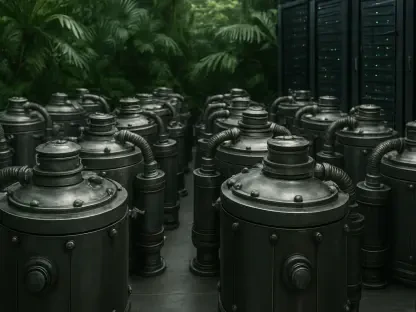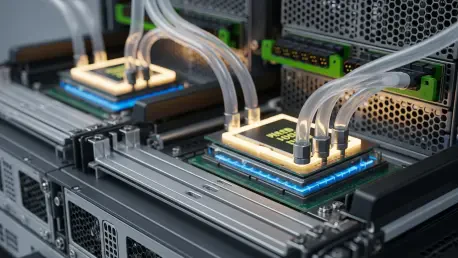

The insatiable appetite for computational power required to train the world’s most advanced artificial intelligence models is driving a foundational transformation of the modern datacenter. While historical facilities were designed to accommodate relatively stable workloads, the current generation of silicon demands a level of energy density that threatens to overwhelm traditional 48V electrical architectures and air-based cooling methods. This shift is not merely an incremental upgrade but a total reimagining of how electricity is delivered and how heat is extracted at the rack level. Engineers are now forced to navigate the physical limitations of copper and the thermal limits of air, pushing the industry toward a high-voltage, liquid-cooled future. As power requirements per rack approach the one-megawatt threshold, the logistical challenges of housing these systems become clear, requiring a pivot toward 800V distribution and closed-loop thermal management. This evolution reflects a broader trend of industrializing AI, where infrastructure must match the scale of the software it supports to remain viable.
The Evolution of Power Distribution
Overcoming Physical Constraints: The Shift to 800V
Current server racks are already reaching power densities that push the limits of traditional 48V distribution, which was originally favored for being safe for human contact and easy to manage. However, as hardware evolves toward architectures requiring unprecedented amounts of electricity, the sheer physical space needed for massive copper cables and bus bars becomes a logistical nightmare for facility managers. To avoid overcrowding the server room with dozens of thick, heavy power cables that obstruct airflow and complicate maintenance, engineers are looking to higher voltages to deliver more power through thinner wires. Moving to an 800V DC standard allows for a significant reduction in the amount of copper required, which not only lowers material costs but also simplifies the mechanical design of the rack. This transition is essential for accommodating the latest generation of GPU clusters, which consume far more energy than previous enterprise server configurations could ever handle.
Transitioning to 800V DC power offers a way to significantly reduce cable congestion and improve electrical efficiency within high-density AI clusters by minimizing resistive losses. While this change is technologically necessary for the most demanding workloads, experts predict a conservative rollout rather than an overnight overhaul across the global datacenter footprint. The initial adoption is expected to target specific high-end AI nodes, with roughly ten percent of new facilities integrating this standard by the end of the decade as they phase out legacy equipment. One of the primary catalysts for choosing the 800V standard specifically is its established presence in the electric vehicle industry, which has spent years refining the necessary power electronics. Because the automotive supply chain has already produced standardized connectors and durable components at this voltage, datacenters can leverage a mature ecosystem. This cross-industry synergy reduces costs and increases the overall reliability of the new power systems.
Strategic Implementation: From Sidecars to Centralized Systems
The move to high-voltage power will likely occur in stages, beginning with the use of sidecar units that convert power at the rack level from traditional AC or 48V sources. These supplemental units allow for the immediate deployment of high-power hardware in existing facilities but consume valuable floor space in the datacenter white space, which is often at a premium. Over time, these functions will move toward centralized conversion systems located outside the main server area to better handle power distribution for massive multi-megawatt clusters without cluttering the floor. This architectural shift requires a rethinking of the physical layout of the facility, moving heavy electrical equipment away from the sensitive compute nodes to optimize airflow and cooling efficiency. By centralizing the conversion process, operators can achieve better economies of scale and simplify the cooling requirements for the power electronics themselves, leading to a more streamlined site design.
A critical component of this new architecture is the development of DC Uninterruptible Power Supplies that integrate energy storage directly with high-voltage power converters. These systems ensure that high-voltage DC power remains stable even during grid fluctuations, providing a consistent and clean flow of energy to sensitive AI hardware that cannot tolerate micro-interruptions. This integration represents a move toward more cohesive and compact power management solutions that simplify the overall facility design by removing redundant conversion steps. By eliminating multiple stages of AC-to-DC conversion, datacenters can capture significant efficiency gains that were previously lost as waste heat during the transformation process. Furthermore, these integrated systems allow for more precise monitoring of energy consumption at the rack level, giving operators the data needed to optimize performance in real-time. This level of control is vital for managing the extreme thermal and electrical stresses.
Managing Thermal Loads and Resource Efficiency
Mitigating Electrical Volatility: Grid Resilience Strategies
AI training workloads introduce unique stresses on the electrical grid because they operate in sudden, massive pulses rather than steady, predictable streams of energy consumption. These spikes in demand require datacenters to act as a sophisticated buffer, protecting local utilities from the equipment’s inherent volatility rather than just protecting the hardware from grid issues. Advanced engineering is now focused on ensuring that facilities can manage these fault ride through events without destabilizing regional power networks or causing local brownouts. This involves deploying large-scale capacitor banks and rapid-response energy storage systems that can absorb or provide power in milliseconds to smooth out the load profile. As AI clusters continue to grow in size, the ability to maintain a harmonious relationship with the power grid becomes a competitive advantage for operators. Facilities that fail to manage these pulses effectively may face regulatory hurdles.
There is a common misconception that high-density AI centers inevitably consume vast amounts of water for cooling, leading to concerns about local environmental impacts in arid regions. In reality, modern liquid cooling technology allows operators to move away from water-intensive evaporative systems toward more efficient, closed-loop designs that recirculate fluids. This shift makes water consumption a strategic choice for operators rather than a technical requirement, allowing for much higher efficiency even in water-stressed areas where traditional cooling is unfeasible. By using Rear Door Heat Exchangers or direct-to-chip liquid cooling, the heat can be captured and moved more effectively than through air alone. This allows the datacenter to operate at higher ambient temperatures, reducing the need for energy-hungry chillers and decreasing the overall carbon footprint. Consequently, the transition to liquid cooling is as much about environmental stewardship as hardware enablement.
Efficiency Metrics: The Impact of Liquid Cooling
Comparative data from facilities in different geographic regions shows that liquid cooling can drastically lower Power Usage Effectiveness scores while maximizing total AI output per square foot. For instance, switching to liquid-cooled systems can cut water usage in half while simultaneously increasing the number of AI tokens a system can generate per watt of energy consumed. This demonstrates that the transition to more intense hardware can actually lead to better resource stewardship when managed with sophisticated engineering and integrated thermal designs. The ability to reject heat at higher temperatures also opens up possibilities for waste heat reuse in nearby industrial or residential applications, further improving the sustainability of the facility. As power prices continue to fluctuate, the efficiency gains provided by liquid cooling provide a critical hedge against rising operational costs. This makes the initial capital investment in liquid infrastructure a sound financial decision.
The datacenter market will likely see specialized pockets of 800V infrastructure rather than a total transformation of every legacy facility in the immediate short-term future. Success in this new era will depend on a holistic design approach where power and cooling systems are tightly integrated to ensure interoperability between hardware from different vendors. As standards mature and the industry gains experience with these high-density zones, the focus will remain on balancing high-speed computing throughput with environmental and grid stability. Operators must prioritize flexible designs that can adapt to changing silicon requirements, as the pace of hardware innovation often outstrips the lifecycle of the building itself. This flexibility is achieved through modular power components and standardized cooling manifolds that can be upgraded without necessitating a complete facility overhaul. Ultimately, the winners will be those who deploy high-density compute quickly while maintaining efficiency.
Strategic Next Steps: Navigating the High-Voltage Transition
Organizations that successfully navigated the early phases of this transition focused on integrating high-voltage DC systems with advanced liquid cooling from the start. They identified the limitations of air-cooled 48V racks and proactively shifted toward 800V standards to mitigate the physical constraints of cabling and energy loss. These pioneers prioritized the development of resilient grid interfaces and closed-loop thermal management to ensure that their facilities remained sustainable and socially responsible. By leveraging the existing supply chains from the electric vehicle market, these operators lowered their procurement risks and accelerated the deployment of high-density clusters. The lessons learned from these initial implementations emphasized the need for deep collaboration between hardware designers and facility engineers. Moving forward, the industry adopted a more modular approach to power distribution, allowing for a smoother integration of emerging technologies. This proactive strategy ensured that the infrastructure was prepared for the demands of the next generation.