
Listen to the Article
Today’s energy market needs stability and high-capacity output to support rapid technological growth. For many business leaders, carbon neutrality has become a core operational requirement. The challenge is scaling technologies that have long stayed in the research phase into robust, grid-connected systems. That calls for heavy capital investment, strategic partnerships, and viewing energy as a manufactured product built in factories and installed on site.
As organizations look toward 2030 and beyond, attention has moved to technologies that offer firm power, meaning electricity available around the clock. The intersection of nuclear innovation and advanced geothermal points to a future in which energy supply keeps pace with AI and global industrial expansion. Dive in to learn how:
- Enhanced geothermal is moving from research projects toward utility-scale generation;
- Modular nuclear is changing how advanced reactors are designed, financed, and deployed;
- Public and private investment is helping build the supply chains needed for commercial scale;
- Rising AI demand is creating new requirements for firm, carbon-free power.
The Commercialization of Enhanced Geothermal Systems
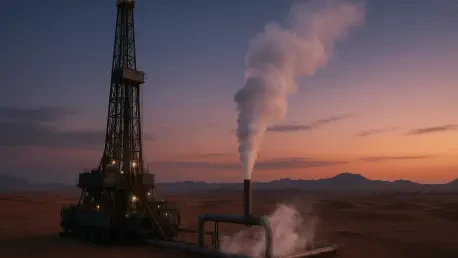
Fervo Energy recently reached a major milestone. when its Cape Station facility in Utah delivered the first utility-scale power from an enhanced geothermal system. The first 33-megawatt block is part of a 100-megawatt first phase. The site is planned to reach 900 megawatts by 2028, with Southern California Edison as its main customer.
The result shows that geothermal energy can extend well past areas with natural hot springs or volcanic activity. Using horizontal drilling and hydraulic fracturing techniques borrowed from the oil and gas sector, developers can create artificial reservoirs in deep rock formations. This approach opens a vast, previously inaccessible resource that provides consistent, carbon-free power at any time of day. Cost remains the open question, since making next-generation geothermal economically competitive at scale is the next major challenge. For energy buyers, enhanced geothermal offers a reliable baseload power source with a small surface footprint. The technical validation at Cape Station is a proof of concept for deep-earth energy across diverse regions.
The Strategic Shift to Modular Nuclear Reactors
Innovation in the nuclear sector is shifting attention from massive, multi-billion-dollar bespoke plants to Small Modular Reactors. Kairos Power is an early mover with Hermes 2, a 50-megawatt fluoride salt-cooled reactor in Oak Ridge, Tennessee, that operates near atmospheric pressure. The Tennessee Valley Authority has signed the first U.S. utility power purchase agreement for its output, with operation targeted for 2030.
Low-pressure operation reduces the complexity of the cooling systems and the facility’s overall footprint compared with traditional water-cooled reactors. The modularity of these reactors supports repeatable manufacturing, with components built in a controlled factory environment and then transported to the site for final assembly.
This change in methodology aims to make nuclear deployment faster and more cost-effective. The industry hopes that treating the reactor as a replicable product will lower traditional barriers of high cost and long development timelines. Kairos still has to prove its manufacturing capability and secure an operating license. This shift matters for meeting the power needs of large industrial consumers and the grid.
Capital Investment in Advanced Grid Solutions
The convergence of infrastructure firms and technology giants is producing a new wave of strategic investment in carbon-free energy. In September 2026, Samsung C&T agreed to invest up to $100 million in Kairos Power, including a $70 million equity investment and $30 million in in-kind engineering services. Samsung C&T will also serve as the engineering firm helping build Kairos’s 50-megawatt demonstration reactor.
The deal combines financing with engineering, procurement, and construction capability, since Samsung C&T has built or helped build about a dozen nuclear reactors worldwide. By bringing seasoned industrial players into the development cycle, startups like Kairos Power gain the operational maturity needed to move from prototypes to commercial fleets. These partnerships help build the complex supply chains that modern energy assets require. The trend shows the value of cross-sector partnerships.
Operational Leadership and Industry Evolution
As energy companies move from research and development to full-scale commercial operations, their leadership structures must evolve. The clean energy talent market is shifting, and demand for engineering talent now comes with a parallel need for operational and go-to-market expertise. Scaling a breakthrough like enhanced geothermal or modular nuclear requires executives who can manage massive capital projects and work through complex regulatory environments. The wider workforce is tight, too.
In a 2025 IEA survey of 700 energy-related companies, unions and training institutions, more than half reported critical hiring bottlenecks. Electricians, plant operators, and nuclear engineers were especially in short supply. Leadership depth is a critical component of enterprise value, because the ability to deliver reliable assets on time and within budget is becoming the main differentiator. This maturing workforce shows an industry building sustainable, scalable businesses.
Federal Funding as a Catalyst for Innovation
Government support continues to de-risk advanced energy technologies. The U.S. Department of Energy announced more than $99 million for 21 geothermal projects, including five field-scale enhanced geothermal system tests and 16 exploration drilling projects. The department said the work will help reduce technical and development risk and provide the information needed to support future commercial projects and investment.
Ormat Technologies was selected for up to about $35 million, including up to $25 million for an enhanced geothermal project at Dixie Valley, Nevada, and up to $9.7 million at Cove Fort, Utah, subject to award negotiations with the Department of Energy.
This support matters most in capital-intensive sectors like geothermal and nuclear, where the initial cost of innovation can deter private investors acting alone. The focus on domestic development also addresses supply chain security concerns. As these federally backed projects mature, they provide the data and operational confidence needed to attract further private investment.
Meeting the Energy Demands of AI
The rapid expansion of AI has created record demand for reliable, high-capacity electricity. Large data center campuses can require hundreds of megawatts or more to support the latest generation of hardware, making them some of the largest consumers on the grid. The U.S. Energy Information Administration estimates that servers alone accounted for about 7% of commercial-sector electricity consumption in 2025. It projects that share could reach 22% to 33% by 2050.
Variable renewable sources, while carbon-free, often lack the round-the-clock consistency these facilities require. Many tech companies now seek direct partnerships with advanced nuclear and geothermal providers. A dedicated supply of firm power keeps their operations carbon-neutral and shields them from spot-market volatility. This demand gives energy startups the long-term contracts and financial certainty they need to scale. The new infrastructure serves the technology sector and strengthens the wider grid with reliable, clean baseload capacity.
Global Supply Chains and Technological Sovereignty
The race to deploy advanced energy technologies is also a competition for global supply chain leadership. Securing materials and manufacturing capacity for modular reactors and enhanced geothermal systems has become a top priority for companies and governments alike. That ranges from high-temperature drilling equipment to the specialized fuels used in next-generation nuclear reactors. Fuel is a clear pinch point. The Department of Energy committed high-assay low-enriched uranium (HALEU) to five advanced reactor developers, including Kairos Power. Congress had required the department to make at least 21 metric tons available by June 2026, and a Centrus plant in Piketon, Ohio, had delivered only 545 kilograms to date.
A resilient and transparent supply chain prevents bottlenecks that could delay the rollout of these assets. Many firms are regionalizing production and sourcing to reduce dependence on volatile international markets. This move toward technological sovereignty keeps the benefits of clean energy innovation local and strengthens national security. As global demand for carbon-free power grows, companies with the most efficient and reliable supply chains will hold a strong position in international markets.
Strategic Pathways to a Decarbonized Power Grid
The path to a more reliable, low-carbon grid depends on turning advanced energy technologies into repeatable commercial projects. Geothermal and modular nuclear are moving through that process with support from private investment, government funding, industrial partnerships, and growing demand from data-intensive industries.
The remaining challenge is execution. Developers must prove these technologies can scale economically, secure the people and materials needed to build them, and deliver power reliably. Those factors will determine how quickly advanced energy moves from promising projects to a meaningful part of the power system.