
The Dawn of a New Era for American Nuclear Fuel
The definitive shift toward a self-sustained American nuclear fuel cycle reached a significant turning point as Uranium Energy Corp successfully activated its operations at the Burke Hollow project in South Texas. As the first new uranium mining operation to open on United States soil in over a decade, this project represents more than just a corporate milestone; it signals a strategic shift toward domestic resource independence. This development arrives at a time when the global energy sector is grappling with the dual challenges of decarbonization and energy security. By revitalizing a long-dormant industry, the project aims to meet the surging global demand for carbon-free baseload power. Examining the operational, financial, and geopolitical dimensions of this restart reveals the critical role Burke Hollow plays in the broader American nuclear renaissance, setting a precedent for future domestic energy production.
The launch of this facility is not merely an incremental increase in capacity but a foundational change in how the United States approaches its energy future. The project serves as a beacon for an industry that has faced significant headwinds, demonstrating that domestic production is not only viable but essential for a modern economy. As data centers and industrial electrification continue to place unprecedented strain on the power grid, the necessity for reliable, high-density energy sources has never been more apparent. Through this venture, the industry moves closer to providing a stable supply of fuel that can support the next generation of nuclear reactors, ensuring that the transition to a low-carbon future is backed by a secure and domestic supply chain.
Historical Context and the Path to Energy Sovereignty
For decades, the United States has navigated a precarious energy landscape, currently importing approximately 95% of its uranium requirements from foreign sources. Much of this supply has historically originated from geopolitically volatile regions or nations that hold significant sway over the global enrichment and production markets. This heavy reliance created a strategic vulnerability for a nation where nuclear energy provides nearly 20% of all electricity. The hiatus in domestic mine development over the last ten years left the American power grid exposed to supply chain disruptions and price fluctuations that were often beyond domestic control. Revitalizing production is therefore not just an economic endeavor but a matter of national security, aimed at reclaiming energy sovereignty and insulating the domestic grid from foreign influence.
The path to this moment involved overcoming years of regulatory hurdles and market apathy that followed previous global energy shifts. However, the realization that wind and solar alone cannot satisfy the constant demands of a high-tech society has brought nuclear power back to the forefront of policy discussions. This historical context provides the necessary backdrop to understand why the restart at Burke Hollow is viewed with such significance by market analysts. It marks the end of a period of contraction and the beginning of a concerted effort to rebuild the vertical integration of the American nuclear industry. By securing the primary stage of the fuel cycle—mining—the nation takes a significant step toward ensuring that its energy destiny remains in its own hands.
Advanced Extraction and Operational Efficiency
The Technical Advantages of In-Situ Recovery (ISR)
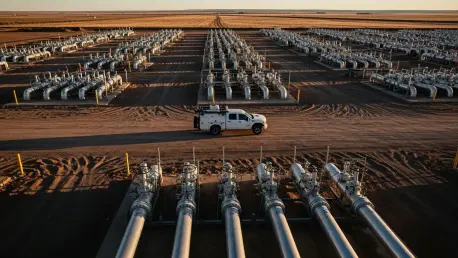
At the heart of the Burke Hollow project is the implementation of In-Situ Recovery (ISR) technology, establishing it as the newest facility of its kind globally. Unlike traditional open-pit or underground mining, which require massive earth-moving operations and leave lasting scars on the landscape, ISR utilizes a closed-loop system. Oxygenated water is circulated through underground ore bodies to dissolve uranium, which is then pumped to the surface for processing. This method is highly favored in the modern era for its minimal environmental footprint, as it avoids the creation of large tailings piles and preserves the natural surface topography. By utilizing ISR, the project addresses historical environmental concerns while maintaining a rigorous focus on groundwater protection and site restoration.
Furthermore, the ISR process is inherently more flexible than traditional mining methods, allowing for quicker adjustments in production levels based on market conditions. This agility is crucial in a commodity market that can be influenced by rapid shifts in global policy or technological breakthroughs. The technical efficiency of the system also translates into lower operational costs over the long term, as the lack of heavy machinery and large-scale excavation reduces both energy consumption and labor intensity. As environmental standards become increasingly stringent, the adoption of ISR positions the project as a model for sustainable resource extraction, proving that industrial progress and environmental stewardship can coexist through technological innovation.
The Hub-and-Spoke Operational Architecture
Operational efficiency is further enhanced through a sophisticated hub-and-spoke model designed to maximize capital efficiency across multiple sites. In this framework, the Burke Hollow wellfields act as the “spokes,” providing raw materials that are transported to the Hobson Central Processing Plant, which serves as the “hub.” This facility is licensed to process up to 4 million pounds of uranium annually, acting as a centralized nerve center for the region’s output. By centralizing the final stages of production, the company reduces overhead and streamlines logistics, allowing for a more cohesive management of resources. This model is replicated in Wyoming at the Christensen Ranch facility, creating a dual-hub system that brings total licensed production capacity to approximately 12 million pounds per year.
The scalability of this architecture allows for the rapid integration of new wellfields as exploration continues across the 20,000-acre site. Currently, only a portion of the available acreage has been fully explored, suggesting that the “spokes” of this system could expand significantly in the coming years. This geographic diversification also mitigates risks associated with localized disruptions, ensuring a more consistent flow of material to the processing hubs. The ability to leverage existing infrastructure like the Hobson plant demonstrates a savvy approach to asset management, where existing investments are maximized to support new growth. This operational synergy is a key factor in the project’s ability to remain competitive in a global market.
Capturing Value through an Unhedged Market Strategy
In a departure from many mining peers, a distinct “unhedged” market strategy is employed to capitalize on current market dynamics. Rather than locking in long-term, fixed-price contracts that might limit potential earnings, the approach maintains full exposure to the spot market. This bullish stance allows for the capture of maximum upside during periods of rising prices, which has been the recent trend in the uranium sector. The effectiveness of this approach was demonstrated in early 2026 when a significant sale of 200,000 pounds of uranium was executed at $101 per pound. This price was well above the market average at the time, illustrating the benefits of price transparency and market timing.
This strategy generated a 50% gross profit margin, showcasing how the balance between operational output and financial positioning can lead to superior economic outcomes. While an unhedged strategy carries higher volatility, it aligns with the perspective that uranium is currently undervalued relative to its critical role in the global energy transition. By avoiding restrictive contracts, the company retains the flexibility to negotiate from a position of strength as utilities scramble to secure long-term fuel supplies. This market-centric approach reflects a deep confidence in the underlying fundamentals of the nuclear industry and the belief that the scarcity of domestic supply will continue to drive value for shareholders and stakeholders alike.
Future Trends Shaping the Uranium Landscape
The resurgence of domestic production is fueled by several converging trends that point toward sustained long-term demand across the global economy. The International Atomic Energy Agency forecasts a potential doubling of global nuclear capacity by 2050 to meet net-zero targets, a goal that requires a massive and reliable supply of fuel. Furthermore, the rise of Artificial Intelligence and the proliferation of massive data centers are creating an unprecedented need for reliable, 24/7 electricity that intermittent sources like wind and solar struggle to provide. These modern demand drivers are forcing a global reevaluation of nuclear energy as a primary tool for decarbonization, placing it at the center of the high-tech energy revolution.
In addition to traditional large-scale reactors, the development of Small Modular Reactors (SMRs) is poised to transform the landscape by providing scalable and flexible nuclear power for a variety of applications. As the United States Department of Energy invests billions into revitalizing enrichment capabilities, domestic miners are positioned at the forefront of this technological shift. The regulatory environment is also evolving, with bipartisan support growing for policies that favor domestic energy production and reduce reliance on foreign entities. These trends suggest that the current expansion is not a temporary spike but the beginning of a multi-decade growth cycle that will redefine the American energy portfolio for generations to come.
Key Insights and Strategic Takeaways
The launch of Burke Hollow provides several critical lessons for the energy sector and investors who are monitoring the transition to carbon-free power. First, the project confirms that domestic uranium production is economically viable when supported by advanced technology like ISR and efficient processing models. This viability is essential for attracting the private capital necessary to scale the industry to meet future demand. Second, the unhedged strategy highlights the importance of market timing and the benefits of maintaining flexibility in a volatile commodity environment. For policymakers and industry leaders, the takeaway is clear: achieving energy security requires a vertically integrated approach that encompasses everything from mining to conversion and enrichment.
To successfully navigate this landscape, stakeholders should prioritize investments in scalable infrastructure and adhere to high environmental, social, and governance standards. Maintaining a “social license” to operate is vital for long-term success, and this is achieved through transparency and a commitment to the communities where production occurs. Furthermore, the integration of domestic supply chains can serve as a buffer against the geopolitical shocks that have historically disrupted energy markets. As the industry moves forward, the focus will likely shift toward optimizing the entire fuel cycle, ensuring that every step from the ground to the reactor is as efficient and secure as possible.
Conclusion: A Milestone for American Energy
The restart of uranium production at Burke Hollow stood as a defining achievement that bridged the gap between a legacy of energy dependence and a future of domestic self-sufficiency. By aligning technological innovation with national security goals and market opportunities, the project established a new benchmark for the domestic mining industry. This development proved to be a vital step in ensuring that the United States possessed the fuel necessary to power its burgeoning digital and industrial economy. The success of the “hub-and-spoke” model and the “unhedged” strategy provided a blueprint for other resource sectors to follow in the quest for energy sovereignty.
Looking forward, the focus must shift toward expanding these successes to other domestic regions and continuing to innovate in extraction efficiency. Actionable next steps involve the further exploration of the remaining 50% of the Burke Hollow site and the potential acquisition of additional domestic assets to bolster the supply chain. Policymakers should continue to streamline the permitting process for ISR facilities to ensure that the momentum gained in 2026 is not lost to bureaucratic delays. By maintaining a commitment to advanced technology and market-responsive strategies, the industry can ensure that nuclear power remains the backbone of a secure, low-carbon American grid, providing the stability needed for long-term economic prosperity.