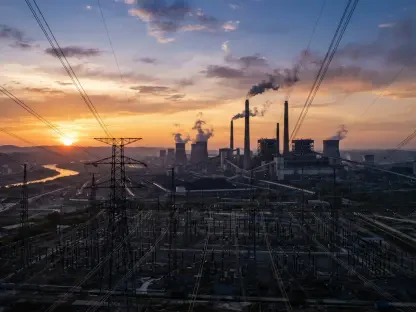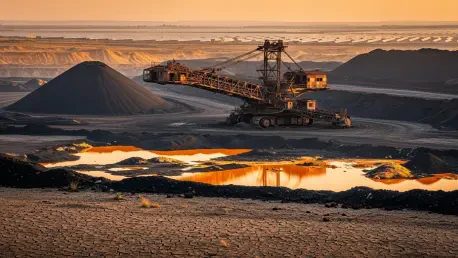

The expansive landscapes of South Africa’s Mpumalanga province, once defined by the rhythmic hum of heavy machinery and the promise of industrial prosperity, are now increasingly characterized by the silent, festering presence of hundreds of abandoned coal mines that threaten to derail the nation’s ambitious green energy transition. As the country maneuvers through a complex pivot toward renewable sources like wind and solar, it remains tethered to a legacy of environmental degradation that spans decades of unchecked extraction. Recent investigations reveal a staggering lack of institutional accountability, highlighting that more than 400 mining sites have been left to decay without the necessary funds for restoration or ecological protection. This burgeoning crisis is not merely a matter of unsightly landscapes; it represents a systematic failure to enforce environmental laws, leaving a trail of “ghost mines” that continue to leach toxins into the soil and water. The disparity between the lofty goals of the Just Energy Transition and the gritty reality on the ground is stark, as local communities bear the brunt of a coal industry that is disappearing while leaving its most dangerous burdens behind for the public to manage.
The Institutional Breakdown: Financial Security and Legal Loopholes
South African legislation theoretically provides a robust framework to ensure that mining operations do not leave behind a permanent scar on the landscape, yet the practical application of these laws has faced a near-total collapse in recent years. The concept of “concurrent rehabilitation,” which requires companies to repair environmental damage while the mine is still operational, is frequently ignored in favor of short-term profit margins. By postponing restoration until the end of a mine’s lifecycle, corporations often find themselves facing massive, unmanageable costs that they are neither willing nor able to pay once the coal reserves are depleted. When ventures become unprofitable, many entities simply vanish through opaque corporate structures or declare bankruptcy, effectively transferring the financial burden of cleanup to the state and the taxpayer. This culture of evasion has become systemic, with companies treating environmental fines as a minor cost of doing business rather than a deterrent. The result is a landscape dotted with open pits and unstable soil that no longer serves any productive purpose, creating a cycle of negligence that undermines the very foundation of the nation’s environmental protection strategies.
The failure is further compounded by a flawed system of financial securities, where bank guarantees and insurance products are used to cover future restoration costs but rarely reflect the actual inflation-adjusted price of a full cleanup. These financial instruments often sit in a state of bureaucratic limbo, as the authority to trigger their release rests with a small number of high-level government officials rather than the local municipalities or community leaders who are directly affected by the blight. Accessing these funds has become a legendary administrative nightmare, characterized by missing paperwork and a lack of coordination between the Department of Mineral Resources and Energy and the Department of Water and Sanitation. Consequently, even when money technically exists for restoration, it remains locked away while toxic sites continue to deteriorate for decades. This lack of liquidity in restoration funds means that the environmental damage accelerates, as the cost of fixing an abandoned site increases exponentially every year it is left open to the elements. Without a streamlined process to claim and deploy these funds, the promise of land reclamation remains nothing more than a theoretical possibility.
Environmental Ruin: Acid Drainage and Physical Hazards
Acid mine drainage stands as perhaps the most insidious threat emerging from the hundreds of abandoned coal shafts that now pockmark the South African interior. When the minerals unearthed during the mining process are exposed to air and water, they undergo a chemical reaction that produces a highly acidic runoff, which subsequently leaches heavy metals like arsenic, cadmium, and lead into the surrounding groundwater. This toxic cocktail does not remain confined to the mine site; it migrates through subterranean aquifers and eventually reaches major water catchments that serve as the lifeblood for millions of people and thousands of hectares of fertile farmland. The long-term implications are catastrophic, as these chemicals can ruin water sources for several generations, making them unfit for human consumption or agricultural irrigation. In regions like Mpumalanga, where coal and agriculture have long coexisted in a delicate balance, the unchecked flow of acid mine drainage is tilting the scales toward an ecological dead zone. The state’s inability to contain this drainage suggests that the true cost of coal is not paid at the power station, but through the permanent loss of water security in a country already prone to severe droughts.
Beyond the invisible chemical threats, the physical hazards of abandoned mining infrastructure present a clear and present danger to the residents of nearby informal settlements and rural towns. Many of these “ghost mines” lack even the most basic safety measures, such as perimeter fencing or warning signs, leaving open shafts and pits exposed to the public. During heavy rainfall, these deep excavations often fill with water, creating deceptive “toxic pools” that attract children seeking relief from the heat, leading to frequent and tragic drowning incidents. Furthermore, the economic desperation prevalent in these regions drives many individuals to enter unstable, crumbling shafts to scavenge for leftover coal to sell or use for domestic heating. These unofficial miners face the constant threat of cave-ins, hazardous dust inhalation, and methane explosions within the unventilated tunnels. The lack of proper closure and sealing of these sites has transformed the landscape into a labyrinth of hazards where every hill and depression could hide a fatal trap. The government’s failure to secure these areas reflects a broader disregard for the safety and dignity of the marginalized populations living on the edge of the coal fields.
The Human Cost: Economic Desolation and Information Gaps
The crisis of abandoned mines is significantly exacerbated by a profound lack of transparency and the persistent absence of accurate, public-facing government records regarding mine closures and rehabilitation progress. For several years, official data detailing which mines have been granted closure certificates and which have been abandoned has been conspicuously missing or withheld from public scrutiny. This information vacuum makes it nearly impossible for environmental watchdogs, researchers, or local communities to hold former owners accountable for their failures. Without a centralized, digital database that tracks the status of every mining license, the process of identifying responsible parties becomes a futile exercise in navigating layers of shell companies and offshore holdings. This lack of data also hampers regional planning, as local municipalities are left in the dark about the environmental risks in their jurisdictions, preventing them from developing viable post-mining land-use strategies. When the government fails to provide a clear picture of the scale of the problem, it effectively protects the interests of negligent corporations at the expense of the public’s right to a clean and safe environment.
The human toll of this administrative and environmental neglect is most visible in the “ghost towns” that emerge when a mine ceases operations without any transition plan for the local workforce or infrastructure. Entire communities that were once built around the prosperity of a single coal shaft find themselves plunged into sudden unemployment and social decay, left to inhabit a landscape that is physically breaking down around them. Residents are often forced to choose between relocating with no resources or staying in homes that are increasingly threatened by land subsidence and toxic dust. Local activist groups have spent decades lobbying for the cleanup of specific high-risk sites, but their efforts are frequently met with silence or bureaucratic stalling from the very agencies tasked with their protection. Many of these groups have been forced to resort to expensive and lengthy litigation just to compel the government to conduct basic safety inspections. This social friction creates a deep sense of betrayal among citizens who were promised that coal would be the engine of their development, only to find that it has left them with a legacy of illness, poverty, and a poisoned environment that offers no future for the next generation.
Path to Recovery: Enforcing Accountability and Sustainable Renewal
Resolving the systemic failure of coal mine abandonment requires a fundamental shift in how the South African government manages the intersection of industrial growth and environmental stewardship. Advocates for reform are calling for the implementation of much stricter financial oversight mechanisms, where mining companies are required to deposit actual cash into ring-fenced restoration funds rather than relying on unreliable bank guarantees. By ensuring that the “polluter pays” principle is strictly enforced through criminal liability for company directors, the state can create a powerful incentive for corporations to prioritize land reclamation throughout the life of the mine. Furthermore, a transparent monitoring system must be established to allow the public to track the progress of closure plans in real-time, ensuring that no site is forgotten or bypassed. This approach would not only mitigate the immediate environmental risks but also restore trust between the government, the private sector, and the communities that have been historically marginalized by the mining industry. Stronger regulatory enforcement is the only way to ensure that the transition to green energy is not built upon a foundation of unresolved toxic waste and corporate negligence.
Looking toward a future beyond coal, the restoration of these abandoned sites presented a unique opportunity for economic renewal and the creation of a truly circular economy. Programs were designed to train former miners in specialized land reclamation techniques, allowing them to use their existing skills to transform derelict pits into productive renewable energy hubs or sustainable farmland. This transition allowed for the repurposing of existing grid infrastructure at old power stations, where solar arrays and wind farms were successfully integrated into the landscape. It was determined that the most effective way forward involved a collaborative model where the government, private investors, and local communities worked together to identify the best alternative uses for every hectare of disturbed land. By shifting the perspective of mine closure from a financial liability to an investment in long-term resilience, the nation began to address the historical injustices of the coal era. These actionable steps provided a roadmap for other resource-dependent nations, proving that with enough political will and transparency, it was possible to turn a toxic legacy into a catalyst for green development.