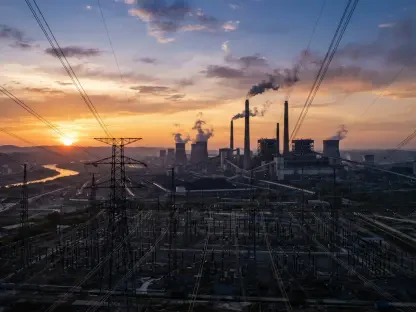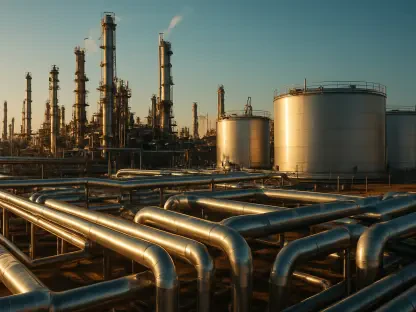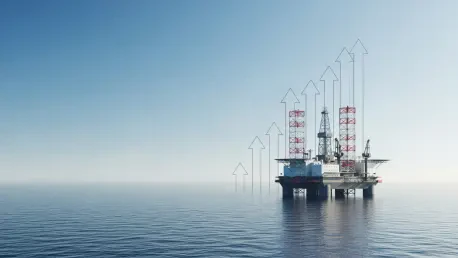

The sudden escalation of military posturing between Tehran and Washington within the strategically vital waters of the Persian Gulf has sent shockwaves through global commodities markets, driving crude oil benchmarks to levels not seen in over a decade. Analysts at major financial institutions noted that Brent crude surged past the hundred-dollar threshold almost immediately following reports of naval skirmishes and drone activity near the Strait of Hormuz. This volatility reflects deep-seated fears regarding the physical security of energy exports from the region, which remains a cornerstone of the global industrial economy despite the ongoing shift toward renewable power sources. Unlike previous fluctuations driven by simple supply-demand imbalances, the current spike is rooted in the high probability of a prolonged blockade that could halt nearly a fifth of the world’s daily oil consumption. Global investors are reacting to the breakdown of diplomatic channels that previously served to de-escalate tensions in the Middle East. The resulting price hike has already begun to manifest as higher transportation costs for logistics firms, further complicating the inflation outlook for several major economies that were already struggling with currency devaluations and rising trade barriers.
Geopolitical Instability: Maritime Logistics and Market Risks
Shipping companies have begun rerouting tankers away from the volatile corridor, which has caused a cascade of logistical delays and a significant increase in operational costs for refineries across Europe and Asia. The price of maritime insurance for vessels traversing the Gulf of Oman has tripled within forty-eight hours, reflecting the extreme risk profile that insurers now assign to any cargo originating from regional ports. This situation is particularly critical for nations like South Korea and Japan, which depend heavily on a steady flow of crude to maintain their manufacturing hubs. Furthermore, the use of autonomous surveillance drones by both sides has created a state of constant uncertainty, where minor tactical errors could ignite a broader conflict. Energy firms are looking toward the 2026 to 2028 period as a critical window to diversify their sourcing strategies, yet the immediate absence of Iranian barrels from the market creates a deficit that non-OPEC producers struggle to fill. The logistical nightmare is compounded by the fact that alternative pipelines lack the capacity to handle the volume required by global markets, leaving the maritime route as an irreplaceable, yet highly vulnerable, link in the chain of energy distribution.
The international community responded to the crisis by prioritizing a mixture of strategic reserve releases and intensified diplomatic pressure to prevent a total cessation of trade. Governments focused on stabilizing the energy sector by accelerating investments in domestic extraction technologies and decentralized power grids, which were identified as vital for long-term national security. Many industry experts suggested that the transition toward diversified energy portfolios would be the only permanent solution to the recurrent vulnerability of global supply chains to regional political disputes. Leaders in the energy sector evaluated the risk models and decided to implement more robust emergency protocols for future disruptions. As the volatility subsided slightly, the primary focus shifted toward establishing a more resilient maritime framework that could withstand the pressures of geopolitical rivalry. These collective actions provided a blueprint for navigating a world where energy remains both a vital resource and a frequent catalyst for international tension. The focus remained on developing high-capacity battery storage and modular nuclear reactors to mitigate the influence of traditional petroleum bottlenecks.