
Christopher Hailstone joins us today to discuss the evolving landscape of sustainable infrastructure in Sweden. As an expert in grid reliability and energy management, he provides context on how the agreement between Nobina and Skånetrafiken to deploy 27 biogas buses marks a major shift for the Malmö–Lund and Kristianstad routes. We explore how this partnership utilizes circular energy models to enhance passenger comfort while meeting ambitious regional emission targets and strengthening domestic energy security.
How will the introduction of these 27 new biogas buses transform the daily commute on the Malmö–Lund and Kristianstad routes while addressing the region’s environmental goals?
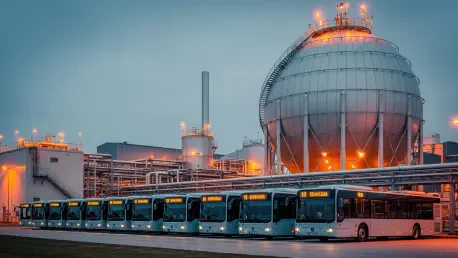
The deployment of 27 new buses represents a significant leap forward for regional mobility across Skåne. By replacing conventional engines with compressed biogas technology, passengers will notice a much quieter and smoother ride as they travel between Malmö, Lund, and Kristianstad. These vehicles utilize a renewable fuel source derived from organic waste, which directly tackles carbon emissions and supports Sweden’s strict climate targets. It is about providing a lighter environmental footprint while maintaining the high frequency and reliability required for these busy regional transportation hubs.
The Scania Irizar i4 is making its Swedish debut through this project; what specific features make this model particularly suited for longer-distance regional services?
This model is specifically tailored for the demands of longer hauls, featuring coach-style seating that offers a level of comfort usually reserved for private travel. We have included essential upgrades like onboard toilet facilities and refined interior finishes to ensure the travel experience is premium and stress-free for daily commuters. From a technical standpoint, the vehicle’s energy efficiency is paramount, allowing the fleet to handle heavy daily rotations without compromising on the comfort of the passengers. While new to Sweden, the model’s established success in Southern European markets suggests it will be a highly reliable addition to our local network.
From an energy management perspective, how does the use of domestically produced biogas strengthen local economies and create a more resilient fuel system?
Biogas is a masterpiece of circular economics because it turns local waste materials into a high-value energy resource for the community. Since a significant share of Sweden’s compressed biogas is produced right here at home, the economic benefits stay within our local borders rather than being sent to international fuel markets. This domestic production creates a robust fuel supply system that is less vulnerable to global price spikes or unpredictable supply chain disruptions. When you see these buses on the road, you are witnessing a closed-loop system where yesterday’s waste is literally powering tomorrow’s commute.
How do the collaborative efforts between operators like Nobina and manufacturers ensure that sustainability and operational reliability go hand-in-hand?
Successful public transportation relies on a delicate balance between environmental responsibility and the grueling reality of daily operations. Helena Ericson from Nobina has emphasized that for a fleet to be truly sustainable, it must be reliable for the drivers and easy to maintain for the technical teams. The partnership with Scania and LECAB Lastbilar AB ensures that these 27 buses are backed by a support network capable of managing the rollout and ongoing service needs efficiently. Rutger Hörndahl from Scania has noted that while the immediate climate benefits are clear, it is the energy efficiency of these vehicles that ensures they remain economically viable for the long term.
What is your forecast for the future of biogas-powered regional transport?
I believe biogas will become the backbone of regional transportation in areas where full electrification still faces significant infrastructure hurdles. As more cities observe the success of the Malmö–Lund expansion, we will likely see a surge in demand for high-capacity, biogas-powered coaches that offer both luxury and low emissions. The circular model of using local waste to fuel local movement is far too efficient to ignore, and I expect Sweden to remain a global leader in refining this technology. In the next decade, the transition from fossil fuels to renewable gases will move from a niche alternative to the standard expectation for all public service contracts.