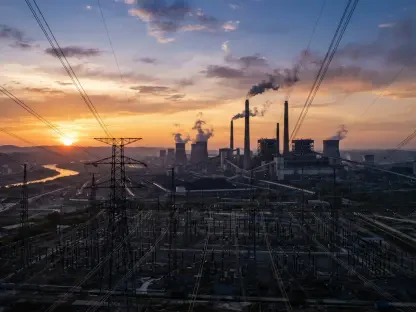

The United Nations Environment Programme has raised concerns that relying on carbon removal could lead to an overshoot of the one point five degree Celsius warming limit due to high energy demands. This caution arrives just as the Sluiskil facility in the Netherlands begins operations, marking a significant milestone in industrial decarbonization efforts across the European continent. As the largest commercial project of its kind, the site is engineered to capture approximately eight hundred thousand tonnes of carbon dioxide annually from a local fertilizer plant. The process involves transporting the captured gas across borders to be sequestered permanently beneath the Norwegian seabed. While proponents hail the project as a critical bridge toward reaching net-zero targets, the scale of investment required has sparked a heated international debate. Critics are increasingly vocal about whether these massive infrastructure projects represent a genuine environmental turning point or merely a sophisticated public relations strategy for high-emission industries that are seeking to preserve their existing business models.
Technical Realities: Examining the Global Impact
At the mechanical level, carbon capture and storage operates by isolating carbon dioxide from industrial flue gases using specialized chemical solvents. Once separated, the gas is compressed into a supercritical state, behaving like a liquid, which allows for efficient transport via pipelines or ships to deep geological formations. Despite the proven nature of this chemistry, the actual impact on global temperature mitigation remains exceptionally modest. By the start of 2026, there are only seventy-five operational large-scale sites across the globe, collectively managing a fraction of the total annual carbon output. Statistics indicate that these facilities account for a mere point two percent of global emissions, suggesting that the technology is currently a minor character in the broader climate story. The discrepancy between the high-profile media coverage and the actual volume of sequestered gas highlights the immense scaling challenges that the industry faces in the coming years.
Economic viability continues to be the primary barrier preventing widespread adoption of sequestration technology. The capital expenditure required to build capture units at existing industrial plants is staggering, often running into the hundreds of millions of dollars before a single gram of carbon is stored. Beyond the initial construction, the ongoing operational costs are high, largely because the capture process itself requires a significant amount of electricity and heat. This financial reality means that almost every major project currently in operation relies heavily on government subsidies, tax credits, or direct public investment to remain solvent. Without a substantial and sustained increase in the global price of carbon, the private sector remains hesitant to invest without these safety nets. This dependence on taxpayer funding raises difficult questions about the long-term sustainability of the carbon management industry and whether those funds might be more effectively spent on scaling up established renewable energy sources.
Historical Context: The License to Pollute Debate
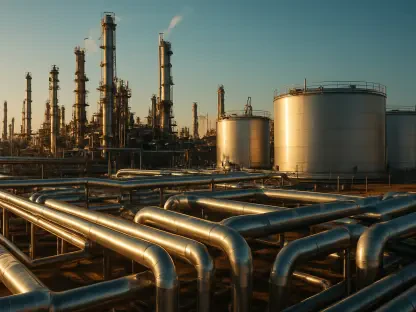
To understand the skepticism surrounding modern carbon capture, one must examine its origins within the energy sector during the 1970s. Initially, the technology was not developed for environmental protection but for a process known as enhanced oil recovery. By injecting carbon dioxide into aging or depleted oil wells, companies could increase the internal pressure and force out remaining crude that would otherwise be unreachable. This historical tie remains strong in 2026, with approximately three-quarters of all captured carbon still being diverted to oil fields to facilitate further extraction. For many environmental advocates, this creates a paradoxical situation where a technology marketed as a climate solution is actually being used to prolong the life of fossil fuel assets. The fear is that the primary motivation for maintaining these systems is to maximize the profitability of carbon-intensive resources rather than to achieve meaningful atmospheric restoration.
The perception of carbon capture as an escape hatch for heavy polluters has become a central theme in contemporary climate discourse. Many worry that by promising a future where industrial emissions can simply be vacuumed away, the technology provides a convenient excuse for companies to delay the transition to cleaner production methods. This narrative suggests that the presence of carbon capture equipment allows for business as usual under a veneer of sustainability. Instead of redesigning manufacturing processes to eliminate carbon at the source, industries may focus on end-of-pipe solutions that do not address the systemic issues of resource consumption and waste. This dynamic risks creating a moral hazard where the hope for a technological fix reduces the urgency of implementing more radical, but necessary, changes to the global energy infrastructure. The debate now centers on whether these facilities are genuinely helping or if they are simply slowing down the inevitable shift away from carbon-heavy industrial practices.
Future Pathways: Assessing Strategic Utility and Implementation
The operational launch of the Sluiskil project provided a critical real-world test for Europe’s climate strategy, demonstrating that the technical hurdles of cross-border carbon management could be overcome through intense international cooperation. It illustrated that the physical infrastructure for a carbon-neutral industrial sector is no longer a theoretical concept but a tangible reality that requires massive coordination. However, the experience also confirmed that relying on these end-of-pipe solutions demands a level of capital and energy that many developing nations cannot currently afford. In retrospect, the project functioned as a laboratory for understanding the limits of technological intervention in a system that is still fundamentally dependent on fossil fuels. It became clear that while carbon capture can mitigate some of the damage caused by heavy industry, it does not address the underlying necessity of reducing the overall consumption of carbon-intensive products. The data gathered helped refine future costs but also underscored the narrow margins of this technology.
Moving forward, the global community must adopt a more disciplined and transparent approach to the deployment of carbon management technologies to ensure they remain a supplement to, rather than a replacement for, renewable energy. Governments should implement strict use-case criteria that limit subsidies for carbon capture to truly hard-to-abate sectors like cement and chemical production, while phasing out support for its use in enhanced oil recovery. To build public confidence, regulatory bodies ought to establish a global liability fund that addresses potential storage leaks, funded by the industries that benefit from sequestration. Furthermore, increasing the transparency of lobbying activities will be essential for ensuring that climate policy is driven by scientific necessity rather than corporate preservation. By treating carbon capture as a specialized tool for specific industrial niches, the world can harness its benefits without falling into the trap of delaying the essential transition to a circular and renewable economy.