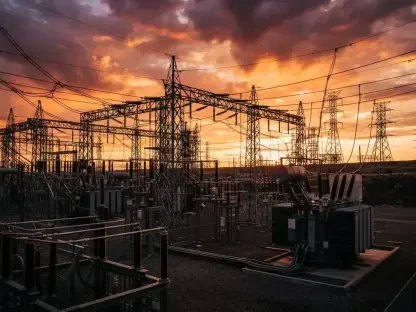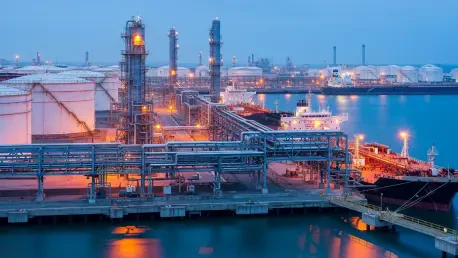

The horizon over the Persian Gulf transformed into a searing tapestry of orange and red as twelve ballistic missiles and a relentless swarm of kamikaze drones effectively terminated the short-lived peace between Tehran and Washington. While the world slept, the fragile stability of the region shattered under a kinetic barrage that targeted the United Arab Emirates with unprecedented precision. This sudden transition from a tense diplomatic ceasefire to active hostilities has transformed the Strait of Hormuz from a vital commercial artery into a perilous maritime graveyard. With smoke rising from the Fujairah oil hub and advanced defense systems lighting up the Abu Dhabi sky, the global community now faces a reality where the primary faucet of the world’s energy supply has been violently throttled.
The collapse of diplomatic efforts indicates that the era of shadow boxing is over, replaced by a direct confrontation that threatens the foundations of international trade. Military analysts observed that the coordination of the attack suggested months of preparation, timed to exploit a moment of perceived Western political hesitation. As the fires at Fujairah continue to burn, the focus shifts from damage assessment to the long-term implications of a regional power willing to disrupt the most sensitive energy corridor on the planet.
The Night the Ceasefire Died Over the Fujairah Horizon
The escalation began with little warning, as radar screens across the region flooded with signatures of incoming projectiles launched from Iranian territory. The target was not merely a geographic location but the economic heart of the UAE’s oil export infrastructure, designed to signal that no facility is beyond reach. In the hours following the initial strikes, the UAE Ministry of Defense confirmed that while many threats were neutralized, the sheer volume of the barrage allowed several units to impact critical storage tanks and processing units.
This aggressive maneuver effectively tore up the existing security protocols that had governed the Gulf for the past several months. Witnesses in Abu Dhabi described a night sky filled with the streaks of interceptor missiles and the low hum of drones, a stark contrast to the quiet commercial traffic that usually defines the city’s skyline. The psychological impact of this breach has been immediate, leading to a suspension of commercial flights and a total halt in port operations as the region braced for a potential second wave of strikes.
Why the Strait of Hormuz Remains the World’s Most Volatile Choke Point
The Persian Gulf serves as the central nervous system of the global energy economy, making any disruption there a tremor felt in every gas station and factory across the planet. This narrow waterway acts as the primary transit point for nearly a fifth of the world’s daily oil consumption, leaving the global market vulnerable to even minor fluctuations in regional stability. The recent collapse of the ceasefire represents more than a localized skirmish; it is a fundamental breakdown of international security that threatens to plunge the world into an era of forced scarcity.
As Iran pivots from proxy skirmishes toward direct state-on-state aggression, the stakes have shifted from political posturing to a total threat against energy security. The geography of the strait allows a determined actor to bottleneck the entire global supply with relatively modest naval resources, such as mines and fast-attack boats. Consequently, the international community finds itself at the mercy of a geographic reality where a single day of closure can trigger a multi-week backlog in the global supply chain, causing ripple effects that transcend the Middle East.
The Anatomy of a Crisis: Missiles, Blockades, and Market Chaos
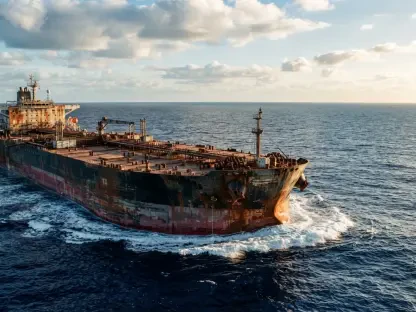
The current escalation manifests as a sophisticated three-pronged assault on the status quo, combining precision military strikes, maritime interdiction, and immediate economic shockwaves. Iranian forces targeted critical infrastructure in the UAE, specifically focusing on the Fujairah oil hub using a mix of cruise missiles and unmanned aerial vehicles designed to bypass modern defense grids. Simultaneously, a blockade of the Strait of Hormuz has created a logistical nightmare, with hundreds of oil tankers stalled and the specter of naval mines preventing the free flow of commerce.
This has forced Brent crude and West Texas Intermediate to price levels not seen in years, as traders begin to account for the largest oil supply disruption in recorded history. Market analysts noted that the volatility is fueled not just by the physical loss of oil, but by the uncertainty of how long the blockade will remain in effect. Insurance premiums for maritime vessels in the region have tripled overnight, making it nearly impossible for independent operators to justify the risk of transit without military escort.
Expert Warnings on the Impending Systemic Supply Chain Failure
Industry leaders and military commanders are sounding the alarm that this situation is not a temporary price spike but a fundamental shift in market availability and maritime safety. Darren Woods, the CEO of Exxon Mobil, cautioned that the world is moving beyond high prices into the realm of genuine fuel shortages, noting that the market has not yet fully internalized the severity of the blockade. He suggested that the lack of spare capacity elsewhere in the world means there is no immediate substitute for the crude currently trapped behind the Iranian lines.
On the front lines, Admiral Brad Cooper of U.S. Central Command confirmed that the situation remains perilous, with American forces already engaging and destroying Iranian fast boats to prevent acts of piracy. These insights suggest that the global energy infrastructure is facing a correction that could lead to a total system-wide failure if maritime security is not restored immediately. Military officials emphasized that the use of asymmetric tactics, including drone swarms and submerged mines, has made the traditional naval escort mission significantly more complex and dangerous than in previous decades.
Project Freedom: Navigating and Securing the Contested Maritime Corridors
To combat the strangulation of the Gulf, the U.S. military initiated Project Freedom, a strategic framework designed to maintain the flow of energy through a high-threat environment. This operation utilized a specific set of tactics including the deployment of guided-missile destroyers to provide overwatch and the integration of over one hundred aircraft to monitor surface threats. For commercial operators and international stakeholders, the strategy involved strict adherence to guided transit lanes and the utilization of unmanned platforms for mine detection.
The implementation of immediate counter-strike authorizations for any interference with civilian shipping created a protective bubble around the most critical vessels. This framework provided a blueprint for how global powers intended to bypass the blockade and forcibly stabilize the energy market through a combination of technological superiority and naval presence. Moving forward, the focus shifted toward establishing permanent international patrols and investing in autonomous sweepers to ensure that the waterway remained open regardless of regional political tensions. The ultimate success of these measures depended on the ability of the coalition to deter further state-sponsored aggression while clearing the logistical backlog that threatened to paralyze global industry.