
Christopher Hailstone joins us today to share his perspective on the massive shifts occurring within the global energy and transportation sectors. With his extensive background in grid reliability and renewable energy, Christopher provides a unique lens through which we can view the ambitious PM E-DRIVE initiative, a program designed to fundamentally alter the way a nation of over a billion people moves. Today, we delve into the financial mechanisms driving this transition, the regional leaders emerging in the race for electrification, and the critical infrastructure hurdles that must be cleared to ensure long-term stability for the power grid.
How is the current financial backing of ₹10,900 crore under the PM E-DRIVE initiative reshaping the adoption of electric vehicles across different segments?
The sheer scale of this ₹10,900 crore allocation represents a monumental commitment to cleaning up urban air and modernizing the national fleet. We are already seeing a massive surge in momentum, with more than 26.5 lakh electric vehicles supported by this scheme as of July 2026. It is particularly striking to see how quickly the funds are moving, with ₹2,322 crore already utilized to get these quiet, efficient machines onto the streets. The transition is most visible in the two-wheeler market, which accounts for 23.79 lakh units, effectively changing the daily commute for millions who now zip through traffic without the smell of exhaust.
While the numbers for two-wheelers are impressive, what can you tell us about the geographic distribution of this growth and which regions are leading the charge?
The geographic landscape of this transition is quite diverse, with specific states emerging as the clear engines of growth. Maharashtra is currently at the forefront, boasting a staggering 4.28 lakh supported vehicles, followed closely by Uttar Pradesh and Karnataka with 2.78 lakh and 2.67 lakh respectively. When you walk through the streets of these leading regions, you can feel the shift in the atmosphere as over 2.68 lakh L5-category three-wheelers and thousands of e-rickshaws become the primary mode of last-mile transport. It’s also heartening to see the public sector stepping up, with 14,000 electric buses sanctioned to replace the rumbling diesel engines that traditionally dominated city transit.
The transition to electric mobility relies heavily on infrastructure; how is the government addressing the current gap in charging stations compared to the vehicle sales already achieved?
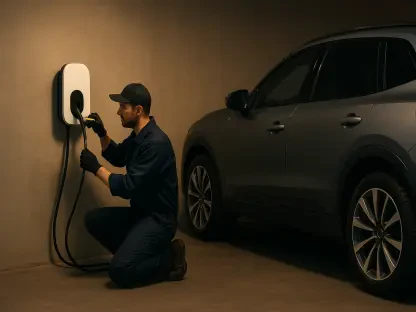
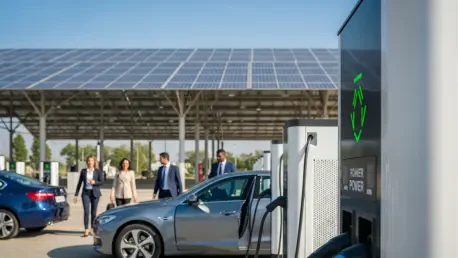
There is a palpable tension between the rapid sale of vehicles and the rollout of charging points, as the infrastructure component is still very much in the implementation stage. While the earlier FAME-II scheme successfully deployed 9,583 public charging stations, the current PM E-DRIVE program has yet to see a single station fully installed as of July 2026, despite having approved 5,871 new locations. However, the roadmap is clear: the government has earmarked ₹2,000 crore specifically for the public charging network, focusing heavily on states like Karnataka, which is slated for 1,571 new chargers. This creates an interesting challenge for the grid, as we must prepare to support these new hubs in Delhi and Rajasthan, where over 1,000 chargers each are planned to keep the fleet moving.
Beyond just getting vehicles on the road, how does the scheme ensure that India builds a sustainable ecosystem through domestic manufacturing and advanced testing facilities?
The vision here extends far beyond simple subsidies; it is about creating a robust, self-reliant industrial base through the Phased Manufacturing Programme. By encouraging the local production of critical components like battery packs, the government is ensuring that the economic benefits of the EV transition stay within the country. To support this, a significant investment of ₹780 crore is being funneled into modernizing testing agencies like ARAI and ICAT, which provides a sense of security and trust for the consumer. When a driver steps into one of the 55 new electric trucks or a high-speed e-scooter, they need to know that the technology has been rigorously vetted by world-class domestic facilities.
What is your forecast for the EV infrastructure in India by the end of the PM E-DRIVE scheme in 2028?
By the time the scheme concludes in March 2028, I expect we will see a much more balanced ecosystem where the “range anxiety” of today becomes a distant memory for most urban drivers. With the planned installation of nearly 6,000 public chargers under the current approvals and the continued involvement of public sector oil companies, the backbone of the network will finally catch up to the 26.5 lakh vehicles already on the road. The most significant change won’t just be the number of stations, but the reliability of the grid as these modernized testing agencies ensure that every battery and charger meets peak performance standards. We are looking at a future where the seamless integration of renewable energy and smart charging will make the ₹10,900 crore investment look like a modest down payment on a much larger green revolution.