
The geopolitical tremors radiating from the Middle East have historically sent shockwaves through the Seoul economy, yet the current escalation in Iran is being met with a defiance that signals a monumental shift in national priorities. Rather than merely bracing for impact, the South Korean government is rebranding this period of regional instability as a “blessing in disguise,” utilizing the chaos to dismantle a long-standing dependency on foreign fossil fuels. This transition represents more than a policy adjustment; it is a fundamental reimagining of how a resource-poor nation can leverage its technological prowess to secure its own borders and its own power.
For decades, the peninsula has remained tethered to the volatile oil markets of the Persian Gulf, a relationship that has often left the domestic economy at the mercy of distant conflicts. The current push for energy independence is a direct response to this vulnerability, aiming to turn a systemic threat into a catalyst for a greener, self-sufficient future. As the global energy landscape fractures, Seoul is positioning itself not as a victim of circumstance, but as a proactive leader in the race toward a sustainable and autonomous energy infrastructure.
Navigating Geopolitical Volatility: A Turning Point for Seoul
The Ministry of Climate, Energy and Environment has recently redefined the nation’s stance, moving toward a strategy where regional crises act as accelerators for domestic change. Minister Kim Sung-hwan has championed this “fundamental energy transition,” arguing that the current volatility is the final push needed to sever the ties with Middle Eastern oil. By treating the conflict as a definitive turning point, the administration is fostering a national consensus that favors long-term stability over the convenience of imported energy.
This shift in perspective is crucial for a nation that has spent years navigating the delicate balance of international trade and domestic security. The transformation involves a psychological move away from viewing the Middle East as an indispensable supplier and toward viewing it as a reminder of why independence is necessary. This new narrative is being used to mobilize both public support and private investment toward a future where South Korea controls its own energy destiny.
The Vulnerability of an Import-Driven Energy Economy
The stakes for this transition are remarkably high, given that South Korea currently imports 94% of its energy, with a staggering 72% of its crude oil sourced from the Middle East. This heavy reliance has created a structural weakness that becomes painfully apparent whenever benchmarks surge, as seen with the recent 30% jump in oil prices. Such fluctuations do not just affect transportation; they ripple through every sector of the industrial economy, threatening the competitive edge of South Korean exports.
To address these risks, the government is leaning on its credibility to manage the “fundamental energy transition” with precision. By highlighting the fragility of current supply chains, the Ministry is making a compelling case for why the status quo is no longer tenable. The goal is to move beyond temporary fixes and toward a structural overhaul that can withstand the unpredictable nature of global politics.
Strategic Pillars of the 2030 Energy Independence Roadmap
At the heart of this transformation is an ambitious roadmap to achieve 100 gigawatts of renewable capacity by 2030. This represents a massive scaling effort, considering the current capacity sits at 37 gigawatts and the renewable share was just 9% in 2025. The government is aggressively bridging this gap by identifying and exploiting every available geographic and technological advantage to ensure the grid remains resilient and clean.
This roadmap is not just a set of environmental targets; it is a comprehensive national security plan. By diversifying the energy mix and focusing on indigenous power generation, South Korea is effectively insulating its economy from the whims of foreign regimes. The path toward 2030 is paved with massive infrastructure projects designed to modernize the grid and accommodate a new era of decentralized power.
Scaling Solar Infrastructure via Geographic Advantages
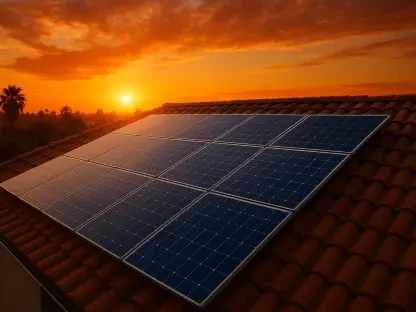
South Korea is uniquely positioned to lead in solar energy, boasting 2,148 annual sunshine hours—a figure that significantly exceeds those of established renewable leaders like Germany. This geographic windfall makes solar power the most logical short-term solution for rapidly increasing domestic capacity. The administration is prioritizing the deployment of solar arrays across industrial complexes and public lands to maximize every hour of available sunlight.
By focusing on solar as a primary pillar, the government can achieve quick wins in energy production while longer-term projects remain in development. The emphasis is on immediate scalability, ensuring that as the Iran crisis persists, the domestic contribution to the power grid grows in tandem. This localized approach reduces the need for expensive and risky long-distance energy transport.
Wind Power as a Long-Term Diversification Asset
While solar provides the immediate surge, wind energy is being cultivated as a vital long-term asset for the national strategy. Development in this sector is naturally slower, requiring extensive environmental assessments and massive generation infrastructure, particularly for offshore projects. However, the government views wind as a necessary counterweight to solar, providing a more consistent and diverse power profile for the grid.
These wind projects represent the next frontier of South Korea’s technological application. By investing in large-scale turbine technology and marine engineering, the nation is preparing for a future where its coastal waters provide a significant portion of its electricity. This patience in development reflects a commitment to building a balanced and reliable renewable portfolio.
Balancing the Grid with Nuclear and Coal Contingencies
To ensure stability during this massive transition, the administration is employing pragmatic contingencies involving nuclear and coal power. Recent measures include restarting mothballed nuclear facilities and delaying the decommissioning of certain coal-fired plants to offset the volatile price and supply of natural gas. These steps are viewed as temporary but necessary safeguards to prevent blackouts or economic disruption while the renewable infrastructure matures.
This balanced approach demonstrates a realistic understanding of the current energy crisis. While the long-term goal remains green independence, the immediate priority is keeping the lights on and the factories running. By utilizing existing nuclear assets, Seoul is creating a reliable “bridge” that supports the grid without increasing the carbon footprint as much as a pure fossil fuel reliance would.
Reclaiming the Supply Chain: A Domestic-First Approach
A defining feature of South Korea’s strategy is the aggressive push to revitalize its domestic solar industry, which has recently faced intense pressure from foreign manufacturers. In a bold move to counter the 95% market share held by Chinese components in 2024, the government is implementing targeted subsidies and leveraging its “substantial technological prowess.” The aim is to ensure that the transition to green energy also serves as a catalyst for domestic economic growth.
By reclaiming the supply chain, South Korea is preventing its energy transition from becoming a wealth transfer to foreign entities. The focus is on nurturing a domestic ecosystem that produces high-efficiency solar cells and advanced battery storage systems. This “Domestic-First” mentality ensures that the billions of won invested in the energy transition remain within the country, fueling local jobs and innovation.
Current Policy Interventions and Economic Safeguards
The administration has mobilized a 26.2 trillion won ($17.6 billion) supplementary budget to act as a buffer against the immediate economic fallout of the Iran crisis. These funds are being used to shield households and small businesses from price spikes, ensuring that the cost of energy does not lead to a broader cost-of-living crisis. Alongside fiscal measures, the government has implemented fuel price caps and energy-saving mandates, such as parking rotations for public employees, to manage demand.
Furthermore, South Korea is strategically managing its 22-million-barrel oil reserve, held in coordination with the International Energy Agency. While these reserves are being monitored closely, officials are currently holding them back, confident that existing supplies can manage the 30% surge in oil benchmarks for now. This disciplined management of resources allows the government to maintain a steady hand on the economy even as global markets fluctuate wildly.
Reflection and Broader Impacts
The proactive fiscal response and the long-term strategic pivot have shown that South Korea is capable of turning a structural disadvantage into a technological opportunity. However, the challenge remains significant; reversing the plummeting domestic market share of solar production requires sustained political will and industrial ingenuity. The success of this transition will depend on whether the government can maintain its momentum once the immediate pressure of the Iran crisis begins to fade.
Reflection
The government’s foresight in treating energy as a security issue rather than just a commodity has been a primary strength during this period of volatility. While the reliance on temporary coal and nuclear restarts shows the limits of the current grid, it also highlights a pragmatic flexibility. The real test lies in the revitalization of the domestic manufacturing sector, which must now compete on quality and cost to replace foreign dominance.
Broader Impact
South Korea’s shift is likely to serve as a blueprint for other resource-poor nations facing similar geopolitical shocks. By choosing technological self-reliance over market subservience, Seoul is demonstrating that the path to energy security is paved with innovation and domestic investment. This shift may influence global energy trends, encouraging a more fragmented but resilient landscape where nations prioritize local generation over global supply lines.
Transforming Crisis into Opportunity for National Energy Security
The Iran crisis has effectively ended the era of South Korean energy complacency, forcing a transition from fossil fuel dependency to a 100-gigawatt renewable future. This journey from an import-driven economy to a leader in technological self-sufficiency is anchored by a massive 2030 roadmap and supported by immediate fiscal safeguards. By leveraging its sunshine hours and industrial expertise, the nation is building a grid that is as independent as it is sustainable.
Ultimately, the administration has utilized this moment of market volatility to fortify the nation’s resolve, proving that “technological prowess” is the most valuable resource a country can possess. As the project for 2030 continues, the lessons learned from the current regional instability will likely shape Korean policy for decades. Moving forward, the focus must remain on scaling these domestic solutions to ensure that South Korea never again finds its energy future held hostage by events beyond its borders.