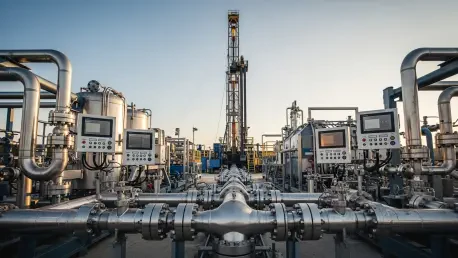

Western Pennsylvania has long been the rugged crucible where the world’s insatiable thirst for energy meets the relentless ingenuity of American engineering and resource management. As the United States prepares to mark its 250th year of independence, the rolling hills and deep valleys of the Allegheny Plateau stand as a testament to an industrial legacy that spans from the first flickers of kerosene lamps to the massive natural gas exports of the present day. This region did not merely provide the raw materials required to build a superpower; it served as a primary laboratory for the specific extraction techniques and mechanical innovations that now define global energy markets. By bridging the gap between raw natural wealth and commercial viability, Pennsylvania’s innovators established the blueprints for modern industrial society, ensuring that the local developments of the past several centuries continue to resonate across the international stage today.
The Modern Revolution of Shale Gas
Unlocking the Marcellus Shale: The Technical Breakthrough
The recent transformation of the energy landscape began in 2004 in Washington County, marking a pivotal moment in the history of geological exploration. By combining horizontal drilling with advanced hydraulic fracturing, engineers successfully tapped into the Marcellus Shale, a massive rock formation once thought to be economically inaccessible. This technical breakthrough at the Renz No. 1 well proved that deep-seated gas could be extracted on a massive scale, sparking a nationwide boom in domestic energy production that continues to shape policies today. The ability to navigate miles of underground strata with precision allowed operators to access vast reservoirs that were previously locked away in tight rock. This success was not merely a local win but a demonstration of technical prowess that recalibrated global expectations for energy self-sufficiency, proving that innovation could overcome physical barriers that had persisted for generations of drillers.
The sheer volume of natural gas available in this region is hard to overstate, with estimates suggesting it could power the national infrastructure for several decades. While this abundance has drastically changed the American economy by lowering costs for manufacturers and consumers, it has also prompted vital national conversations regarding environmental safety and long-term sustainability. The success of these extraction methods turned Pennsylvania into a modern frontier, influencing global energy strategies and international trade agreements. As of the current period from 2026 to 2028, the focus has shifted toward refining these techniques to minimize the surface footprint and improve the recycling of process water. This ongoing refinement ensures that the lessons learned in the Marcellus are exported to other shale basins across the globe, maintaining Pennsylvania’s role as the primary instructor in the high-stakes game of unconventional resource recovery.
Refining and Extraction: The Legacy of Titusville
Long before the current gas boom, Western Pennsylvania gave birth to the modern oil industry through a series of experimental triumphs in the mid-nineteenth century. In the 1850s, Samuel Kier developed a specialized distillation process to turn crude oil into kerosene, providing a cleaner and more efficient alternative for domestic lighting. His work created the first real consumer market for petroleum, shifting it from a medicinal curiosity used in liniments to a valuable industrial commodity that could illuminate cities. Kier’s ability to recognize the chemical potential of what was then considered a nuisance by salt well drillers laid the groundwork for the refining industry. This shift in perspective was crucial, as it established the concept that natural resources must be processed and refined to reach their full economic potential, a principle that remains a cornerstone of the global energy sector and modern chemical engineering practices.
This growing demand for illumination led Edwin Drake to attempt the first commercial oil well near Titusville in 1859, a venture many contemporaries viewed with skepticism. By adapting drilling techniques originally used for salt wells, Drake struck oil at a depth of 70 feet, proving that petroleum could be harvested in bulk rather than just gathered from surface seeps. This moment established Western Pennsylvania as the global center of the early oil industry and set the stage for the age of fossil fuels that would define the twentieth century. The technical success of Drake’s Folly, as it was mockingly called, provided a reproducible model for exploration that was quickly adopted by speculators and engineers around the world. The legacy of Titusville is not just the oil itself, but the birth of a standardized industry that could scale to meet the demands of an increasingly mechanized and hungry global population.
Mechanization and the Shift in Coal Mining
The Impact: Joy Continuous Miner and Modern Automation
Coal served as the primary engine of the American Industrial Revolution, but for many years, mining was a slow, grueling, and dangerous manual process. This reality changed mid-century with the introduction of the Joy Continuous Miner, a massive machine designed to tear coal directly from the seam without the traditional stop-and-start cycle. First deployed in Pennsylvania in 1948, it replaced the need for explosives and hand tools, fundamentally altering how the industry functioned by streamlining the extraction process. The machine used a large rotating drum equipped with tungsten carbide teeth to scrape the coal face, which was then moved onto a conveyor system for immediate transport. This innovation did not just increase speed; it essentially turned the mine into a subterranean factory where the flow of material was constant, a concept that revolutionized the efficiency of underground resource harvesting across the entire globe.
While the mechanization of coal mining significantly improved safety and output, it also brought about a painful economic transition for many communities reliant on labor. The shift from manual labor to automated “button-pushing” led to a massive reduction in the mining workforce over the following decades, creating a blueprint for the automation challenges seen in various sectors today. Despite these social challenges, the technology developed in Pennsylvania’s mines redefined underground extraction methods used in heavy industry from Australia to South Africa. The legacy of the Joy Continuous Miner serves as a reminder that technological progress often necessitates a total restructuring of the human element in industry. Today, the principles of continuous extraction are being applied to new frontiers, ensuring that the mechanical DNA of Pennsylvania’s coal history persists in the development of safer and more efficient mining robotics.
Strategic Synthesis: Rare Earths and Future Potential
The history of energy in this region is defined by a consistent willingness to take high-stakes risks and combine different technologies to solve complex geological problems. These historical milestones created the blueprints for modern industrial growth and a significantly higher quality of life for millions of people worldwide. The ability to integrate mechanical engineering, chemical refining, and geological science allowed Pennsylvania to remain at the forefront of the energy conversation for over a century. This interdisciplinary approach is what truly distinguishes the region, as it fostered an ecosystem where failure was seen as a step toward a commercial breakthrough. By studying the evolution from Drake’s first well to the sophisticated horizontal rigs of the present, one can see a clear trajectory of human mastery over the environment through technical persistence and the relentless pursuit of more efficient energy sources.
The regional shift toward sustainable practices and the extraction of critical minerals provided a template for global industrial hubs facing similar transitions. Leaders in the energy sector prioritized the repurposing of legacy infrastructure, which effectively transformed abandoned sites into centers for the production of battery-grade lithium and rare earth elements. This approach minimized the environmental costs associated with new mining operations while simultaneously revitalizing local economies that had been stagnant. It was essential for stakeholders to integrate historical geological data with modern carbon capture technologies to achieve a balanced energy portfolio. By adopting this dual-purpose strategy, the industry moved toward a more resilient model that addressed both resource scarcity and climate objectives. These actions established a clear path forward, proving that the most effective way to secure future energy needs involved building upon the mechanical and scientific foundations laid by previous generations.