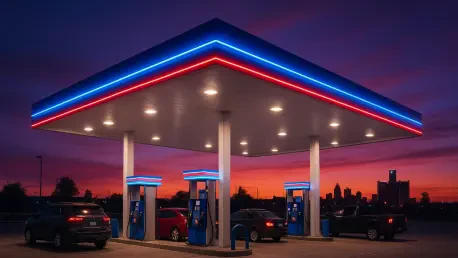

The neon glow of a new gas station on Harper Avenue is casting a long shadow over the Detroit automotive landscape as prices plummet to levels rarely seen in the modern era. While many residents are flocking to the Freedom Fuel station to fill their tanks for $3.47 per gallon, the sixty-two-cent discount compared to the Michigan state average is sparking more than just consumer excitement. This bold entry into the Midwest market arrives at a precarious crossroads for the brand, as the network faces a legal storm that threatens to undermine its rapid expansion.
The High Stakes: Underpricing Gasoline in the Motor City
In a city where the automotive industry defines the local culture, the arrival of a fuel provider offering significantly lower prices was always going to make waves. The Harper Avenue location represents the first major push for the Freedom Fuel Network outside of its original footprint, challenging established regional players during a period of high economic sensitivity. For the average Detroiter, the savings are tangible, yet the underlying economics of such a steep discount remain a subject of intense debate among market analysts and local competitors who view the move with suspicion.
The aggressive pricing strategy has effectively forced nearby retailers to reconsider their own margins, creating a localized price war in a high-traffic corridor. While the immediate benefit to the consumer is undeniable, the sustainability of this model remains the central question as the brand navigates its newest territory. The expansion into Detroit serves as a litmus test for whether the company can maintain its disruptive momentum while operating under the intense scrutiny of a federal courtroom in Philadelphia where allegations of debt continue to mount.
The Intersection: Political Endorsements and Market Disruption
The Freedom Fuel Network rose to national prominence following a high-profile endorsement from Donald Trump in 2026, positioning itself as a disruptor in a market dominated by global oil giants. By leaning into an “America First” philosophy, the chain initially gained a foothold in Pennsylvania and New Jersey before targeting the competitive landscape of Detroit. This expansion highlights a growing trend where retail brands leverage political identity to build rapid consumer loyalty, even as competitors in the Northeast begin to narrow the price gap through traditional market adjustments.
This strategy allowed the brand to cultivate a dedicated following that viewed filling up at their stations as a form of economic protest against traditional energy giants. However, as the brand moved into late 2026, the novelty of political branding had to be supported by operational stability to ensure long-term viability. The shift from a regional curiosity to a multi-state network requires a level of supply chain coordination that is currently being tested by allegations of massive financial delinquency and vendor disputes.
Deconstructing the $4 Million Allegation: Financial Mismanagement
The core of the legal turmoil involves a federal lawsuit filed by Georgia-based Mansfield Oil Company against KRSM, the middleman firm tied to the network’s operations. Mansfield alleges that over 1.1 million gallons of fuel were delivered but never paid for, leading to an unpaid invoice totaling approximately $4 million. This allegation suggests that the low prices enjoyed by consumers might be the result of a failure to compensate the original supplier rather than genuine innovation in logistics or overhead reduction.
Central to the court’s concern is a recent discovery that a mandated M&T Bank account—intended to hold $2.75 million in security—is currently underfunded by over $2.25 million. Mansfield recently informed the court that funds appeared to have been shifted to a secondary entity known as “Universal,” raising red flags about the potential dissipation of assets. These financial maneuvers complicated the legal proceedings as judges attempted to trace the flow of cash from the pump back to the fuel wholesalers.
Corporate Defiance: The Defense of Mis-Priced Invoices
Freedom Fuel leadership has remained steadfast, dismissing the legal proceedings as “baseless speculation” and “misinformation” intended to harm their reputation. While the network itself is not the primary defendant in the Mansfield suit, the familial and operational links between Syed Kazmi of KRSM and Shamikh Kazmi of Freedom Fuel have drawn intense judicial scrutiny. The company maintained that its business model was sound and that the legal drama was merely an attempt by established interests to suppress a rising competitor.
Defense counsel Mauro Tucci characterized the entire $4 million conflict as a clerical accounting dispute over “mis-priced” invoices, suggesting that the delinquency was a matter of administrative error. This defense hinged on the idea that the volume of transactions processed by the network led to honest mistakes in the billing cycle. Whether the court accepted this narrative determined if the Kazmi-linked entities could continue their rapid expansion or if they would be forced into a costly settlement that could end the discounts.
Identifying Sustainable Pricing Models: High-Volatility Markets
The Freedom Fuel saga offered a framework for evaluating the longevity of aggressive market entrants who prioritized growth over vendor relations. Sustainable discounting typically relied on supply chain efficiency or high-volume offsets, yet this case suggested that vendor non-compliance could artificially deflate retail prices for a short period. Observers noted that the most successful business models were those that balanced consumer savings with transparent financial obligations to their suppliers toward the end of the fiscal year.
Stakeholders prioritized transparency in supply agreements and monitored judicial findings regarding fund dissipation to determine if the brand’s growth was supported by legitimate management. The resolution of the Mansfield lawsuit established a precedent for how the industry handled rapid-growth startups that used non-traditional branding to gain market share. In the end, the market realized that while political alignment could bring drivers to the station, only sound accounting practices could keep the lights on and the fuel flowing to the public.