
Christopher Hailstone brings decades of frontline experience in energy management and grid security to the table, making him one of the most respected voices in the shifting landscape of American power delivery. As the nation grapples with the tension between aging fossil fuel infrastructure and the rapid ascent of renewable energy, Hailstone has become a go-to expert for understanding how federal mandates intersect with the technical realities of the grid. His background in utilities provides a grounded perspective on the high-stakes decisions being made in Washington that directly impact the reliability of the lights in our homes and the numbers on our monthly bills.
This conversation explores the controversial application of Section 202(c) emergency orders used to prevent the retirement of coal-fired power plants, specifically focusing on the R.M. Schahfer facility in Indiana. We examine the disconnect between federal claims of “energy emergencies” and the physical state of plants that are currently unable to operate due to mechanical failures. The discussion also dives into the massive financial implications for ratepayers, who are expected to shoulder over a billion dollars in costs, and how the surge in wind, solar, and battery storage across the 15-state Midcontinent Independent System Operator (MISO) territory is calling the necessity of these coal extensions into question.
Section 202(c) of the Federal Power Act was historically used as a temporary measure for immediate energy threats, but we are seeing it applied differently now. How does this recent shift in federal intervention change our understanding of grid management and utility independence?
The recent use of Section 202(c) represents an unprecedented flex of federal authority that we simply haven’t seen in previous administrations. Historically, these emergency orders were the “break-glass” option, triggered only when a utility or a grid operator specifically requested help because they were staring down an imminent blackout or a natural disaster. Now, we are seeing the Department of Energy step in to order seven different fossil-fueled plants to stay online, often against the explicit retirement plans of the utilities that actually own and operate them. This creates a confusing tug-of-war where federal officials are declaring an emergency while the regional operators—those with their hands on the switches—are saying the grid is actually well-positioned to meet demand. It undermines the traditional autonomy of state regulators and utilities who have already spent years planning their transition to more modern, efficient energy sources.
The R.M. Schahfer coal plant was ordered to stay open to prevent blackouts, yet it hasn’t been operational for months. What does it say about the reliability of the grid when a facility deemed “essential” by the government is physically unable to produce power?
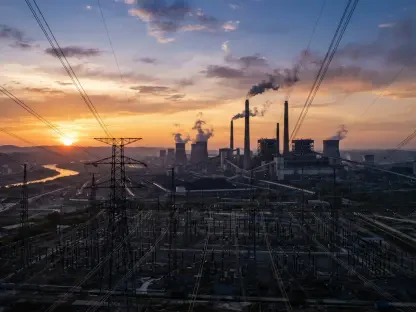
It exposes a massive gap between political rhetoric and the gritty reality of 1980s-era mechanical engineering. The Schahfer plant is currently a collection of rusted tubes and failing pumps rather than a reliable power source; one of its units has been out of service since July 2025, and the other hasn’t run since late February. When environmental compliance directors start talking about “deteriorated” conditions and failures in boiler feed pumps and turbines, you realize that a federal mandate cannot magically fix a dilapidated boiler. Even with these 90-day “must-run” orders in place, the plant is expected to be offline for much of 2026 for significant repairs, proving that you can’t mandate reliability from a machine that is fundamentally broken. It’s a sobering reminder that true grid security comes from functional, modern assets, not from keeping “zombie” plants on life support through legal paperwork.
With costs to keep these specific Indiana units running estimated to exceed $1 billion through 2027, how should the public view the trade-off between this “emergency” insurance policy and the rising costs on their monthly utility bills?
The financial burden here is staggering, and it’s the households and local businesses in north and central Indiana that are being forced to absorb the blow. We are talking about more than $1 billion in projected costs to prop up an antiquated facility that is more expensive to run than the gas and renewable alternatives already available. Federal regulators have already cleared the way for these repair costs to be spread among customers, which feels like a double punishment for the public: they pay higher rates for a plant that isn’t even delivering electricity during the months it was ordered to be “ready.” There is a very real sense of frustration among consumer advocates because this money is being funneled into old technology instead of being used to further the transition to the cheaper, faster energy solutions that the utility originally planned for.
The utility owner, NIPSCO, has pointed to a surplus of power coming from new wind, solar, and battery sites. How has the rapid integration of these technologies across the MISO territory challenged the traditional belief that coal is the only way to ensure summer reliability?
The narrative that we need these old coal plants to keep the lights on during a summer heatwave is quickly being debunked by the sheer volume of new capacity hitting the grid. Since 2021, we’ve seen the addition of three wind farms, eight solar farms, and two major battery storage sites in this portfolio alone, which has created a comfortable surplus of power. Across the 15 states that make up the MISO territory, the growth in storage and solar—combined with some new gas plants—has fundamentally changed the math of grid reliability. These newer assets don’t suffer from the same “mechanical fatigue” that plagues a forty-year-old coal unit, and they can be brought online much faster to meet the spikes in demand from new data centers and factories. We are seeing in real-time that the “solution” to energy demand isn’t clinging to the past, but rather leaning into the diversified, modern fleet that is already performing well on the ground.
What is your forecast for the long-term viability of federal “must-run” orders as more utilities move toward electrification and the development of massive data center projects?
My forecast is that we are approaching a breaking point where the physical and economic realities of the energy market will eventually override these federal interventions. While the government may continue to issue 90-day extensions—like the one expected this June—those orders mean very little if a plant is undergoing “significant boiler and turbine work” and remains cold through the peak of summer. As we see a massive spike in demand from electrification and new data centers, the pressure to build fast, cheap, and reliable generation will only intensify. Ultimately, the market and the state regulators will likely favor the efficiency of wind, solar, and storage over the billion-dollar price tags of propping up antiquated coal units. The transition might be messy and politically charged, but the data shows that the grid of the future is already being built, regardless of whether these old plants are forced to stay on the books or not.