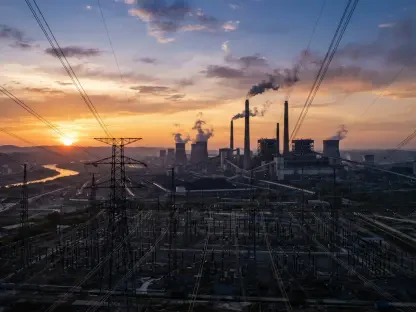

The global energy landscape has entered a period of unprecedented peril as of May 2026, forcing major industry titans and international monitoring agencies to issue urgent warnings about an imminent supply catastrophe. According to the latest reports from ExxonMobil, the International Energy Agency, and the Joint Oil Data Initiative, crude oil inventories across the globe have plummeted to their lowest levels in modern history, leaving the market without any meaningful buffer against further disruptions. This rapid depletion is largely a consequence of the widening conflict in the Middle East and the strategic closure of the Strait of Hormuz, which has effectively severed a critical artery for global energy commerce. Experts now observe a collision between record-low physical supplies and a total exhaustion of strategic reserves that were designed to mitigate such volatility. Without these safety nets, internal predictive models suggest that oil prices are poised to surge into the $150 to $160 range per barrel within weeks, creating a massive economic burden for global consumers.
The Unprecedented Scale: Analyzing Global Supply Shocks
Data from the second quarter reveals a staggering decline in global oil production, with a confirmed loss of nearly 1.8 million barrels per day occurring in April alone. This brings the cumulative deficit since the start of 2026 to over 12 million barrels, a figure that highlights the severity of the ongoing regional instabilities. The core of this disruption remains centered in the Middle East, where the shuttering of vital shipping lanes has essentially shut in more than 14 million barrels per day of output that simply cannot reach international markets. This massive reduction in available crude has completely overwhelmed the global market’s ability to compensate through alternative sources or production hikes. The transition from a modest surplus to a deep, structural deficit happened far faster than many analysts anticipated, and there are currently no indications that this pressure will ease in the immediate future, leaving the global energy supply in a state of extreme vulnerability.
The velocity at which global oil inventories are being drained is historic, with on-land stocks in developed nations currently falling at a rate of nearly 5 million barrels per day. Throughout the course of this crisis, more than one billion barrels of global oil reserves have been effectively erased, removing the commercial and strategic buffers that usually protect the global economy from sudden price spikes. This rapid drawdown indicates that the physical reality of the market is far more precarious than previous estimates suggested, leaving major industrial economies without a cushion to absorb further shocks. As these reserves vanish, the market is losing its primary mechanism for price stabilization, making high volatility the new baseline for global trade. Financial institutions are now scrambling to adjust their outlooks as the realization sets in that the global energy buffer has been entirely spent, leaving the system vulnerable to even the smallest additional disruption.
Downstream Constraints: Refining Disruptions and Scarcity
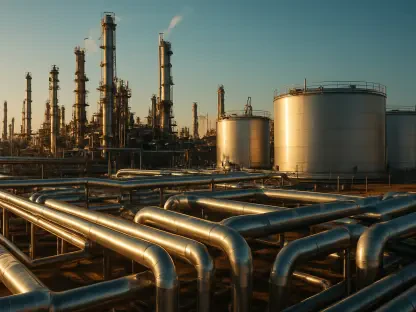
While the lack of raw crude is a primary concern, the refining sector is simultaneously grappling with a separate but equally critical set of challenges that threaten fuel availability. Physical damage to infrastructure in key processing hubs, combined with sudden political export restrictions, has left many refineries unable to maintain throughput levels. Consequently, refining volume is expected to drop significantly throughout the summer months, just as seasonal demand for transportation fuel reaches its peak. The lack of consistent feedstock has created a situation where essential products like diesel and jet fuel are becoming increasingly scarce on the open market. This downstream bottleneck is amplifying the crisis, as the inability to convert raw materials into usable energy products further strains global logistics and international shipping. Even if crude production were to stabilize tomorrow, the damage to the refining network suggests a prolonged period of product shortages.
Leadership at ExxonMobil has issued a specific alert regarding commercial liquid inventories, which have reached levels previously thought impossible in the modern industrial era. Executives suggest that the global market is currently only a few weeks away from a critical tipping point where inventories will hit their absolute operational minimums. At this juncture, the traditional economic mechanic of demand destruction will likely take over, forcing prices to such extreme levels that consumption is artificially reduced. This is not a voluntary reduction in usage but a forced economic necessity as businesses and consumers find themselves physically unable to afford the fuel required for daily operations. This phase of the crisis marks a shift from market volatility to a genuine economic contraction, where the price of energy becomes a barrier to global trade rather than a facilitator. The prospect of extreme oil valuations is no longer a theoretical risk but a functional reality of a market that has run out of options.
Geopolitical Deadlock: Diplomatic Limits and Strategic Exposure
The ongoing crisis is further complicated by a deep geopolitical stalemate between the United States and Iran, where traditional diplomatic and military levers appear to have lost their effectiveness. While the U.S. administration has attempted to mitigate the domestic impact by aggressively draining the Strategic Petroleum Reserve, these efforts have proven to be unsustainable over the long term. This strategy has now left the United States with very little leverage or remaining reserves to handle a sustained conflict or a further escalation of hostilities in the region. Iran’s perceived ability to withstand prolonged economic pressure, combined with its continued control over critical shipping routes, has placed Western powers in a difficult position. They are now faced with a choice between potentially risky military escalation to reopen the shipping lanes or making significant diplomatic concessions that could reshape the regional power balance for decades to come.
Current projections from industry analysts indicate a ticking clock of approximately two to three weeks before the market experiences a major price explosion. Even if a diplomatic resolution is reached later this year, the systemic damage already done to global supply chains suggests that extreme volatility will persist for some time. The world is moving into a phase where extreme pricing will serve as the primary tool for balancing a broken market, signaling a period of profound instability for the global economy. This shift in market dynamics means that the cost of energy will likely remain decoupled from traditional production costs as the scarcity premium continues to drive valuations. The inability of major powers to coordinate a response has exacerbated the situation, turning a regional supply shock into a permanent shift in how energy security is perceived and managed. Investors are now pricing in a world where energy stability is the exception rather than a reliable standard.
Strategic Resilience: Future Considerations for Energy Security
In response to this looming crisis, many industrial sectors began pivoting toward more localized energy production and increased investment in alternative liquid fuels to bypass traditional supply chains. This shift involves accelerated development of domestic processing capabilities and a move away from reliance on singular, high-risk transit points like the Strait of Hormuz. Companies that successfully transitioned their logistics to accommodate decentralized energy sources managed to maintain higher operational stability than those still dependent on global crude benchmarks. The current situation demonstrated that energy security is no longer just a matter of procurement but a fundamental requirement for infrastructure hardening. Moving forward, the focus must remain on creating redundant systems that can survive the total loss of primary international shipping routes. This includes the rapid expansion of synthetic fuel production and the integration of large-scale battery storage to offset the volatility of fuel costs.
The energy crisis of 2026 proved that the global economy remained dangerously susceptible to localized geopolitical conflicts and the depletion of strategic buffers. Policymakers and industry leaders recognized that relying on a just-in-time delivery model for essential energy commodities was a strategy that invited disaster in a volatile world. Those who prioritized long-term storage and the diversification of their energy portfolios were better positioned to survive the price spikes that eventually hit the $150 per barrel mark. This period served as a definitive turning point, forcing a global rethink of how critical infrastructure was protected and how supply chains were structured. The transition toward more resilient, domestic energy frameworks became the standard approach for ensuring economic survival in an era of constant geopolitical shifts. Ultimately, the lessons learned from this shortfall encouraged a more proactive stance on energy independence, ensuring that the global economy was better prepared for the next inevitable shock.