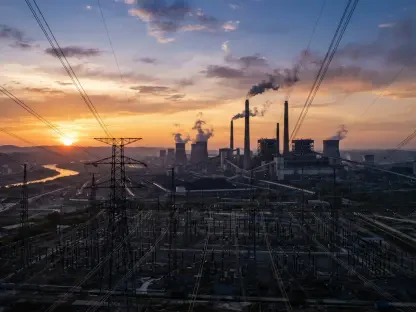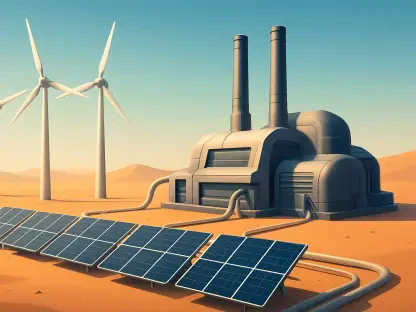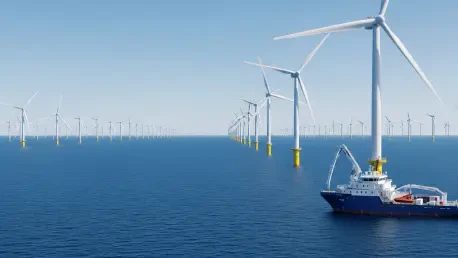

The rapid expansion of the clean energy sector has fundamentally reshaped the global financial landscape, transforming what was once a niche environmental movement into a massive economic powerhouse. Over the last decade, the clean energy sector has experienced a remarkable six-fold expansion, reflecting a profound shift in how capital is allocated across the international stage. Currently, renewable energy projects attract more than 90% of all new investments in the power generation sector, a clear signal that the financial world has definitively moved on from heavy fossil fuel dependency. This shift is not merely about ecological preservation; it is a pragmatic response to the inherent volatility of traditional energy markets and the need for long-term fiscal stability. By 2026, renewable sources are expected to definitively surpass coal as the primary global source of electricity, a milestone that underscores the permanence of this technological revolution. Governments and private enterprises alike are increasingly viewing green infrastructure as a pathway to national security, prioritizing energy independence over the unpredictable cycles of global oil and gas markets. While political debates often grab headlines, the underlying economic momentum suggests that the foundations of the green transition are far more resilient than the fluctuating political discourse might indicate.
Analyzing Public Sentiment and Political Branding
The Gap Between Policy Support and Terminology
The current political friction surrounding environmental policy is frequently a byproduct of the way these initiatives are branded rather than a rejection of their core objectives. In recent years, terms like “Net Zero” have become increasingly toxified in certain political spheres, particularly in the United Kingdom, where specific factions have successfully linked the label to bureaucratic overreach and perceived financial burdens on the working class. This branding crisis has created a superficial dip in popularity for climate-related slogans, leading some observers to mistakenly believe that the public is withdrawing its support for environmental protection. When these same policies are stripped of their controversial labels and described in plain, functional language—such as reducing air pollution, protecting local wildlife, or modernizing the energy grid—public approval remains remarkably high and consistent across various demographics.
This discrepancy suggests that the opposition is often reacting to a weaponized narrative or a specific political identity rather than the fundamental goals of the transition. Voters generally remain committed to the idea of a cleaner future, provided the path toward that future does not feel like an imposition from a detached political elite. The challenge for modern leadership is to reclaim the narrative by focusing on the practical benefits of green technology, such as lower long-term costs and improved public health, rather than relying on abstract terminology that is easily exploited by critics. By grounding the conversation in tangible outcomes, policymakers can bypass the polarized rhetoric and reconnect with the broad segment of the population that still views climate action as a necessity for the next generation.
Climate Action in the Face of Economic Hardship
While environmental concerns remain a high priority for the electorate, they now find themselves in direct competition with immediate domestic pressures such as inflation and the rising cost of living. In the current economic climate, voters are understandably focused on their immediate financial security, often ranking energy prices and housing costs as their primary concerns. However, it is a mistake to assume that this focus on the economy represents a total abandonment of climate goals; rather, the public is demanding that the green transition be managed in a way that is economically sustainable for the average household. Data from the wealthiest global economies indicates that environmental issues maintain a level of importance comparable to national defense, suggesting that climate change has become a permanent fixture in the hierarchy of national priorities despite the presence of short-term financial stressors.
Interestingly, support for tangible green technologies remains robust even among voters who lean toward populist or conservative ideologies. Programs aimed at improving home insulation, expanding the use of electric vehicles, and incentivizing local solar installations continue to see high levels of engagement. This indicates that the public is not rejecting the transition itself, but rather expressing skepticism toward the government’s ability to manage the process fairly and effectively. The perceived “backlash” is often less about the technology and more about the fear of being left behind in a rapidly changing economy. To maintain public support, it is becoming increasingly necessary for officials to demonstrate that the transition can deliver immediate economic relief, such as creating well-paying local jobs and providing direct subsidies that lower the upfront costs of sustainable home upgrades.
Identifying the Sources of Political Friction
Manufactured Backlash and Execution Errors
A significant portion of the resistance currently highlighted in mainstream media is an elite-driven phenomenon rather than a organic, bottom-up movement of the citizenry. Political echo chambers and specialized interest groups often amplify minor grievances to create a false sense of widespread public dissent, which can cause moderate political parties to defensively roll back ambitious climate policies. This manufactured friction is frequently exacerbated by specific instances of poor policy design, such as sudden bans on traditional home heating systems without providing affordable alternatives. When climate mandates are perceived as technically flawed or socially unfair, they provide critics with the necessary leverage to attack the broader environmental agenda, even if the underlying goals of those policies are still widely supported by the majority of the population.
Beyond policy design, disinformation campaigns have played a crucial role in misleading the public about the reliability and cost of renewable energy sources. By focusing on rare instances of grid instability or highlighting the environmental costs of mineral extraction for batteries, these campaigns attempt to cast doubt on the feasibility of a clean energy future. These narratives are designed to create a sense of uncertainty and fear, making the transition feel like a risky gamble rather than a logical economic evolution. When leaders fail to provide clear, evidence-based rebuttals to these claims, they allow a vacuum to form, which is quickly filled by skepticism and a sense of futility. Effective climate governance therefore requires not only sound technical planning but also a proactive communications strategy that addresses these manufactured concerns with transparency and factual clarity.
Populism as a Proxy for Institutional Distrust
Populist movements have increasingly used climate policy as a convenient symbol to represent what they characterize as “top-down” elite politics. This skepticism is rarely a rejection of climate science itself; instead, it is deeply rooted in a long-standing distrust of major institutions following decades of deindustrialization and economic instability in many regions. For many voters, environmental regulations are seen as another set of rules imposed by urban professionals who are perceived as being out of touch with the struggles of rural and working-class communities. Even among individuals who support populist candidates, a majority still believe that the government should take climate change seriously, indicating that the core issue is not the policy itself, but the lack of trust in the institutions responsible for implementing it.
Watering down environmental targets has proven to be a futile strategy for mainstream politicians attempting to win back these skeptical voters, as the underlying problem is not the specific climate goal but the perceived lack of institutional accountability. When politicians retreat from green initiatives, they often signal a lack of conviction that further erodes public confidence. Addressing this friction requires a shift in how climate action is presented, moving away from moralizing lectures and toward a framework that emphasizes regional revitalization and local control. By focusing on how the green transition can rebuild local industries and restore a sense of economic purpose to marginalized areas, the government can begin to decouple climate action from the broader grievances associated with institutional distrust, creating a more stable foundation for long-term policy success.
Strategic Paths for Long-Term Success
Overcoming Pluralistic Ignorance and Green Hushing
One of the most persistent hurdles to sustained progress is the phenomenon of “pluralistic ignorance,” where citizens in nearly every major economy vastly underestimate the level of climate support among their peers. Many people hold the mistaken belief that they are part of a small minority that cares about the environment, while assuming the rest of the population is indifferent or hostile to green initiatives. This psychological gap is further widened by a trend known as “green hushing,” where corporations and governments stop publicizing their environmental successes to avoid potential controversy or accusations of greenwashing. When success stories are suppressed, it creates a distorted public perception that little progress is being made, which can lead to a sense of fatalism and reduced motivation for continued collective action.
The failure to highlight the dramatic advancements already achieved in emissions reduction and renewable deployment has left a narrative vacuum that is easily exploited by disinformation. For the transition to remain politically viable, it is essential for leaders to actively celebrate these wins and normalize the idea that a clean energy economy is already a functioning reality. Providing the public with clear, localized data about how green investments are improving their specific communities can help dismantle the myth of widespread opposition. When individuals realize that their support for climate action is actually shared by a broad majority of their neighbors, the perceived risk of supporting ambitious policies diminishes. Transparency and open communication are therefore not just ethical choices but strategic necessities for maintaining the social momentum required to complete the transition.
Building a New Social Contract for the Transition
To ensure the long-term durability of the clean energy revolution, policymakers focused on establishing a new framework that prioritized direct community involvement and tangible benefits. They recognized that top-down mandates often failed to gain traction because they ignored the lived experiences of those most affected by the changing economic landscape. By shifting toward a model of community-owned energy projects, local governments allowed citizens to become literal stakeholders in the new energy system, which significantly reduced the appeal of populist anti-climate rhetoric. This approach moved beyond abstract targets and instead delivered immediate, visible rewards such as lower utility bills and the revitalization of local infrastructure. These actions fostered a genuine sense of public ownership, transforming the green transition from a distant political goal into a shared source of local pride and economic resilience.
Transparent communication became a cornerstone of this strategy, as officials finally addressed the costs and challenges of the transition with honesty instead of dismissive optimism. Leaders acknowledged the short-term disruptions while providing clear, funded pathways for workforce retraining and regional development. By 2026, the focus had shifted toward a more inclusive social contract that guaranteed no community would be abandoned in the pursuit of a low-carbon future. This commitment to equity and fairness provided the political “license to operate” that was necessary to sustain complex, multi-decadal projects. These steps effectively neutralized the friction of the past decade, ensuring that the momentum of the clean energy sector remained irreversible and that the public stayed engaged as active participants in the transformation.