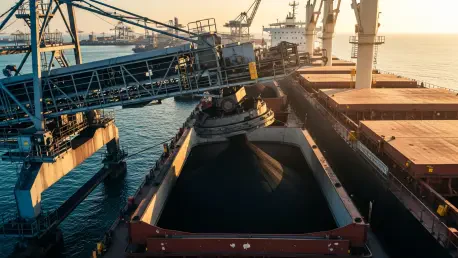

The sheer scale of Yancoal Australia Limited’s recent production surge has sent ripples through the global energy sector, establishing a new operational benchmark with 10.8 million tonnes of saleable coal produced in just three months. This record-breaking performance, finalized during the quarter ending June 30, 2026, represents a remarkable 20% increase over the previous quarter, signaling a period of unprecedented operational dominance for the mining giant. The success witnessed during this window was not merely a result of favorable environmental conditions but rather the culmination of a meticulously planned transition from early-year site preparation to high-intensity extraction. By front-loading significant waste removal and infrastructure upgrades in the initial months of the year, the company cleared the logistical path for maximum productivity during a period of rising international prices. With a robust cash reserve of A$2.01 billion now sitting on its balance sheet, Yancoal is positioned as a formidable player in the global market, yet the true test lies in whether this momentum can be maintained against a backdrop of shifting regulatory requirements and evolving global demand.
Market Dynamics: Capitalizing on Global Pricing Trends
The dramatic escalation in production during the second quarter was met with a highly favorable international pricing environment, allowing the company to achieve a realized coal price averaging A$160 per tonne. This figure reflects a broad-based recovery in international indices, where both thermal and metallurgical coal benchmarks saw significant upward movement. By aligning its peak extraction period with this window of high pricing, Yancoal successfully maximized its revenue streams, ensuring that every tonne produced contributed significantly to the bottom line. The operational efficiency displayed at the mines was mirrored by the commercial strategy, which focused on capturing the highest possible value from the spot market while maintaining long-term contract obligations. Because there is often a temporal lag in certain pricing indices, the financial benefits of these high June prices are expected to ripple into the subsequent months, providing a substantial buffer for the organization as it enters the latter half of the year with a strengthened financial profile and a clear competitive advantage.
Global demand, particularly within the industrial hubs of the Asian market, continues to serve as the structural backbone for the export strategy of the company. While supply constraints in several other coal-producing regions have tightened the overall global market, Yancoal has maintained a consistent and reliable flow of product to its diverse international customer base. This reliability has become a key differentiator in a market where energy security is a top priority for importing nations. The current landscape suggests that while some indices may fluctuate, the fundamental demand for high-quality Australian coal remains resilient, particularly for the specific grades that Yancoal produces. The company’s ability to navigate these market fluctuations while simultaneously delivering record-breaking volumes demonstrates a sophisticated understanding of global supply chains. As long as the demand from major steel producers and power utilities in the Asia-Pacific region remains steady, the company is well-positioned to leverage its increased output into sustained profitability and market share growth throughout the remainder of 2026.
Strategic Expansion: The Role of the Kestrel Acquisition
A pivotal moment in the strategic evolution of the company is the nearing completion of the Kestrel Coal Mine acquisition, a move that fundamentally alters its portfolio composition. By securing the necessary regulatory approvals to acquire an 80% stake in this premier Bowen Basin asset, the organization is making a deliberate shift away from its historical reliance on thermal coal toward high-margin metallurgical products. Kestrel is widely recognized for its production of high-quality hard-coking coal, an essential ingredient in the global steel manufacturing process that typically commands a significant price premium over energy-generating coal. This acquisition is not just about adding volume; it is about enhancing the quality of the earnings base and ensuring that the company can thrive even during periods when thermal coal prices may face downward pressure. Integrating such a high-performing, long-life asset into the existing stable of mines represents a clear ambition to dominate the “tier-one” resource space, where operational longevity and product quality provide a natural hedge against market volatility and economic shifts.
The financial implications of integrating the Kestrel mine are substantial, as the asset is expected to provide an immediate boost to the company’s margin profile upon the deal’s closure in September. Current production guidance for 2026 does not yet incorporate the anticipated output from Kestrel, meaning any coal extracted and sold in the final months of the year will act as a significant bonus for the year-end financial results. This acquisition strategy highlights a broader focus on asset rationalization, where capital is diverted toward high-return projects that offer long-term stability. The management’s ability to execute such a large-scale transaction while maintaining a record production pace elsewhere in the business speaks to the depth of the leadership team’s operational expertise. Moving forward, the successful assimilation of Kestrel’s workforce and infrastructure will be a primary focus, as the company seeks to harmonize the new asset’s output with its existing logistics and marketing frameworks to create a unified and more diversified energy portfolio that can withstand the rigors of a changing global economy.
Fiscal Discipline: Managing Capital Expenditure and Inflation
Despite holding a massive cash reserve of A$2.01 billion, the company is demonstrating a disciplined and cautious approach to capital allocation and operational spending. Total capital expenditure for the year is currently trending toward the lower end of the projected A$750 million to A$900 million guidance range, a result of a strategic decision to prioritize immediate operational returns over speculative long-term projects. By deferring certain development initiatives to 2027, the management is ensuring that the company remains agile and liquid in a commodity cycle that can often be unpredictable. This “capital-light” philosophy is designed to protect the balance sheet against sudden shifts in market conditions, allowing the organization to pivot quickly if opportunities or challenges arise. The focus remains squarely on optimizing existing infrastructure to drive efficiency, ensuring that every dollar spent contributes directly to the volume and quality of the coal being shipped to international customers, rather than being tied up in non-productive long-term construction.
This commitment to fiscal prudence is particularly relevant given the persistent inflationary pressures that continue to impact the mining sector, specifically regarding the cost of diesel and heavy machinery parts. Diesel remains a primary cost driver for open-cut operations, and while there has been some moderation in fuel prices compared to previous highs, the procurement teams remain vigilant. The company has adopted a strategy of using short-term delivery commitments and flexible supply contracts to mitigate the risk of sudden price spikes in the energy markets. By maintaining a lean operational structure and keeping a close watch on the cost of consumables, the company has managed to keep its margins robust even as the broader industry struggles with rising overheads. This proactive management of the supply chain, combined with a conservative approach to debt and reinvestment, ensures that the company is not only profitable during periods of high coal prices but also resilient enough to maintain its operations if the market enters a cooling phase in the coming months.
Operational Challenges: Addressing Safety and Asset Longevity
The aggressive push for record-breaking production volumes has introduced new complexities, particularly regarding the safety and well-being of the workforce. The company recently reported a concerning rise in its rolling injury frequency rate, a trend that senior leadership has publicly pledged to reverse through immediate and targeted safety interventions. Maintaining a high level of productivity must not come at a human cost, and the organization is currently redoubling its focus on site protocols, hazard identification, and employee training programs. The challenge for management is to foster a culture where safety is prioritized alongside production targets, ensuring that the rapid pace of extraction does not lead to a degradation of operational standards. Addressing these safety trends is critical for maintaining morale and ensuring that the company remains an employer of choice in a competitive labor market, as any significant safety incident could lead to regulatory scrutiny or operational shutdowns that would ultimately negate the gains made in production.
In tandem with safety improvements, the company is making strategic decisions to phase out aging or less viable assets as part of a comprehensive portfolio optimization plan. The announced closure of the Ashton underground mine, scheduled for 2028, serves as a prime example of this forward-looking approach to asset management. Rather than struggling with the increasing geotechnical hurdles and rising costs associated with an aging mine, the company has opted for a controlled and structured exit. By providing an 18-month lead time for the closure, management aims to stabilize its workforce and provide clear pathways for skilled miners to relocate to more productive and longer-life sites, such as the Moolarben complex or the newly acquired Kestrel mine. This proactive labor management strategy ensures that the company retains its most valuable human capital while shifting focus toward assets that offer better geological conditions and higher profit margins, effectively future-proofing the production base against the natural decline of older mining operations.
Portfolio Performance: Maximizing Throughput Across Key Assets
Across the various sites in the company’s portfolio, performance has been overwhelmingly positive, with the Moolarben site continuing to serve as the flagship operation and a primary driver of revenue. The ability of the site team to effectively blend output from both open-cut and underground mining operations resulted in a significant 23% production increase during the quarter. This synergy between different mining methods allows for greater flexibility in meeting customer specifications and maximizing the recovery of high-value coal. Moolarben’s consistent performance is a testament to the effectiveness of the recent infrastructure upgrades and the site’s strategic importance within the broader organizational framework. As the company continues to invest in technology and process improvements at this site, it serves as a blueprint for how other assets can be optimized to achieve higher throughput and better cost efficiency, reinforcing the company’s status as a leader in the Australian coal industry.
Other major assets, including Mount Thorley Warkworth (MTW) and the Hunter Valley Operations, also delivered impressive results that underpinned the record-breaking quarter. Mount Thorley Warkworth, in particular, saw a massive jump in output as it successfully moved out of a heavy waste-removal phase and into active coal recovery, allowing the onsite preparation plants to run at near-maximum capacity. Even the smaller-scale operations, such as the Yarrabee mine, showed impressive percentage gains in production, highlighting the company’s ability to extract significant value from every asset in its portfolio. This collective performance across diverse geographical regions and mining types has boosted internal confidence in the company’s ability to meet the upper end of its yearly production targets. By ensuring that every site contributes to the overall goal, the organization has created a diversified production base that is less susceptible to localized disruptions, such as weather events or equipment failures, providing a stable foundation for continued growth and financial success in 2026.
Future Considerations: Transitioning Toward a Transformed Portfolio
As the company moves through the remainder of 2026, the primary focus for the executive leadership was the seamless integration of the Kestrel asset into the existing operational framework. This transition required a high degree of coordination between the technical, financial, and human resources departments to ensure that the 80% stake was managed efficiently from day one. Actionable steps involved the implementation of unified reporting systems and the alignment of safety protocols across the new Bowen Basin site to match the company’s rigorous internal standards. Management also prioritized the development of a long-term workforce plan that facilitated the movement of skilled personnel from maturing sites like Ashton to the growth-oriented operations at Kestrel and Moolarben. By focusing on these integration efforts, the company aimed to realize the full synergies of the acquisition, ensuring that the shift toward metallurgical coal resulted in immediate and measurable improvements to the overall margin profile and shareholder value.
Reflecting on the historic performance of the second quarter, the organization successfully demonstrated its ability to scale operations rapidly while maintaining a disciplined focus on cost control and strategic growth. The record 10.8 million tonnes of saleable coal produced not only validated the decision to front-load preparation work earlier in the year but also provided the necessary capital to fund the Kestrel acquisition without straining the balance sheet. Leadership effectively navigated the complexities of fluctuating global prices and localized operational challenges, resulting in a significantly strengthened market position. The combination of a record cash reserve and a more diversified, high-quality asset base provided a clear path for the company to sustain its momentum well beyond the immediate term. By addressing safety trends and optimizing the portfolio through the closure of older mines, the company ensured that its recent growth was built on a foundation of operational excellence and long-term sustainability, setting a high standard for the Australian energy sector.