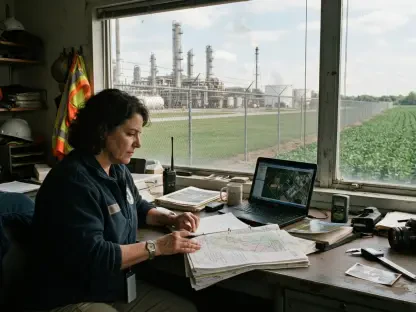

The United Mine Workers of America members at the Kemmerer site face an uncertain future as the mine’s largest customer shifts to cleaner energy. This shift represents a seismic change for a region that has long defined its economic identity through the extraction of fossil fuels. As the Kemmerer coal mine approaches its scheduled closure in late 2029, the surrounding industrial ecosystem is scrambling to adapt to a reality where the primary local fuel source no longer exists. Managed currently by ECC Capital Corporation, the facility has struggled with financial instability following the bankruptcy of previous ownership, but the ultimate blow came from the Naughton power plant’s decision to move away from coal. By the end of 2025, Naughton completed a full transition to natural gas, leaving the mine without its foundational buyer and forcing a dramatic scale-back in operations. This local disruption is not just a mining issue; it threatens to destabilize the vital trona and soda ash sector that relies on steady fuel.
The Economic Ripple Effect of Fuel Transitions
The decline in production at the Kemmerer site is staggering when viewed through the lens of recent industrial output figures. In 2017, the mine was a powerhouse producing approximately 4.2 million tons of coal annually, but as of 2026, the projected output has plummeted to just 1.5 million tons. While management has made public assurances that no immediate layoffs are planned for the 153 workers currently on the payroll, the long-term viability of maintaining such a workforce remains in question as the 2029 deadline looms. The primary concern for state officials and labor leaders is whether the remaining years of operation can provide enough stability to transition these workers into new roles. The loss of high-paying union jobs would create a significant vacuum in the local economy, affecting small businesses and public services that rely on the tax revenue generated by the mine. This transition period is proving to be a difficult balancing act for the entire region as they face an evolving energy market.
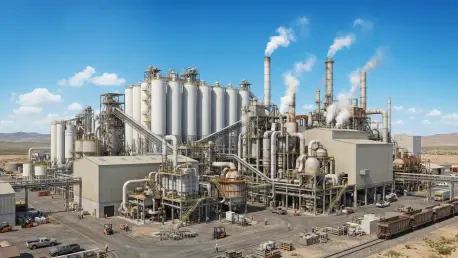
Beyond the immediate impact on the labor force, the energy deficit created by the mine’s impending closure poses a direct threat to Wyoming’s trona industry. This sector is a global heavyweight, producing over half of the world’s supply of soda ash and contributing more than $1.3 billion annually to the state’s export economy. The processing plants located in southwest Wyoming require immense amounts of thermal energy to fire the boilers used in soda ash production and to generate onsite electricity. Currently, two of the five major processing facilities in the area consume nearly one million tons of coal every year. Losing a local and economical fuel source could undermine the global competitiveness of an industry that supports 2,500 residents. If the cost of energy spikes due to the need for imported fuel or expensive infrastructure upgrades, Wyoming may find itself losing market share to international competitors who do not face the same logistical hurdles or energy costs as the local producers.
Infrastructure Adaptations and Future Energy Solutions
Recognizing the gravity of the energy gap, industrial leaders have begun pivoting toward alternative fuels, with natural gas emerging as the most immediate and viable solution. Companies like WE Soda are already making strategic shifts to ensure their processing plants remain operational in a post-coal landscape. To facilitate this transition, the Wyoming Energy Authority recently recommended a $13 million grant to assist the company in establishing a robust natural gas supply connection by 2027. This infrastructure is intended to replace the heavy reliance on coal, but the transition is not as simple as flipping a switch. It requires significant capital investment, environmental permitting, and the physical construction of pipelines across rugged terrain. For many of these companies, the decision to move to natural gas is a defensive maneuver designed to protect their long-term interests against the volatility of the coal market and the tightening regulations surrounding carbon emissions that are reshaping heavy industry.
The historical reliance on the Kemmerer coal mine underscored the necessity for a diversified energy strategy that prioritized local resilience. As the trona industry navigated the complexities of this transition, it became evident that the path forward required a combination of immediate infrastructure support and long-term technological investment. State officials recognized that preserving the economic viability of soda ash exports was not just about finding a new fuel, but about reinventing the entire industrial energy model. Stakeholders were encouraged to finalize the construction of natural gas pipelines while simultaneously exploring the pilot programs for modular nuclear reactors to ensure a seamless energy handover. By aggressively pursuing these alternative energy sources, Wyoming successfully mitigated the risk of industrial decline and set a blueprint for other resource-dependent regions. The proactive measures taken during this period ensured that the global supply chain for soda ash remained stable, securing the livelihoods of thousands.