
Navigating a Global Chokepoint Under the Banner of Project Freedom
The announcement of a military initiative known as Project Freedom has placed the Strait of Hormuz back at the center of global attention, serving as a high-stakes litmus test for international diplomacy and maritime security. Following two months of intense friction between the United States and Iran, the current administration has framed this military initiative as a necessary humanitarian intervention to rescue civilian vessels currently trapped in the contested waterway. The operation, set to commence this Monday, aims to provide a safe exit for non-affiliated merchant ships and their crews who have been caught in the middle of a geopolitical standoff. This analysis explores whether this bold move can truly secure the corridor or if it risks reigniting a dormant conflict, analyzing the strategic, economic, and diplomatic variables that will determine the mission’s success.
The Road to the Current Impasse in the Persian Gulf
To understand the weight of Project Freedom, one must look at the volatile events of the past sixty days. The Strait of Hormuz, a narrow passage through which 20% of the world’s crude oil flows, became virtually impassable after hostilities broke out between Washington and Tehran. While a fragile two-week ceasefire has provided a temporary reprieve, the region remains a powder keg. Past shifts in the industry have shown that even minor disruptions in this corridor can send shockwaves through the global economy, but the current closure is unprecedented in the modern era. These historical tensions are compounded by the recent War Powers Resolution deadline, which prompted the executive branch to declare hostilities terminated—a claim that remains highly controversial among domestic critics and international observers alike.
The Strategic Mechanics and Geopolitical Stakes of the Operation
Balancing Humanitarian Goals with Absolute Military Superiority
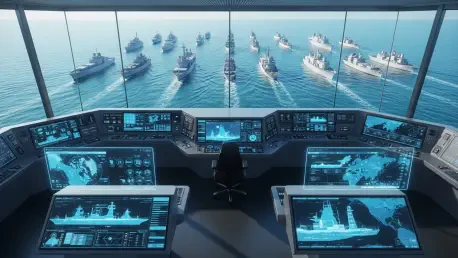
The most critical aspect of Project Freedom is the sheer scale of the military assets involved. U.S. Central Command has mobilized 15,000 service members, guided-missile destroyers, and over 100 aircraft to oversee the extraction. While the official narrative emphasizes the humanitarian rescue of stranded sailors, the presence of such overwhelming force serves a secondary, more assertive purpose: the restoration of freedom of navigation. This duality creates a significant challenge; the military must project enough power to deter interference while ensuring that the deployment is not perceived as an invitation to total war. The success of the mission hinges on whether these assets can act as a shield for civilian commerce without being viewed by the Iranian Revolutionary Guard as an invading force.
The Economic Imperative of Restoring Global Energy Security
Another essential angle is the massive economic pressure driving this initiative. The closure of the strait has created a severe supply chain bottleneck, resulting in a sharp spike in global oil prices and a noticeable increase in gasoline costs for American consumers. By attempting to clear the strait, Project Freedom is not just a military maneuver but a direct attempt to stabilize the energy market. Comparative analysis of previous maritime crises suggests that markets react quickly to the perceived safety of trade routes. However, the risk remains that if the operation encounters even minor resistance, the resulting uncertainty could drive energy prices even higher, undermining the economic relief the mission seeks to provide.
Navigating the Thin Line Between De-escalation and Provocation
Adding to the complexity are the overlooked nuances of the current ceasefire and the role of autonomous technology. Project Freedom will utilize various unmanned sea and land platforms, a move that reflects a shift toward algorithmic warfare and remote surveillance. While these innovations reduce the risk to American personnel, they also introduce a layer of unpredictability in how Iran might react to ghost vessels entering their territorial waters. Furthermore, a common misconception is that this operation is a solo endeavor; in reality, its success depends on the silent cooperation of regional allies and the reaction of the Iranian leadership. If Tehran views the movement of destroyers as a breach of the ceasefire rather than a humanitarian exit, the show of goodwill could quickly devolve into a tactical disaster.
The Future of Maritime Security and Algorithmic Warfare
Looking ahead, Project Freedom likely signals a permanent shift in how the international community manages contested waterways. There is an emergence of a new doctrine where humanitarian corridors are established through managed escalation—using high-end military tech to force a diplomatic outcome. Experts predict that if this operation succeeds, it could set a precedent for using unmanned systems to patrol volatile zones, reducing the human cost of maintaining trade routes. However, regulatory changes regarding maritime law in conflict zones will be necessary to prevent these humanitarian deployments from becoming a loophole for indefinite military presence. The evolution of this situation will likely determine whether the Strait of Hormuz remains a global chokepoint or becomes a model for technologically assisted peace.
Strategic Recommendations for Navigating High-Stakes Maritime Risks
For global shipping companies and international stakeholders, the primary takeaway is the need for enhanced risk diversification. While Project Freedom offers a potential path for trapped vessels, businesses should not rely solely on military interventions to safeguard their assets. Best practices now include investing in real-time geopolitical intelligence and exploring alternative, albeit more expensive, transport routes that bypass traditional chokepoints. Furthermore, policymakers must ensure that communication channels with adversarial nations remain open during such operations. To apply the lessons of Project Freedom, organizations should conduct stress tests on their supply chains to determine how a prolonged closure of similar waterways would impact their bottom line, ensuring they are prepared for the new normal of maritime volatility.
The High-Stakes Gamble for Peace in the Strait
In the final assessment, Project Freedom functioned as far more than a simple extraction mission; it stood as a pivotal moment that defined the future of international relations and global trade security. By blending humanitarian objectives with a massive show of force, the United States attempted to break a long-standing deadlock and restore economic stability. The significance of this topic lay in its ability to influence everything from the price of fuel at a local gas station to the broad strokes of international law. As the world watched the first ships move, the ultimate success of the mission depended on whether transparency and restraint outweighed the deep-seated mistrust that defined the region for decades. These actions revealed whether this was the first step toward a permanent peace treaty or the beginning of a more dangerous chapter in the conflict.