
Christopher Hailstone is a recognized authority on high-voltage transmission and the strategic deployment of clean energy technologies across emerging markets. With a career rooted in grid reliability and utility security, he has become a key voice for understanding how regional giants like Egypt, Türkiye, and Saudi Arabia are mobilizing capital to lead the global energy transition. This discussion centers on the massive infrastructure projects and financial commitments currently reshaping the Middle East and Europe, highlighting the scale of ambition required to move from traditional fuels to a hydrogen-ready future.
The Ra green ammonia project in Egypt represents a massive leap for the region; how do you see the $3.55 million grant from the African Development Bank influencing the broader hydrogen economy?
This funding is a strategic catalyst that goes far beyond a single facility in East Port Said. By being part of a larger $20 million package targeting Egypt, Morocco, Namibia, and South Africa, it signals to private investors that the risks associated with green hydrogen are manageable and backed by institutional support. The Ra project itself is colossal, spanning 780 square kilometers, and it represents a major partnership between Germany’s DAI Infrastruktur and local stakeholders. When we look at the goal of producing 2 million tonnes of green ammonia annually by late 2028, we aren’t just talking about energy; we’re talking about a fundamental shift in how global fertilizer and shipping fuel supply chains will operate.
Türkiye is committing approximately $108 billion over the next decade to its energy roadmap; what are the technical challenges of integrating 120 GW of wind and solar capacity into their national grid?
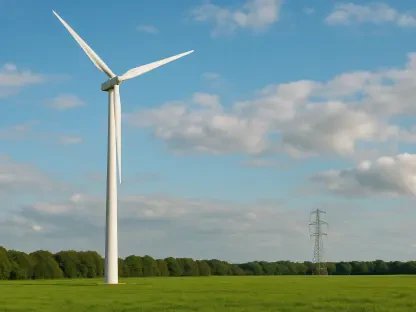
It is a massive logistical and engineering puzzle that requires a sophisticated balance between power generation and delivery. Of that $108 billion investment, a critical $28 billion is earmarked specifically for transmission infrastructure, which serves as the backbone of any reliable system. The government recognizes that adding 120 GW of capacity by 2035 is only half the battle; the real work lies in upgrading high-voltage lines so that power from wind-swept hills can reach industrial centers without causing instability. By putting $80 billion into the generation side, Türkiye is setting an incredible pace, but the $28 billion for the grid ensures that this new energy actually reaches the end consumer reliably.
Saudi Arabia has made significant strides this year in both generation and storage; how does the addition of 14 GWh of battery storage change the feasibility of their 2030 renewable targets?
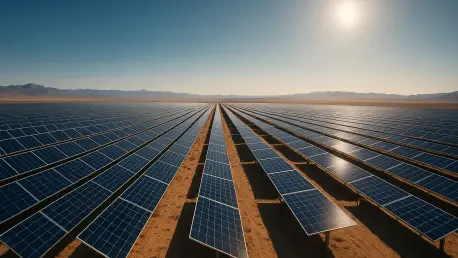
The sheer scale of the 3.5 GW and 14 GWh battery energy storage systems added so far in 2026 is a complete game-changer for regional grid stability. Storage is the “holy grail” that allows the Kingdom to bridge the gap when the sun sets on their massive 2 GW projects like Haden and Al-Muwayh. By integrating 7 GW of solar and wind capacity in just this year, they are proving that the goal of generating 50% of electricity from renewable sources by 2030 is a tangible reality. With projects like Al-Khushaybi adding 1.5 GW and Tabarjal contributing 400 MW, the energy mix is becoming more resilient and less dependent on fossil fuels for baseload power.
Looking at the acquisition of the FLUX wind project in Poland, what does the $2 million per MW valuation tell us about the current state of the free electricity market in Europe?
This deal, valued at roughly $15.71 million for a 7.84 MW project, reflects a very mature and confident secondary market for renewable assets. Since the three GE turbines have been spinning since late 2015 and 2016, they represent a stable, proven cash flow even without the safety net of long-term power purchase agreements. Operating on Poland’s free electricity market means the owners are comfortable navigating price volatility because the operational costs of wind are so low and predictable. It shows that investors are willing to pay a premium for existing infrastructure that has already survived the early-stage technical hurdles of the energy transition.
What is your forecast for green energy expansion in the MENA region?
I expect to see an even more aggressive convergence between large-scale storage and green derivative production, like the ammonia we see in Egypt. Over the next four years, the region will transition from being a testing ground for pilot projects to a global hub for zero-carbon exports that fuels international industry. As Türkiye completes its transmission upgrades and Saudi Arabia continues to break records in solar deployment, the cost of green energy in these sunny, windy corridors will drop below anything we’ve seen in the West. We are witnessing the birth of a new energy geography where the sun and wind are becoming as strategically valuable as the oil fields once were.