
The rapid acceleration of offshore wind energy has fundamentally transitioned from a subsidized experiment into a self-sustaining industrial powerhouse that operates with a momentum largely independent of the cyclical shifts in national political administrations. This evolution reflects a global recognition that the transition to renewable energy is no longer just a policy preference but a strategic economic necessity for energy security. While individual governments may occasionally attempt to stall progress through regulatory hurdles or the withdrawal of federal funding, the sheer scale of international investment and technological maturity has created a baseline of activity that is becoming increasingly difficult to dismantle. The integration of specialized supply chains across continents ensures that a slowdown in one region is often offset by rapid expansion in another, effectively decoupling the industry’s growth from the whims of any single legislative body. Consequently, the sector has entered a phase where engineering milestones and market competitiveness dictate the pace of deployment more than partisan rhetoric ever could.
The Technological Shift: Purpose-built Marine Infrastructure
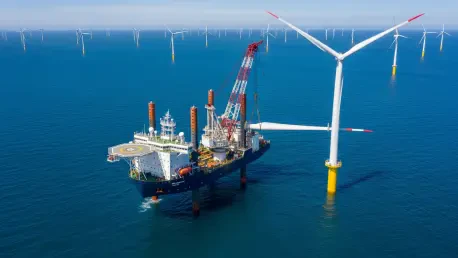
A critical factor in the industry’s newfound resilience is the strategic move away from repurposed technology that once defined the early years of the sector. In its infancy, offshore wind projects relied heavily on vessels and equipment borrowed from the oil and gas industries, which frequently led to significant logistical bottlenecks and inefficiencies. Today, the sector has entered an era of purpose-built marine technology, exemplified by the “Wind Ace” and other next-generation installation vessels designed from the keel up for turbine deployment. These ships are engineered specifically to handle the massive height and weight of modern components, allowing for streamlined construction timelines and making projects significantly more resilient to harsh maritime conditions. By investing in a dedicated fleet, developers have successfully insulated their operations from the volatility of the fossil fuel service market, ensuring that specialized assets are always available to meet the demands of a growing global pipeline.
The development of these specialized vessels, such as heavy-duty jack-up cranes built through multi-national partnerships, allows for the precise installation of XXL turbines that were once thought impossible to manage. By creating a global fleet dedicated exclusively to wind energy, the sector has managed to lower deployment costs while increasing the safety of offshore workers. This specialized infrastructure creates a formidable barrier against political interference, as the massive capital already committed to these international fleets ensures that construction schedules continue regardless of local policy hurdles. When a single nation shifts its stance on renewable energy, these highly mobile assets can be redeployed to more favorable jurisdictions, maintaining the global growth rate. This mobility of capital and technology means that the industrial base for offshore wind is no longer anchored to the specific political climate of any one country, but rather to the collective demand of the international market.
The Economic Advantage: The Impact of Massive Scaling
The financial profile of offshore wind has reached a decisive tipping point that makes it a dominant force in the global energy market. By utilizing the Levelized Cost of Energy (LCOE) metric, industry researchers have demonstrated that wind power is on a trajectory to become significantly cheaper than establishing new coal or natural gas plants within the next few years. As project costs continue to fall toward the range of $40 to $50 per megawatt-hour, the economic incentive for adopting renewable energy becomes an undeniable market reality that transcends political ideology. Financial institutions now view large-scale offshore wind farms as low-risk, high-yield assets, attracting billions in private equity that remains largely indifferent to partisan debates. This influx of capital has allowed the industry to achieve economies of scale that were previously unimaginable, further driving down the price per kilowatt-hour and cementing the technology’s role as a primary pillar of the modern energy grid.
This remarkable cost-effectiveness is largely driven by the rapid evolution of hardware, moving from 6-megawatt turbines to massive 18-megawatt units in a relatively short timeframe. Each new generation of turbines allows a single foundation to generate far more power than its predecessors, effectively reducing the number of installations required for a given energy output. Furthermore, the development of floating wind technology is opening up deeper waters for energy capture, bypassing the geographical limitations of fixed-bottom foundations. These advancements ensure that even if certain coastal areas are restricted by local environmental policy or political opposition, the industry can simply move further out to sea where wind speeds are higher and more consistent. By expanding the available territory for development, the industry has effectively outpaced the ability of local governments to restrict its growth, ensuring a steady supply of clean energy regardless of territorial zoning challenges.
Operational Efficiency: Robotics and Autonomous Maintenance
To maintain its competitive edge against traditional energy sources, the offshore wind sector is aggressively tackling the high costs associated with long-term operations and maintenance. Currently, manual labor and the hazardous transport of workers to remote turbine sites account for a significant portion of ongoing expenses. To solve this, the industry is transitioning toward a comprehensive suite of robotic and autonomous solutions that minimize the need for human intervention in dangerous environments. From subsea vehicles that inspect underwater cables for structural integrity to aerial drones equipped with high-resolution sensors for monitoring turbine blades, automation is making the management of wind farms both safer and more affordable. These technologies allow for continuous monitoring and rapid response to technical issues, ensuring that energy production remains at peak levels while simultaneously reducing the insurance premiums associated with offshore maritime work.
Beyond the deployment of physical robots, the integration of machine learning and predictive analytics is revolutionizing how these massive energy assets are managed on a daily basis. Digital maritime dashboards now provide operators with precise windows for maintenance by analyzing real-time wave and wind data, effectively eliminating the “dead time” that occurs when crews are idled by unpredictable weather. By predicting component failures before they happen, these systems allow for proactive repairs that extend the lifespan of the hardware and prevent costly emergency shutdowns. These efficiency gains make offshore wind projects increasingly attractive to private investors who prioritize stable, predictable returns over the long term. As the cost of maintaining these systems continues to drop through technological innovation, the industry becomes further insulated from the need for government subsidies, making its survival independent of federal fiscal support.
Market Resilience: Overcoming Local Political Friction
In certain regions, the offshore wind industry has faced significant friction due to federal obstruction or the sudden withdrawal of infrastructure funding. However, these localized challenges are being effectively countered by the reality of a robust global market that operates on a much larger scale. Shipyards in Asia and Europe continue to produce the necessary components and installation vessels, ensuring that the global supply chain remains healthy even when specific national policies waver. This international momentum makes it nearly impossible for a single government to halt the broader technological progress of the sector, as the demand for energy security and carbon reduction remains a priority for the rest of the world. The interconnected nature of the global economy means that the expertise and manufacturing capacity developed in one region can be quickly exported to another, providing a safety net against domestic political volatility.
Furthermore, the fight for renewable energy has shifted significantly to the state and provincial levels, where coastal coalitions are protecting their green economy investments through legal and local policy means. These regional governments recognize the job creation and economic revitalization that come with wind energy port developments and manufacturing hubs. As private capital continues to flow toward high-yield, low-cost renewable assets, the broader economic “train has left the station,” making a return to fossil fuel dominance increasingly unlikely. The transition to offshore wind is now being driven by engineering excellence and financial inevitability rather than just legislative mandates. This shift has turned the energy transition into a permanent fixture of the global industrial landscape that sits largely beyond the reach of temporary political cycles, ensuring that the clean energy movement remains resilient even in the face of executive opposition.
Strategic Integration: The Path Toward Energy Sovereignty
The industry successfully established a foundation that prioritized long-term structural resilience over short-term political gains. By focusing on the standardization of turbine components and the expansion of grid interconnectivity, the sector moved past the era of isolated projects and into the age of integrated energy systems. Engineers and policymakers worked together to create regional energy hubs that shared the costs of transmission, thereby reducing the financial burden on individual developers and taxpayers alike. This collaborative approach allowed the industry to withstand localized economic shocks and provided a blueprint for other renewable sectors to follow. The transition was characterized by a shift in focus from mere energy production to comprehensive energy sovereignty, where nations utilized their coastal resources to insulate themselves from the volatility of international fuel markets. This move proved essential in maintaining economic stability during periods of global geopolitical tension.
Looking forward, the next logical steps involved the deep integration of green hydrogen production directly at the source of offshore generation. By converting excess wind energy into transportable hydrogen fuel, the industry bypassed the limitations of battery storage and opened new markets in heavy shipping and industrial manufacturing. This diversification further solidified the economic standing of offshore wind, making it an indispensable part of the broader industrial ecosystem. Governments and private entities began prioritizing the training of a specialized maritime workforce, ensuring that the human capital was in place to support the next generation of deep-sea energy projects. The lessons learned during this period of rapid expansion demonstrated that when technology and economics align, the resulting momentum could overcome almost any political obstacle. This history of adaptation and growth served as a reminder that the path to a sustainable future was built on the steady progress of innovation and the unwavering reality of market demand.