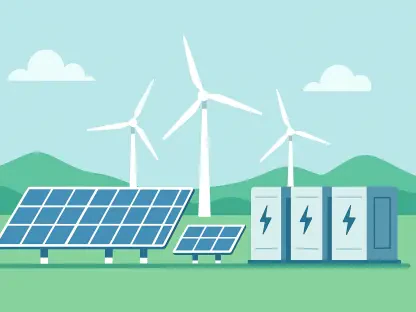

Expansion into the household energy storage market through the Xuzhou base involved developing intelligent energy management systems for homeowners using renewable energy. This strategic development represents a critical juncture in how energy is preserved and distributed, particularly as the limitations of conventional lithium-ion technologies become increasingly apparent in high-demand environments. By prioritizing solid-state architectures, Intellvation, the operational brand for Super Power New Energy Co., Ltd., has effectively addressed the safety and efficiency gaps that have long hindered the widespread adoption of massive energy storage. This evolution is not merely about increasing capacity but about redefining the chemical and mechanical foundations of the battery industry to ensure that green energy remains available even when the sun sets or the wind ceases. As the industry moves away from liquid electrolytes, which are prone to thermal runaway and degradation, the introduction of semi-solid and solid-state alternatives offers a path toward a more resilient and predictable energy future. By stabilizing the intermittent nature of wind and solar power, these advanced storage solutions provide the necessary bridge to a fully decarbonized electrical grid for both industrial giants and individual consumers across the globe.
The Evolution of Solid-State Manufacturing
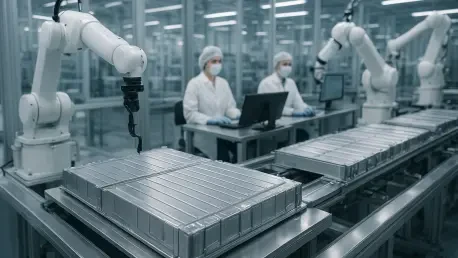
Establishing a foothold in this competitive sector required more than just theoretical research; it necessitated a massive financial and infrastructural commitment to bridge the gap between academic innovation and commercial viability. Since its inception with a capital infusion of approximately forty million dollars, the company has prioritized the development of a three-gigawatt-hour production facility specifically engineered for solid-state battery cells. This site acts as the primary conduit for scaling laboratory breakthroughs into standardized industrial products, ensuring that manufacturing precision is maintained across every unit produced. By internalizing the entire production chain, the organization has bypassed many of the supply chain bottlenecks that often delay the deployment of next-generation energy technologies. This controlled environment allows for the rigorous testing of solid-state components, where the absence of traditional liquid electrolytes requires specialized assembly techniques to maintain interface stability. The resulting infrastructure provides a blueprint for how high-tech energy firms can transition from prototyping to the high-volume output necessary to satisfy the requirements of utility providers and industrial operators seeking reliable energy reserves.
The strategic distribution of manufacturing assets further underscores a sophisticated understanding of the diverse needs within the modern energy market. While the main production hubs maintain a focus on large-scale output, the regional facilities in Shandong and Xuzhou allow the company to tailor its offerings to specific economic sectors. The Shandong facility primarily concentrates on industrial and commercial energy management, providing the heavy-duty hardware required for manufacturing plants and microgrids that demand consistent high-voltage performance. In contrast, the Xuzhou base serves as the center for residential innovation, focusing on the miniaturization and safety profiles required for home use. This dual-track strategy ensures that the technological advancements in solid-state chemistry are accessible to a broad spectrum of users, from municipal grid operators to suburban homeowners. By decentralizing its manufacturing and development focus, the company can respond more agilely to localized market trends, ensuring that its solid-state solutions are integrated into existing infrastructure with minimal friction or technical delay. This geographical spread also facilitates a more robust supply chain, as different facilities can focus on the specific components and assembly processes most relevant to their respective market segments.
Engineering High-Capacity Architecture
The technical superiority of the latest solid-state cells is largely attributed to a high-caliber research and development team comprised of specialized experts with advanced degrees in electrochemistry. These researchers have focused their efforts on overcoming the most persistent hurdles in battery design, specifically the development of five-hundred-ampere-hour large-capacity cells that maintain stability under heavy loads. Historically, high-capacity formats have suffered from thermal management issues, but the transition to solid-state materials has mitigated these risks by eliminating the volatile liquid components found in traditional batteries. The engineering team uses advanced molecular modeling to ensure that the solid electrolyte provides a seamless path for ion transport while remaining chemically inert under high temperatures. This focus on the fundamental physics of the battery has allowed the organization to produce cells that are not only more powerful but also significantly safer than their predecessors. By concentrating human capital on these chemical challenges, the company has positioned itself as a primary innovator in the field, setting a high performance bar for others to meet.
Progress in energy density has followed a consistent upward trajectory, reflecting the company’s milestone-driven approach to technological evolution. Starting from the mass production of semi-solid batteries that achieved an initial density of one hundred and eighty watt-hours per kilogram, the technology has rapidly matured. By refining the interface between the electrolyte and the electrodes, the team successfully pushed these metrics to two hundred and twenty watt-hours per kilogram. This increase in energy density represents a tangible improvement in the duration for which a storage system can discharge energy relative to its physical size. For utility-scale installations, this means that more energy can be stored in a smaller footprint, reducing the land use and construction costs associated with building massive energy storage sites. These advancements in density have been achieved without compromising the longevity of the battery, ensuring that each cell can undergo thousands of charge cycles with minimal degradation. This balance of power and durability is essential for making solid-state technology the standard for the next generation of energy infrastructure.
Integrating Intelligence into Storage Systems
A holistic approach to energy storage requires more than just high-performance battery cells; it necessitates a sophisticated digital infrastructure to manage the flow of power. The company has distinguished itself by developing proprietary Battery Management Systems that serve as the intelligent nervous system for the entire energy storage unit. Unlike generic off-the-shelf controllers, these integrated systems are designed specifically to handle the unique characteristics of solid-state chemistry, which operates under different electrical parameters than liquid-based systems. This integration ensures that the management software can communicate directly with the hardware at a granular level, monitoring every individual cell within a larger module. By using advanced algorithms to predict load requirements, the system can adjust charging and discharging rates in real-time, preventing the stress that typically leads to premature battery aging. This seamless synergy between chemical storage and digital control provides a level of reliability that is indispensable for critical infrastructure projects, where disruptions in energy supply could have significant economic consequences.
The safety protocols embedded within these intelligent management systems are designed to address the most extreme operating conditions, providing a multi-layered defense against electrical anomalies. Every storage unit is equipped with a suite of sensors that provide constant feedback on temperature fluctuations and voltage levels across the battery array. If the system detects any deviation from the established safety parameters, the management software can isolate specific modules to prevent the spread of a potential issue. This level of oversight is particularly crucial for massive energy storage power stations that are often located in remote areas or harsh environments. Moreover, the data collected by these systems provides valuable insights into the long-term performance of solid-state technology, allowing engineers to continuously refine the firmware and hardware designs. As energy grids become more reliant on storage to balance the variability of renewables, the role of these intelligent systems becomes even more vital. They provide the necessary transparency for grid operators to manage supply and demand effectively, ensuring that storage units function as stable components of the power network.
Navigating Global Certification and Expansion
International expansion has been a core objective since the company’s inception, necessitating a proactive strategy to meet the diverse regulatory and safety standards of global markets. A major milestone in this process was achieving the CE certification, which is a mandatory requirement for any technology entering the European market. This certification serves as a testament to the rigorous quality control and safety standards maintained throughout the manufacturing process, from the sourcing of materials to the final assembly of the units. By aligning its operations with these international benchmarks, the company has removed the technical and legal barriers that often prevent emerging technologies from scaling across borders. This commitment to compliance provides a high degree of assurance to utility providers who require bankable and certified solutions for their energy projects. Furthermore, the synchronization of R&D centers in Jiangsu with sales hubs has created a streamlined pipeline for identifying global market needs and delivering localized solutions. This international outlook ensures that innovations are quickly adapted to meet specific grid requirements, solidifying the company’s global position.
The relocation of the operations center to Shanghai served as a strategic move to align technical capabilities with the logistical and financial heart of international trade. This transition has allowed for more direct engagement with global investors and utility firms looking to overhaul their energy infrastructure. Shanghai’s role as a major transportation hub also facilitates the efficient distribution of high-capacity battery units to key markets in North America, Europe, and the Asia-Pacific region. This physical proximity to international trade routes has enabled the organization to reduce lead times and provide better support for large-scale deployments. Beyond simple logistics, the presence in such a prominent financial center has opened new avenues for collaborative ventures with international technology firms. This interconnectedness is vital for the continued growth of the solid-state industry, as it allows for the sharing of best practices and the harmonization of standards across different jurisdictions. By maintaining a strong presence in both the manufacturing heartlands and the centers of global commerce, the organization ensures that its growth is supported by both industrial strength and market visibility.
Sustainable Impacts and Strategic Implementation
The environmental implications of transitioning to solid-state storage extend beyond the immediate benefits of carbon reduction in the energy sector. Solid-state batteries are inherently more sustainable than their liquid-based predecessors because they typically require fewer hazardous materials and offer a significantly longer operational lifespan. This durability means that fewer units need to be manufactured and recycled over time, reducing the footprint associated with raw material extraction. Furthermore, the stability of solid electrolytes minimizes the risk of environmental contamination that can occur during disposal or accidental damage. By providing a reliable way to store and deploy renewable energy, these systems are a fundamental component of the global strategy to decouple economic growth from carbon emissions. The shift toward solid-state technology also encourages the development of more efficient recycling programs, as the materials within these cells are often more easily recovered. This circular approach to the battery lifecycle is essential for building a truly green energy economy where the tools of sustainability do not themselves become a burden on the planet’s natural resources or ecosystems.
The recent advancements in solid-state energy storage provided a clear roadmap for the future of global power grids and industrial sustainability. To maintain this momentum, industry stakeholders and policymakers emphasized the need for continued investment in research and the streamlining of international safety standards. The successful deployment of high-capacity cells across various sectors proved that the transition away from volatile liquid electrolytes was not only technically feasible but also economically advantageous for long-term infrastructure. Stakeholders recognized that the integration of intelligent management systems was the key to maximizing the lifespan and safety of these storage units, leading to a surge in demand for proprietary software solutions. Furthermore, the commitment to rigorous global certifications ensured that these technological breakthroughs reached the markets where they were most needed, facilitating a more rapid shift toward a decarbonized energy landscape. Looking forward, the focus shifted toward optimizing the recycling of solid-state components and further increasing energy densities to meet the escalating demands of modern society. These actions solidified the foundation for a resilient energy future, where storage acted as the primary stabilizer for renewable sources.