
Christopher Hailstone is a leading authority on energy management and global grid security, specializing in the intersection of renewable infrastructure and electricity delivery. Our conversation explores the technical shift toward green hydrogen, the strategic importance of the SoutH2 Corridor, and the integration of advanced low-carbon technologies into existing North African infrastructure. He highlights how Algeria and Germany are balancing immediate hydrocarbon needs with a shared long-term vision for industrial sustainability and carbon neutrality.
Algeria and Germany are shifting focus toward green hydrogen and ammonia production. What specific technical challenges arise when manufacturing electrolyzers locally in Algeria, and how can German engineering expertise facilitate the necessary technology transfer to build a self-sufficient industrial base?
Manufacturing electrolyzers on Algerian soil requires a robust supply chain for specialized components like precision membranes and high-grade catalysts. German engineering provides the necessary technical blueprints, but the primary hurdle is establishing a local industrial base that meets rigorous global performance standards. To bridge this gap, firms like Bosch Energy and thyssenkrupp must collaborate directly with local technicians to facilitate a deep knowledge transfer. This hands-on approach ensures that Algeria doesn’t just assemble imported parts but masters the complex thermodynamics of hydrogen production.
The development of the SoutH2 Corridor aims to connect North African energy production with European markets. What infrastructure milestones must be reached to make this corridor viable, and how will this project influence the long-term reliability of energy exports to Europe?
The SoutH2 Corridor is the backbone of this vision, designed to pipe North African energy directly into the heart of Europe. To make this viable, we must hit critical milestones in pipeline repurposing and the construction of massive compression stations that can handle hydrogen’s unique properties. This project is a game-changer for European reliability, as it utilizes Algeria’s strategic position as a reliable partner to diversify energy sources. These new pipelines represent a permanent physical link that stabilizes the entire region’s energy security for the coming decades.
Petrochemicals and equipment manufacturing are being prioritized as areas for deeper industrial integration. Which specific advanced technologies from companies like Siemens Energy or thyssenkrupp are most critical for these sectors, and what steps are required to ensure local Algerian workers are effectively trained to operate them?
Siemens Energy and thyssenkrupp are bringing advanced electrolysis and high-efficiency petrochemical turbines that are at the absolute cutting edge of the sector. To operate these, we need specialized training programs that move beyond the classroom and directly into active industrial fields. It’s about creating a workforce capable of managing high-pressure green ammonia systems with technical precision and safety. Integrating local workers into these projects ensures the technology is owned and maintained by those on the ground, fostering true industrial independence.
Efforts to reduce methane emissions and increase carbon recovery are becoming central to hydrocarbons cooperation. How can these low-carbon initiatives be integrated into existing oil and gas infrastructure, and what metrics will be used to measure the success of these environmental upgrades?
Integrating methane recovery involves retrofitting aging valves and seals with high-precision sensors to catch and eliminate leaks in real-time. This isn’t just an environmental goal; it’s about capturing wasted value and feeding it back into the production cycle to maximize efficiency. Success will be measured through rigorous carbon intensity metrics and the total volume of recovered methane that would have otherwise been lost to the atmosphere. These initiatives are transforming traditional oil and gas sites into modern, efficient energy hubs that meet today’s environmental standards.
The Algeria Bid Round 2026 presents a significant opportunity for foreign investment. What specific incentives or regulatory frameworks would encourage German companies to commit to long-term projects, and how will these partnerships impact the development of local content within the Algerian energy supply chain?
The Algeria Bid Round 2026 offers a clear regulatory pathway for German firms to sink deep roots into the North African energy landscape. For these companies to commit long-term, they need stable frameworks that protect technical investments while encouraging the growth of local content. This process isn’t just about resource extraction; it’s about the joint development of industrial solutions that benefit both the German and Algerian economies. These partnerships will weave Algerian suppliers into the global chain, turning local workshops into vital components of the international energy market.
Joint projects are increasingly focused on sustainable industrial development and reducing carbon intensity. In terms of practical implementation, how do both nations plan to balance the immediate need for traditional hydrocarbons with the long-term transition to green energy exports?
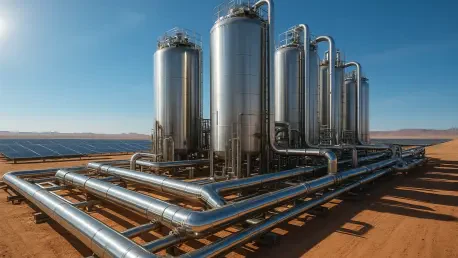
Balancing hydrocarbons with green exports is a delicate act of industrial choreography that requires managing current demand while building for the future. While gas continues to power today’s economy, every new investment is now scrutinized through the lens of carbon intensity and future sustainability. Algeria and Germany are ensuring that the infrastructure built today is flexible enough to transition to a green economy as technology matures. This shift is visible as solar farms rise alongside traditional refineries, signaling a future where green hydrogen becomes a dominant export.
What is your forecast for the future of the Algeria-Germany energy partnership?
The momentum from President Tebboune’s visit to Berlin on July 16-17, 2026, will likely lead to a cluster of completed hydrogen plants and resilient energy bridges. Algeria is rapidly transforming into a high-tech hub where German engineering and North African natural resources meet to create a stable power supply. This collaboration sets a gold standard for how nations can successfully co-author a sustainable and profitable industrial future. It is a partnership that will serve as a permanent cornerstone for the global energy transition.