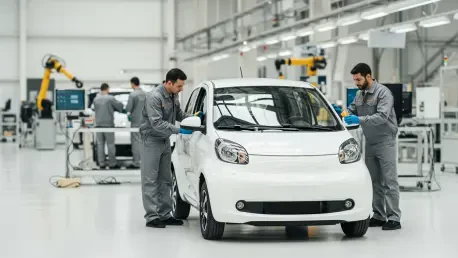

The traditional landscape of the global automotive industry is currently witnessing a profound transformation as Mexico transitions from being a primary manufacturing hub for foreign giants to an architect of its own technological destiny. This evolution has culminated in the unveiling of a state-led initiative that introduces a compact, domestically engineered electric vehicle designed to navigate the dense urban corridors of modern metropolitan areas. Named after the Nahuatl word for “mobility,” the project signals a strategic pivot toward national energy sovereignty and sustainable development, moving away from a total reliance on internal combustion engines and imported designs. By focusing on a vehicle that specifically addresses the unique logistical challenges of local cities, the government aims to democratize access to clean energy while simultaneously fostering a new era of industrial independence. This initiative is not merely a symbolic gesture of progress; it is a calculated response to the urgent need for affordable, low-emission transportation in a region where environmental concerns and economic constraints often intersect.
The engineering philosophy behind this debut focuses on practicality and accessibility, ensuring that the technology is reachable for the average citizen rather than being reserved for the luxury market. These compact vehicles are built for short-range efficiency, reaching a maximum speed of 50 km/h, which is more than sufficient for the stop-and-go nature of urban traffic and residential neighborhoods. One of the most significant technical features is the ability to recharge the battery using standard household electrical outlets, eliminating the immediate necessity for a massive rollout of specialized high-speed charging infrastructure. This design choice effectively lowers the barrier to entry for first-time electric vehicle owners who may live in areas without dedicated public charging stations. By prioritizing a functional and modest design over high-performance metrics, the project ensures that the primary focus remains on reducing the carbon footprint of daily commutes while providing a reliable tool for family transport and neighborhood logistics.
Socioeconomic Impact: Designing for Inclusivity and Accessibility
A central pillar of this domestic automotive strategy involves addressing the socioeconomic disparities that have historically hindered the adoption of electric mobility in developing markets. The pricing structure is intentionally aggressive, with estimated costs ranging from $5,000 to $9,000, making it one of the most affordable electric vehicles in the global landscape. To ensure the project serves a broad demographic, the rollout includes specialized configurations beyond the standard family model, such as a version intended to replace traditional motorcycle taxis and a dedicated “last-mile” delivery vehicle for domestic logistics. These variations reflect a deep understanding of the local economy, where small-scale transport and delivery services are essential lifelines for many communities. Furthermore, the design process incorporated extensive feedback to ensure that the interior space is versatile enough to accommodate wheelchairs and bulky cargo, bridging the gap between high-tech innovation and the tangible, everyday requirements of the working population.
The initiative also serves as a catalyst for strengthening the domestic labor market and retaining high-level technical talent within the country. By coordinating the efforts of over 80 specialists in engineering, software development, and energy systems, the project leverages the expertise of top academic institutions like the National Autonomous University of Mexico and the National Polytechnic Institute. This collaborative framework ensures that the intellectual property and technical know-how generated during development remain within the national ecosystem, reducing the long-term dependence on foreign technology providers. As the project moves toward mass production, it is expected to create a robust supply chain involving local component manufacturers, which will further stabilize the automotive sector and provide high-skilled employment opportunities. This approach transforms the vehicle from a simple consumer product into a comprehensive industrial platform that supports broader economic resilience and fosters a culture of innovation rooted in local necessity.
Environmental Strategy: Progress Through National Engineering
From an ecological perspective, the transition to this domestic electric platform represents a critical step in mitigating the severe air quality issues that plague many urban centers, where the transport sector currently accounts for a quarter of all pollutants. The shift toward electrification is not only a matter of environmental responsibility but also an economic necessity for consumers facing rising fuel costs. Operational data suggests that the cost of recharging these electric units is approximately 60% lower than the expense of maintaining a comparable gasoline-powered vehicle. To further incentivize adoption, the government has integrated the project into a wider policy framework that includes tax exemptions and the ability for owners to bypass daily driving restrictions that typically apply to internal combustion engines during high-pollution events. These combined benefits create a compelling financial argument for switching to electric power, aligning individual savings with the national goal of reducing greenhouse gas emissions and improving public health.
Looking toward the immediate future, the strategic roadmap for this initiative emphasizes a rapid transition from prototype testing to full-scale industrialization. While specialized models and pricing tiers have already been established to generate market interest, the definitive target for beginning mass production is set for 2027. This timeline allows for the necessary refinement of manufacturing processes and the establishment of quality control standards that meet international benchmarks. The successful implementation of this project will likely serve as a blueprint for other emerging economies seeking to balance industrial growth with environmental stewardship. Rather than waiting for global markets to provide affordable solutions, the focus has shifted toward proactive, state-supported engineering that prioritizes local conditions. As the manufacturing facilities begin to take shape, the emphasis remained on ensuring that every component, from the software interface to the battery management systems, reflects a commitment to quality and national pride in technological achievement.
The transition to domestic electric mobility was characterized by a shift from theoretical planning to concrete industrial action. Decision-makers and regional planners focused on integrating these vehicles into existing public transit networks to create a seamless multimodal transportation system. Municipalities began identifying high-traffic zones where the small footprint and zero-emission profile of these units provided the greatest benefit, particularly in historic centers and narrow residential streets. Future considerations included the development of specialized recycling programs for the lithium-ion batteries to ensure a circular lifecycle for all vehicle components. Engineering teams also explored the possibility of modular upgrades, allowing owners to update software or replace battery packs as technology improved without needing to purchase a new chassis. These proactive steps ensured that the first domestic electric vehicle was not just a temporary solution, but a long-term investment in a cleaner, more efficient urban infrastructure that prioritized the needs of the citizen over the demands of traditional global markets.