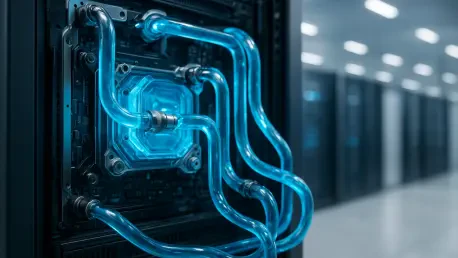

As the global race for artificial intelligence moves from the experimental phase into massive physical deployment, the industry is hitting a critical inflection point where hardware cooling and power management are no longer side notes but the main event. Christopher Hailstone, a veteran in technology sector analysis and industrial infrastructure, has spent years tracking the evolution of the global supply chain, particularly how it handles the staggering thermal and electrical demands of modern compute. Today, we explore the shifting landscape of AI investment, moving beyond the well-documented world of GPUs and optical modules to the foundational systems that keep these machines running. We will discuss the rapid adoption of liquid cooling as a core architectural requirement, the looming power shortages threatening data center expansion, and the technical innovations like 800VDC power delivery that are reshaping the physical layout of the modern server rack.
Liquid cooling has traditionally been a niche upgrade for specialized high-performance clusters, but we are seeing it become a core requirement for the latest AI deployments. How do you view the industrial shift as liquid cooling moves from an accessory to a foundational component of data center architecture?
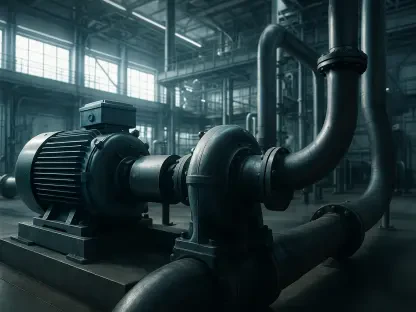
The transformation we are witnessing right now is nothing short of a total architectural pivot. In the past, data center managers viewed liquid cooling as a “nice to have” or a secondary upgrade for the most extreme use cases, but that mindset has been completely vaporized by the sheer heat density of modern AI chips. As we navigate 2026, the penetration of liquid cooling in the AI chip market is expected to hit 53%, a massive jump from just 33% last year. We are moving toward a world where nearly 60% of these systems will be liquid-cooled by 2027. When you walk into a modern facility today, you can actually feel the difference in the engineering; we aren’t just talking about a few pipes anymore, but a comprehensive system-level infrastructure including cold plates, cooling distribution units (CDUs), and complex piping networks. Major players like Google are already ahead of the curve, with over 80% of their AI servers utilizing liquid cooling to manage these thermal loads. It is no longer a laggard sector for investors; it is the front line of the production architecture.
Nvidia’s Rubin platform has made waves by adopting a fully liquid-cooled design. What are the practical implications of this shift for data center operators, particularly regarding the use of warm-water cooling and the elimination of traditional refrigeration?
Nvidia’s move with the Rubin platform, specifically the Vera Rubin NVL72, is a watershed moment because it mandates a 100% liquid-cooled architecture. One of the most fascinating aspects of this design is the ability to handle coolant inlet temperatures of up to 45 degrees Celsius. This “warm-water” approach is a game-changer because it allows data center operators in many geographic regions to bypass traditional, energy-hungry mechanical refrigeration equipment entirely. By using dry coolers instead, they can significantly slash their operational costs and simplify the facility’s footprint. We are seeing a future where the rack and the cooling system are inseparable; you don’t just “install” a Rubin platform, you integrate it into a fluid dynamic system. As a result, Nvidia’s rack-level liquid cooling solution shipments are projected to double this year, forcing the entire supply chain to rethink how they manufacture everything from pumps to thermal management controllers.
As AI server deployments scale, the conversation is shifting from chip shortages to power shortages. How severe is the current bottleneck in electricity supply, and what does the data tell us about the projected shortfall through 2028?
The power bottleneck is the most sobering challenge facing the industry today, as the constraints have expanded from the silicon itself to the very grid that feeds it. In the United States, we are seeing electricity demand from data centers climb from 31GW last year to a projected 41GW this year, with expectations to reach a staggering 66GW by 2027. To put that in perspective, data centers will soon account for 8.5% of the U.S. summer peak electricity load, more than doubling their share in just two years. We are looking at a potential power shortfall of approximately 38GW between 2026 and 2028, which is a terrifying prospect for developers. In some high-demand regions, the timeline for a new grid connection has stretched to five or even seven years. This is why we see the industry’s focus shifting toward land with existing power permits and proximity to stable energy sources; reliable electricity has become the rarest and most valuable commodity in the AI ecosystem.
To address these rising power densities, there is a significant push toward 800VDC power architecture. Can you explain how this technology alleviates pressure on the physical infrastructure and the specific materials like copper that it helps conserve?
The transition to 800VDC is a masterclass in electrical efficiency driven by necessity. By utilizing a higher supply voltage, we can significantly reduce the current, which in turn reduces the physical stress on cabling and connectors while minimizing power loss within these high-density racks. The data is quite striking: under an 800VDC architecture, conductors of the same gauge can transmit over 150% more power than a traditional 415VAC system. This isn’t just a theoretical gain; it results in a tangible saving of about 200 kilograms of copper busbars per rack. When you consider the scale of these data centers, that’s an enormous reduction in material costs and weight. This evolution is perfectly timed for the next generation of infrastructure, like the Kyber rack planned for 2027, which is expected to house 576 Rubin Ultra GPUs. Without the move to 800VDC and high-density power shelves, the physical bulk and energy waste of traditional systems would make these deployments nearly impossible.
Beyond the chips themselves, the supply chain for power components like PSUs, BBUs, and SSCBs is seeing increased activity. How are these individual components evolving as they transition from supporting parts to independent infrastructure?
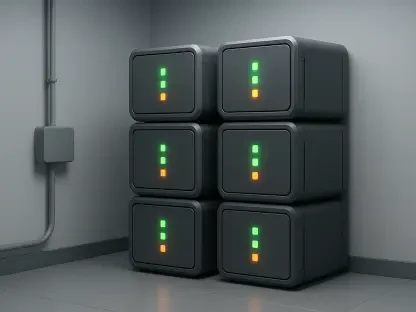
We are seeing a fundamental re-rating of what used to be considered “boring” hardware. Power Supply Units (PSUs) and power shelves are no longer just supporting components; they are becoming high-value, independent infrastructure within the server environment. As per-rack power consumption skyrockets, the value content and complexity of these shelves increase accordingly. Battery Backup Units (BBUs) are also seeing a shift in role, moving toward handling the instantaneous, violent power fluctuations that occur when GPU loads spike. We expect to see a layered architecture where these BBUs provide short-duration voltage stabilization while pairing with facility-level energy storage for longer-term reliability. Furthermore, the move to 800VDC is creating a massive new market for solid-state DC circuit breakers (SSCBs). Because DC circuits don’t have the natural zero-crossing points of AC, traditional protection doesn’t work. The need for fast, safe interruption in a high-voltage DC rack makes SSCBs a critical, high-growth segment that is much closer to seeing real-world orders compared to more experimental tech like solid-state transformers.
Analog Devices (ADI) recently reported a 40% year-over-year revenue growth. What does their performance tell us about how AI demand is trickling down into the broader analog and power management segments?
The results from Analog Devices are a perfect “canary in the coal mine” for the broader health of the AI supply chain. Seeing their revenue hit a midpoint expectation of $4.3 billion this quarter, driven largely by data centers and industrial demand, confirms that the AI boom is no longer restricted to just the GPU makers. ADI’s net income more than doubled year-over-year to $1.34 billion, with a healthy net margin of 33%. This tells us that the “silicon-to-power” logic is holding up; you can’t have advanced AI without the analog chips that manage energy distribution and signal integrity. What is particularly interesting from an investment standpoint is that companies like ADI face lower capital expenditure pressure because their equipment replacement cycles are much longer than those in the cutting-edge GPU or memory space. With a forward P/E of around 22.5x and a PEG of 0.56, it shows that there is still significant value to be found in the firms providing the essential “nervous system” for AI infrastructure.
In the Chinese market, we have seen a noticeable rotation of capital away from high-flying sectors like optical modules toward liquid cooling and power management. What is driving this shift in investor sentiment, and which players are leading the charge?
The market is currently going through a period of intense discovery where capital is hunting for sectors with clearer “expectation gaps” and lower relative valuations. As the rally in optical modules and PCBs matured, investors began looking for the next logical beneficiary of the AI build-out. This has led to a surge in interest for companies like Shenling Environment and Envicool, the latter of which recently hit its daily limit up. We are also seeing strong performance from names like Strong State, Goaland Energy, and Feirongda, all benefiting from this pivot toward thermal management. The logic is simple: the market realizes that if you can’t cool the chips, you can’t run the models. While the daily turnover in the A-share market has stayed below 2 trillion yuan, making it hard for every sector to rise at once, the rotation into liquid cooling feels more like a structural realization of industrial necessity rather than just a temporary trade.
As we look at the integration of data centers with the energy grid, Nvidia has been involved in projects with companies like Lancium and SB Energy. How critical is it for AI developers to secure their own power and energy storage solutions moving forward?
It is becoming the single most important strategic move an AI developer can make. We have moved past the era where you could simply lease a building and assume the utility company would provide whatever power you needed. The International Energy Agency has been very clear that affordable, rapidly accessible electricity is now a prerequisite for AI survival. This is why we see these collaborations with energy firms to create DC microgrids and dedicated energy storage. By securing their own power sources and exploring technologies like solid-state transformers for better grid connectivity, these companies are trying to insulate themselves from the 5-to-7-year grid wait times I mentioned earlier. If you don’t own your power or have a direct line to a stable source, your multi-billion dollar investment in GPUs is just a collection of very expensive paperweights.
What is your forecast for the AI infrastructure supply chain over the next two years?
My forecast is that we will see a “physical reality check” where the growth of AI is increasingly dictated by the speed of transformer manufacturing and the permitting of power substations rather than just chip tape-outs. We are entering a phase where the “industrial” side of AI—cooling, power distribution, and grid equipment—will see more sustained, stable growth as the initial hype in software and core chips levels out. Expect liquid cooling penetration to solidify at that 60% mark by 2027, and look for a massive surge in orders for 800VDC components as the Rubin platform and its successors become the standard. The investment opportunity is shifting from the “brain” of AI to its “body” and “circulatory system.” While there will be volatility based on Nvidia’s guidance and overall market liquidity, the underlying industrial demand for these cooling and power systems is anchored by physical laws and thermodynamic limits that can’t be ignored. The companies that can solve the heat and power problems will be the true gatekeepers of the next decade of compute.