
A sudden atmospheric shift involving a mere three-degree temperature rise can fundamentally alter the energy profile of a municipal substation within minutes, triggering a cascade of high-stakes decisions for grid operators. As global climate patterns become increasingly erratic, the utility sector is moving away from simply observing the forecast toward a state of complete operational integration. High-fidelity weather data is no longer viewed as an external variable to be monitored from the sidelines; rather, it has become a core strategic asset, sitting alongside physical hardware and workforce management in the hierarchy of utility operations. This shift represents a fundamental change in how the industry handles risk, moving from a reactive stance to one where environmental intelligence dictates daily decision-making and long-term planning. By treating meteorological insights as actionable intelligence, companies are finding they can bridge the thin margin between a manageable load spike and a catastrophic transformer failure. The current landscape demands a level of precision that traditional forecasts simply cannot provide, necessitating a transition to hyper-local, real-time data streams that empower operators to act with speed and surgical accuracy. These advancements are essential as the industry navigates the complexities of a changing climate and a rapidly evolving energy market.
Physical Resilience and Environmental Pressures
Tracking the Escalation of Severe Weather Events
The frequency of billion-dollar weather disasters has increased significantly over the last few decades, with current data from agencies like NOAA indicating that such events now occur nearly three times as often as they did in the late twentieth century. This upward trend presents a direct and constant threat to the physical integrity of the electrical grid, which was largely designed for the more predictable climate patterns of the past. Between the start of the century and the current period beginning in 2026, weather-related incidents have been responsible for approximately 80% of all major power outages in the United States. This staggering statistic confirms that the traditional models of grid management are no longer sufficient to maintain reliability. Operators are now forced to contend with a “new normal” where extreme heat waves, unprecedented flooding, and intense wind events are regular operational hurdles rather than once-in-a-generation anomalies. To combat this, utilities are investing heavily in weather intelligence platforms that provide a granular view of the atmosphere, allowing them to visualize threats before they manifest as physical damage to poles, wires, and transformers.
These disruptions typically fall into several distinct categories, each requiring a specific strategic response to minimize downtime. Severe convective storms, characterized by lightning and high winds, cause the majority of physical damage to the distribution network, often snapping lines and uprooting trees in a matter of seconds. In contrast, winter weather events involving heavy ice accumulation place a prolonged, steady strain on the infrastructure that is notoriously difficult to repair while temperatures remain below freezing. Tropical cyclones, though less frequent in some regions, cause the most widespread devastation, often necessitating the mobilization of thousands of mutual assistance workers from across the country. Understanding the specific mechanics of these weather types allows utility managers to tailor their hardening efforts, such as installing reinforced poles in wind-prone corridors or applying ice-resistant coatings to critical transmission components. By analyzing historical weather footprints in conjunction with real-time tracking, companies can identify which specific circuits are most at risk, transforming a broad regional threat into a manageable series of localized maintenance tasks.
Identifying the Primary Drivers of Grid Instability
Beyond the obvious physical destruction caused by storms, subtle fluctuations in temperature and humidity play a critical role in maintaining the delicate balance of the modern grid. When a localized heat dome settles over a metropolitan area, the demand for cooling can surge beyond the capacity of local substations, leading to equipment overheating and potential failure. Precision weather intelligence helps operators predict these load spikes with high accuracy, often down to the level of an individual neighborhood or street. This allows for the implementation of demand-response programs or the strategic purchase of supplemental power before prices spike in the wholesale market. The ability to differentiate between a 95-degree day and a 98-degree day is vital; those three degrees can represent the difference between a stable system and one that requires emergency rolling blackouts to prevent a total collapse. By integrating temperature-sensitive load models with meteorological data, utilities can maintain a buffer of reliability that protects both the hardware and the end consumer.
The challenge of grid stability is further complicated by the interaction between various weather elements, such as the relationship between wind speed and ambient temperature. High winds can actually benefit the grid by cooling overloaded transmission lines, allowing them to carry more current without sagging or sustaining heat damage. Conversely, a lack of wind during a peak heat event removes this natural cooling effect, significantly increasing the risk of line failure. Advanced weather intelligence platforms now incorporate these complex atmospheric interactions into their risk assessments, providing operators with a dynamic view of “line ratings” based on current and forecasted conditions. This practice, known as dynamic line rating, enables utilities to maximize the efficiency of their existing assets without the need for costly physical upgrades. By leveraging the environment as a cooling mechanism, or preparing for its absence, grid managers are able to navigate the thin margins of modern energy transmission with much greater confidence and financial efficiency.
Strategic Integration of Meteorological Intelligence
Advanced Modeling: Moving Beyond Simple Forecasts
To effectively manage the risks associated with an volatile atmosphere, the energy industry has transitioned from traditional deterministic models to sophisticated probabilistic forecasting. While a deterministic model might predict that a storm will hit a specific city at noon, it fails to account for the inherent uncertainty in atmospheric science. Probabilistic modeling, however, uses Monte Carlo simulations to run hundreds of different scenarios, each with slightly varied initial conditions. This approach provides utility operators with a range of possible outcomes and the statistical likelihood of each one occurring, allowing them to make informed decisions based on risk tolerance. For instance, if there is a 70% chance of a major ice storm hitting a critical transmission hub, a manager can justify the cost of pre-staging repair crews and equipment in that area. This shift from “what will happen” to “what could happen” transforms weather data into a robust risk management tool that aligns with the financial and operational goals of a modern utility company.
This probabilistic approach is particularly effective for managing the timing and placement of field resources, which often represents the largest variable cost in storm restoration. Deploying crews too early to the wrong location results in millions of dollars in wasted labor and lodging costs, while deploying them too late extends the duration of outages and damages the utility’s reputation with customers and regulators. By using weather intelligence to define the “impact zone” with high precision, companies can optimize their logistics chains and ensure that the right personnel are in position before the first line goes down. Furthermore, these models help utilities communicate more effectively with local governments and emergency services, providing a clear, data-backed rationale for the level of mobilization chosen. The integration of these advanced simulations into the daily workflow ensures that every dollar spent on storm preparation is backed by a statistical probability of necessity, significantly improving the overall financial health of the organization.
The Human Element: Integrating Expertise with Automation
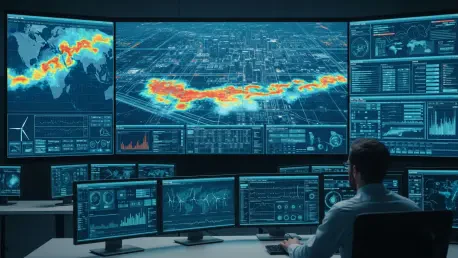
While artificial intelligence and automated data feeds provide the foundation for modern weather intelligence, the “Human-Over-The-Loop” model remains essential for high-stakes decision-making. Professional meteorologists who specialize in utility operations work alongside automated systems to interpret complex data and filter out noise that might lead to “alert fatigue” for grid operators. These experts are capable of adjusting AI outputs based on their knowledge of local terrain, microclimates, and historical grid performance—factors that a generalized algorithm might overlook. At many major utilities, these meteorologists operate from a centralized briefing desk, providing real-time updates to executive leadership and field managers during critical events. This human intervention ensures that the data is not just accurate, but also contextually relevant to the specific needs of the grid. For example, a meteorologist might recognize that a forecasted wind gust is particularly dangerous because the soil in a specific region is saturated from recent rains, making trees more likely to fall on power lines.
This collaboration between human experts and machine learning is especially critical for utilities that operate independently or in isolated regions where the decision to call for emergency aid must be made days in advance. In these scenarios, the meteorologist acts as a strategic advisor, helping the company navigate the “cost of a wrong decision” by providing nuanced insights into the confidence level of a specific forecast. They can explain the “why” behind a model’s prediction, which is often more valuable to a decision-maker than the prediction itself. As the energy landscape becomes more complex with the addition of renewable sources and decentralized assets, the role of the utility meteorologist is expanding to include load forecasting and market analysis. This multidisciplinary approach ensures that weather intelligence is woven into every layer of the organization, from the boardroom to the bucket truck. By maintaining this human connection, the industry avoids the pitfalls of blind reliance on technology and preserves the critical thinking necessary for managing the unpredictable nature of the Earth’s atmosphere.
Economic and Operational Optimization
Grid Stability: Managing Renewables and Response
As the global energy transition accelerates, the grid has become increasingly dependent on weather-dependent renewable sources like wind and solar power. Unlike traditional coal or gas plants, which provide a steady “baseload” of electricity, renewable output fluctuates according to cloud cover, wind speed, and atmospheric density. Precision weather intelligence is the primary tool used to manage this variability and ensure that the supply of energy always meets the demand. Solar operators use hyper-local cloud tracking and satellite imagery to predict sudden dips in production, allowing them to spin up fast-acting backup reserves or adjust battery storage levels. Similarly, wind farm managers rely on specialized forecasts that account for “wind shear” and atmospheric layers at the specific height of the turbine blades, which can vary significantly from ground-level conditions. This level of detail is necessary to prevent sudden drops in grid frequency that could lead to widespread instability or equipment damage.
Improving the accuracy of weather intelligence also offers a massive financial benefit to the broader economy, which suffers an estimated $150 billion in annual losses due to power outages. By identifying the exact footprint of a storm, utilities can avoid over-committing resources and focus their efforts on protecting the most critical infrastructure, such as hospitals, water treatment plants, and emergency response centers. This operational efficiency not only saves the utility money but also speeds up the restoration process for customers, reducing the economic impact on local businesses and communities. Furthermore, accurate weather alerts allow industrial consumers to shift their high-energy processes to times when renewable production is high and the weather is stable, further optimizing the efficiency of the entire energy ecosystem. The ability to “operationalize” the weather in this way turns an environmental challenge into a competitive advantage, fostering a more resilient and economically sound power grid for the millions of people who depend on it daily.
Future-Proofing Systems: EVs and Decentralized Loads
The rise of decentralized infrastructure, including electric vehicles (EVs) and green hydrogen production, has introduced new layers of complexity that require even more sophisticated weather intelligence. Cold weather presents a unique challenge for these technologies, as it simultaneously reduces the efficiency of EV batteries and increases the demand for residential heating, creating a “double-sided” pressure on the grid. Precision forecasting helps utilities manage these localized overloads by predicting exactly when and where charging demand will peak during a winter storm. In the growing green hydrogen sector, producers rely on weather data to determine when surplus renewable energy will be available at the lowest cost, making the production process economically viable. By syncing industrial energy use with the natural cycles of the sun and wind, these new technologies are helping to create a more flexible and responsive energy system that is better equipped to handle the fluctuations of the atmosphere.
Looking at the broader technological landscape, large-scale data centers have also become major stakeholders in the weather intelligence ecosystem. These facilities require massive amounts of energy for cooling, and their load profiles are extremely sensitive to outdoor temperature and humidity levels. By integrating hyper-local climate data into their cooling management systems, data center operators can significantly reduce their energy consumption and lower their operational costs. This trend toward “climate-aware” infrastructure is becoming the standard for modern development, as the link between environmental conditions and energy stability becomes more apparent. Ultimately, the successful implementation of these systems during the period from 2026 to 2028 demonstrated that weather data could serve as the foundation for both physical resilience and financial sustainability. The move toward a unified ecosystem of meteorological expertise and high-fidelity data proved to be the most effective way to secure the modern grid against the challenges of a volatile and unpredictable world.