



The traditional electric grid is no longer a silent background utility but a fragile bottleneck that must evolve rapidly to support the surge in electric vehicle adoption and renewable energy integration. To address this, the Grid Digital Twin Studio has emerged as a high-fidelity sandbox where virtual models meet physical stress testing. This initiative represents a departure from static grid planning, providing a dynamic environment that mirrors the complexities of modern energy distribution. By creating a digital replica of neighborhood-scale networks, the technology offers a predictive buffer against the volatility introduced by decentralized energy sources. It stands as a pivotal development in the shift toward a more resilient and digitized power infrastructure.
Evolution of Grid Management and Digital Twin Technology
The technology under review functions as a sophisticated bridge between the theoretical constraints of electrical engineering and the messy reality of physical infrastructure. At its core, the Grid Digital Twin Studio utilizes high-resolution data to create a synchronized virtual model of the physical grid, allowing for real-time monitoring and simulation. This evolution is driven by the necessity of managing “prosumers”—customers who both consume and produce energy via solar panels—and the localized strain caused by high-capacity electric vehicle chargers. Historically, grid management relied on manual inspections and reactive repairs, but the rise of digital twin technology allows for a proactive stance.
The relevance of this platform in the broader technological landscape cannot be overstated, as global energy goals require a radical restructuring of how electricity is distributed. As the grid moves from a centralized “top-down” model to a decentralized “mesh” of diverse energy resources, the complexity of maintaining voltage stability grows exponentially. The studio provides the computational power necessary to navigate this transition, offering a space where new control algorithms can be validated before they are deployed to the public. It serves not just as a simulation tool, but as a critical validation layer for the transition toward a zero-carbon economy.
Technical Architecture and Core Capabilities
Virtual High-Fidelity Modeling
The studio utilizes a combination of physics-based simulations and artificial intelligence to create replicas that are far more granular than standard utility models. These “living” twins synthesize data from geographic information systems and advanced metering infrastructure to reflect real-time network behavior. Unlike traditional simulations that rely on historical averages, this platform accounts for the specific thermal and electrical characteristics of localized assets. Consequently, utilities can visualize how a sudden spike in solar generation or a surge in evening charging will affect voltage stability across a specific street or neighborhood.
The integration of artificial intelligence allows the system to identify anomalies that might escape the notice of human operators. By training on thousands of hours of historical grid data, the AI can predict how the virtual model should behave and flag discrepancies that indicate potential equipment degradation. This high-fidelity approach ensures that the model is not just a visual representation but a functional surrogate that obeys the laws of physics. It provides a level of detail that allows engineers to experiment with “what-if” scenarios, such as the total loss of a substation, without endangering a single customer.
Hardware-in-the-Loop: Integration and Realism
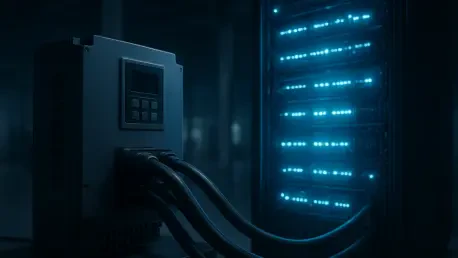
A distinguishing factor of this platform is its capacity for physical-to-virtual synchronization, often referred to as Hardware-in-the-Loop integration. While many competitors offer purely software-based solutions, this studio enables engineers to plug physical transformers, inverters, or smart meters directly into the simulation environment. This creates a feedback loop where the virtual grid reacts to the performance of the real hardware, and the hardware experiences the electrical stresses of the virtual network. This hybrid approach is essential for testing new proprietary equipment in a controlled yet realistic setting.
Such testing is vital because it reveals hardware behaviors—such as harmonic distortions, electromagnetic interference, or overheating—that software alone might overlook. For example, a new model of a high-speed electric vehicle charger can be connected to the studio to see how its power draw affects a simulated neighborhood during a heatwave. By stressing physical components within a simulated disaster scenario, the system provides a safety margin that is currently unattainable in live grid operations. This capability makes the studio an invaluable asset for manufacturers looking to certify their products for the smart grids of the future.
Emerging Trends in Grid Resilience and Monitoring
The landscape of grid monitoring is moving toward multispectral transparency, where LiDAR and thermal sensors provide a layered view of physical assets. The Digital Twin Studio integrates these inputs to transform how infrastructure is inspected and maintained. Instead of manual walk-throughs or visual-only drone flights, the platform uses 3D point cloud data to identify minute structural weaknesses or vegetation encroaching on power lines. This data is then fed back into the digital twin to create a “living” history of every pole and wire in the network.
This proactive approach marks a significant shift from the “break-fix” mentality that has dominated the utility sector for decades. By creating a living-lab environment, researchers can observe the aging process of components under varied environmental stressors in a compressed timeframe. AI-driven predictive maintenance allows for the identification of a failing insulator or a corroded transformer long before it causes a blackout. As these technologies become more affordable, the industry is shifting toward a model where the digital twin is the primary interface for grid operators, rather than a secondary diagnostic tool.
Real-World Applications and Sector Impact
Vegetation Risk and Outage Forecasting
Wildfires and storm-related damage represent the most severe threats to grid reliability, and the studio addresses these through sophisticated proximity modeling. By simulating the trajectory of falling trees during various storm intensities, the platform can predict which specific sections of a power line are likely to fail. This allows for a more efficient allocation of tree-trimming crews and repair teams before a weather event even begins. The use of multispectral imaging ensures that even the health of the trees is considered, as diseased or dead wood poses a significantly higher risk to the infrastructure.
Beyond natural disasters, the studio evaluates cyber-physical attack vectors, testing how the grid might be restored if hackers compromised the control software of a regional substation. By modeling these extreme scenarios, the platform helps utilities develop “black start” restoration strategies that are robust and verified. This dual focus on environmental and man-made risks provides a comprehensive safety net for the energy sector. The ability to simulate these events in a virtual environment ensures that when a real crisis occurs, the response is calculated and practiced rather than chaotic.
Asset-Health and Building System Optimization
The reach of the studio extends into the efficiency of individual buildings using IoT sensors and AI algorithms. Through implementations like the LoRaWAN testbed, the platform monitors energy consumption, air quality, and mechanical vibrations to detect early signs of equipment failure within a facility. This integration of smart-building analytics into the broader grid model creates a holistic view of energy demand. It allows for a more precise understanding of how building-level efficiency measures can collectively reduce the peak load on the entire distribution network, delaying the need for expensive infrastructure upgrades.
Notable implementations have shown that by optimizing the mechanical performance of large buildings, the digital twin can help smooth out the “duck curve” of energy demand. This is particularly important as more buildings transition to all-electric heating and cooling systems. The platform acts as an optimizer, balancing the needs of the individual building with the capacity of the local grid. This synergy between asset health and grid stability is a hallmark of the studio’s design, proving that the most effective way to manage the grid is to understand every component connected to it.
Implementation Hurdles and Technical Constraints
Despite its advanced capabilities, the technology faces the persistent hurdle of data fragmentation across various utility departments and stakeholders. Synthesizing disparate datasets from Geographic Information Systems, Advanced Metering Infrastructure, and weather sensors remains a labor-intensive process that requires standardized protocols. There is often a mismatch between the high-resolution requirements of the digital twin and the low-frequency data provided by older sensors. Overcoming these “data silos” is the primary challenge for engineers seeking to create a truly seamless and accurate virtual replica.
Moreover, moving from a research-scale model to a wide-scale utility deployment involves navigating rigid regulatory frameworks and market skepticism. There are significant concerns regarding data privacy and the security of the digital twin itself, as a detailed map of the grid could become a target for malicious actors. Currently, the team is working toward a “minimum viable platform” by the end of 2026, which will serve as the baseline for future scaling efforts. Achieving this milestone requires balancing the need for technical complexity with the necessity of a user-friendly interface that can be operated by utility staff.
Future Trajectory and Industry Outlook
The trajectory of this technology points toward hyper-localized grid modeling and the expansion of campus-wide living labs. These environments will serve as a blueprint for smart cities, where every utility asset is mapped and monitored in a unified digital space. In the coming years, we can expect the integration of even more diverse data sources, such as real-time traffic patterns and satellite-based soil moisture levels, to further refine the accuracy of the twin. These advancements will likely move the technology from a specialized research tool to a standard requirement for all modern utility operations.
Additionally, the initiative is laying the groundwork for specialized workforce training through programs like “CyberLearn.” This program will use the digital twin to train the next generation of engineers in managing both physical faults and cyber threats. By simulating intrusions and control-system vulnerabilities in a virtual space, the university can train professionals to protect critical infrastructure without the risk of causing actual blackouts. This long-term focus on education ensures that the technological advancements of the Digital Twin Studio are matched by a workforce capable of utilizing them to their full potential.
Summary of Findings and Final Assessment
The synthesis of academic research and industry application within the Digital Twin Studio demonstrated a viable path forward for modernizing aging energy infrastructure. This review found that the integration of hardware-in-the-loop testing and AI-driven predictive analytics provided a level of insight that far surpassed conventional grid modeling techniques. While data integration challenges remained a significant barrier to immediate wide-scale adoption, the potential for reducing outages and improving asset longevity outweighed the initial implementation costs. The platform successfully proved that a proactive, high-fidelity approach was necessary to manage the volatility of a decentralized energy landscape.
Future efforts should have focused on standardizing data communication protocols to allow for easier integration across different utility territories. The move toward a minimum viable platform by the end of 2026 marked a critical transition point from development to practical utility. Ultimately, the studio positioned itself as an essential tool for national energy security, providing the resilience needed to face the environmental and technological challenges of the current decade. The transition to a smarter grid was no longer a theoretical goal but a tangible reality supported by the robust capabilities of digital twin technology.







