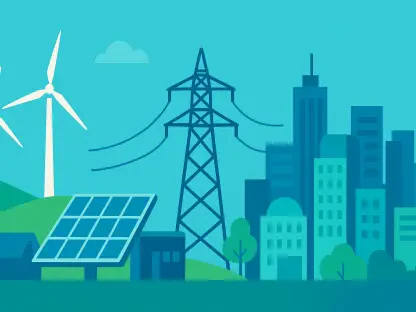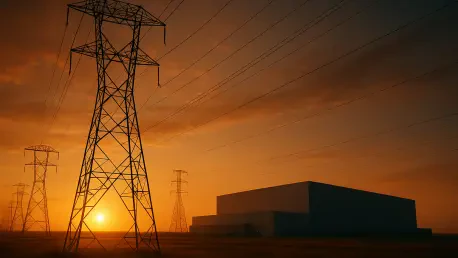

The electrical grid in the United States, a sprawling network of copper, steel, and aging transformers, is currently facing its most significant test since the dawn of the digital age as hyperscale data centers proliferate at an unprecedented rate. These massive industrial campuses, often consuming as much power as small cities, represent a new paradigm in energy demand that traditional utility planning was never designed to handle. As the race for artificial intelligence supremacy accelerates, the gap between the power needed to drive large language models and the physical capacity of the transmission system widens. This friction point is no longer a theoretical concern for the distant future but a present-day crisis for engineers and policy makers trying to keep the lights on while fostering technological innovation. The sheer scale of the energy draw required by modern clusters means that a single facility can disrupt the delicate balance of regional power markets, leading to questions about whether the nation’s infrastructure can survive the very technology it aims to host.
A systemic lack of centralized data regarding the location and operational habits of data facilities forces grid planners to rely on speculative and often inaccurate demand projections. This absence of transparency is compounded by the speed at which technology companies move, often outpacing the multi-year regulatory cycles required to approve new transmission lines or generation sources. When a utility receives a request for several hundred megawatts of power, it often lacks the historical context or the granular operational data to know if that demand will be constant or if it will fluctuate based on market conditions or computational loads. Consequently, the power grid remains in a state of reactive adaptation rather than proactive management, which increases the likelihood of localized bottlenecks and regional instability. The intersection of high-stakes technological advancement and a rigid energy infrastructure has created a volatility that threatens the reliability of service for millions of residential and commercial customers across the country.
The Information Gap and Its Consequences
Obstacles: The Difficulty of Accurate Energy Planning
Because reliable information is so difficult to obtain, grid planners are often forced to rely on best guesses rather than hard data. Researchers frequently have to piece together information from news reports, expensive private databases, and speculative projections to understand the industry’s footprint. This fragmented approach is not only time-consuming but also prone to error, as the fast-moving tech market often renders data obsolete before it can be effectively analyzed. Relying on such patchwork information is a dangerous strategy when planning multi-billion-dollar infrastructure that must last for decades. The mismatch between the rapid construction of a data center and the decade-long timeline for new high-voltage transmission lines creates a structural deficit that endangers grid resilience.
Furthermore, the proprietary nature of server utilization and cooling efficiency means that utility providers are often left guessing the peak load requirements of these facilities. Without a standardized reporting mechanism, a data center might claim a certain power capacity in its initial application but operate at a significantly higher or lower intensity once fully commissioned. This lack of precision prevents regional transmission organizations from optimizing the flow of electricity across state lines, leading to inefficient energy distribution. When planners cannot see the full picture of where and when demand will peak, they are unable to implement the necessary safeguards to prevent equipment failures and thermal overloads on critical grid components.
Risks: The Cost of Infrastructure Mismanagement
When utilities lack precise data, they risk two equally damaging outcomes: over-building or under-building. Over-building leads to stranded assets, where ratepayers are forced to fund unnecessary fossil fuel plants and transmission lines for demand that may never materialize if a tech project is canceled or scaled back. Conversely, under-estimating demand can lead to severe reliability issues, including blackouts and emergency power purchases at exorbitant prices. In both scenarios, the general public bears the financial and environmental burden of planning errors caused by a lack of industry transparency. These financial risks are particularly acute in regulated markets where the cost of new infrastructure is passed directly to the consumer regardless of the actual utility of the project.
The environmental consequences of these planning errors are also significant, as uncertainty often leads utilities to keep older, dirtier power plants online as a safety net. When a massive data center project is announced with little lead time, the easiest way for a utility to meet that load is to delay the retirement of coal-fired generation or to quickly permit new natural gas peaking plants. This reactionary approach undermines national decarbonization goals and locks in carbon emissions for years to come. The social cost of this mismanagement is high, as the communities living near these aging plants suffer the most from air quality degradation, while the tech companies driving the demand often claim carbon neutrality through the purchase of distant, unbundled renewable energy credits that do not actually reduce local pollution.
Regional Vulnerabilities and Regulatory Erosion
Challenges: The Battle for Accountability in Local Markets
Specific regions across the United States, from the Midwest to California, face unique hurdles in managing the data center boom. In some states, the absence of formal planning processes allows utilities to fast-track infrastructure with minimal oversight, often delaying the retirement of carbon-heavy coal plants to meet new demand. Local officials, lured by the promise of tax revenue and investment, frequently sign non-disclosure agreements that prevent the public from seeing the true cost-benefit ratio of these projects. This lack of accountability often leaves communities in the dark about the noise, water usage, and air quality impacts of neighboring facilities. The competitive nature of state-level economic development has created a race to the bottom where regulatory standards are sacrificed to attract the next major cloud region.
In many Midwestern states, the pressure to maintain low electricity rates for industrial users has led to a conflict between the interests of residential consumers and those of hyperscale developers. Utilities may prioritize the needs of a single large customer that consumes five hundred megawatts over the collective needs of thousands of small businesses. This prioritization is often masked by complex tariff structures that do not accurately reflect the cost of the specialized infrastructure required to serve such a massive, concentrated load. Without public access to the details of these agreements, there is no way for citizens or watchdog groups to verify if the economic benefits promised by tech giants—such as job creation and infrastructure improvements—actually outweigh the long-term strain on the local power grid and water resources.
Policies: Reassessing Economic Incentives and State Oversight
The historical trend of offering massive tax breaks to attract data centers is beginning to reverse as the hidden costs of these facilities become apparent. Several states have started to roll back incentives or implement audits to ensure their grids can handle the projected loads without compromising service to existing customers. New York has taken the most significant step by imposing a temporary moratorium on large-scale data center development to allow for a thorough impact evaluation. These policy shifts reflect a growing realization that the economic benefits of these facilities may not outweigh the strain they place on public infrastructure. Lawmakers are increasingly questioning why residential taxpayers should subsidize the expansion of some of the most profitable corporations in the world.
This shift in legislative sentiment is driving a new wave of environmental and operational regulations that require data centers to demonstrate their grid readiness. In states like Maryland and Illinois, new bills are being drafted to require developers to prove that their facilities will not negatively impact the reliability of the local distribution network before they can receive construction permits. These regulations often include requirements for on-site energy storage or the use of advanced cooling technologies that reduce the facility’s overall water consumption. By tying economic incentives to specific sustainability and reliability benchmarks, states are attempting to regain control over their energy landscapes and ensure that the digital economy does not come at the expense of the physical one.
Strategic Solutions for Grid Resilience
Standards: Mandatory Transparency and Reporting Requirements
To safeguard the grid, policymakers must mandate that data center developers provide clear, public-facing data regarding their energy and water requirements. This includes eliminating the use of restrictive non-disclosure agreements in negotiations with public utilities and requiring facilities to report their actual emissions and land use. By moving away from a culture of secrecy, regulators can ensure that the entities driving the highest demand are held accountable for their impact on the environment and the economy. Transparency should not be viewed as a burden on innovation but as a necessary prerequisite for a functioning energy market where supply and demand can be matched accurately and efficiently across all regions.
Implementation of these standards would involve a national registry where every data center above a certain megawatt threshold must report its hourly energy consumption and its water withdrawal rates. Such a database would allow grid operators to use machine learning to predict load patterns more accurately, potentially identifying opportunities for demand-response programs where data centers could reduce their power draw during periods of extreme heat or cold. By making this data public, third-party researchers and technology providers could develop new solutions for load balancing and grid optimization. The goal is to create a digital twin of the nation’s data center footprint, enabling a level of sophisticated planning that is currently impossible due to the siloed nature of corporate and utility data.
Oversight: Strengthening Federal Planning and Regulation
Federal agencies and reliability organizations are beginning to draft new standards that would require data centers to register as entities and provide modeling data to grid operators. These efforts are essential for creating a national-level understanding of the industry’s footprint and ensuring that reliability standards remain robust. Additionally, utilities must reform their long-term planning to account for the speculative nature of data center loads, ensuring that the tech developers—rather than residential ratepayers—pay for the additional infrastructure required to serve them. This involves moving toward a “polluter pays” model for the grid, where those who create the most stress on the system are responsible for the upgrades needed to maintain its integrity.
Strengthening federal oversight also means empowering the Federal Energy Regulatory Commission to oversee the interconnection process for large-scale digital infrastructure. Currently, the “first-come, first-served” queue system for connecting to the grid is clogged with projects that may never reach completion, preventing viable renewable energy projects from coming online. By prioritizing projects that provide firm financial commitments and clear operational data, federal regulators can streamline the expansion of the grid. This federal approach would also help to standardize the requirements for data center backups, ensuring that the proliferation of diesel generators at these sites does not circumvent regional air quality regulations or create new vulnerabilities in the fuel supply chain during emergencies.
Navigating the Future of Technology and Energy
The Bubble: Assessing the Risks of the Artificial Intelligence Surge
A major concern hanging over the industry is the potential for an artificial intelligence bubble, where current infrastructure investment far outpaces actual revenue generation. If the demand for AI processing collapses, the country could be left with a surplus of expensive and polluting power plants that were built specifically to serve that niche. This possibility highlights the need for utilities to be cautious, prioritizing projects with firm financial commitments over hypothetical future demand. Building massive generation capacity for a trend that might be fleeting could lead to a significant waste of resources and a long-term financial burden on utility customers who must pay for those unused facilities.
The history of technological booms suggests that the initial phase of rapid expansion is often followed by a period of consolidation and correction. If the energy requirements of next-generation AI models decrease through software optimization or more efficient hardware, the massive clusters being built today might become underutilized sooner than expected. This creates a risk of stranded costs not just for the tech companies, but for the utilities that built out transmission and distribution networks to support them. To mitigate this risk, regulators must insist on flexible infrastructure solutions, such as modular microgrids and mobile energy storage units, that can be redeployed if the demand at a specific data center site evaporates in the coming years.
Synthesis: Balancing Technological Growth with Sustainability
The United States does not have to sacrifice its clean energy goals to accommodate technological growth, provided that transition is managed with accurate data. It is entirely possible to meet the increased demand from data centers through renewable energy sources while phasing out fossil fuels. However, this transition requires a fundamental shift toward regulatory accountability and standardized reporting. Ensuring that the largest energy consumers in the country operate transparently is the first step toward building a grid that is both technologically advanced and environmentally sustainable. The path forward required a synchronization of digital expansion and physical capacity to prevent the former from overwhelming the latter.
The transition toward a more resilient energy ecosystem relied on the integration of granular data and the courage of regulators to demand accountability. Stakeholders recognized that the era of unlimited, subsidized growth for digital infrastructure had reached its limit, and they implemented strict reporting requirements to protect public assets. Success was achieved by aligning the incentives of tech companies with the needs of the communities they inhabit, ensuring that new power generation served both the cloud and the home. Moving forward, the most effective strategy involved treating data facilities as active partners in grid management rather than passive consumers. This shift allowed for a more flexible and responsive system that could absorb the shocks of a rapidly changing technological landscape while maintaining the unwavering reliability of the national power grid.